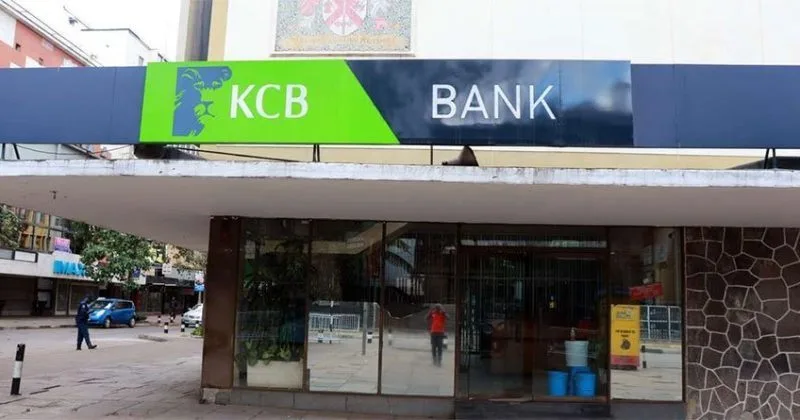
NAIROBI, Kenya, Oct 8 – Growth in commercial banks’ lending to Kenya’s private sector accelerated to 10.6 percent in September from 10.3 percent in August, supported by increased demand for credit across key sectors of the economy.
The Central Bank of Kenya (CBK) said lending grew strongly in trade, building and construction, agriculture, finance and insurance, and consumer durables.
“Growth in commercial banks’ lending to the private sector remained strong at 10.6 percent in September 2026, compared to 10.3 percent in August 2026 and -2.9 percent in January 2025,” the Monetary Policy Committee (MPC) said.
The latest figures point to a continued recovery in private-sector credit after lending contracted by 2.9 percent in January 2025.
The growth comes as the CBK retained its Central Bank Rate (CBR) at 8.75 percent during its October 7 meeting.
Despite the increase in lending, the average commercial bank lending rate edged up to 14.4 percent in September from 14.3 percent in August, significantly below the 17.2 percent recorded in November 2024.
The CBK has raised its economic growth forecast for Kenya to 5 percent in 2026 from an earlier projection of 4.9 percent, citing stronger performance in the industry and services sectors.
The economy is projected to grow by 5.3 percent in 2027.
The CBK’s September CEOs Survey and Market Perceptions Survey showed that businesses remain optimistic about economic activity over the next 12 months.
The optimism was attributed to macroeconomic stability, increased government infrastructure spending, digital innovation and improved access to private-sector credit as bank lending rates have declined.
The banking sector also remained stable, with strong liquidity and capital adequacy levels, according to the MPC.
Gross non-performing loans as a share of total loans fell to 13.9 percent in September from 14.8 percent in June and 17.6 percent in August 2025.
The decline in non-performing loans was recorded in the financial services, agriculture, trade, and energy and water sectors, while banks continued to make provisions for bad loans.
Meanwhile, inflation rose to 6.8 percent in September from 6.6 percent in August, driven mainly by higher prices of processed food items, including milk, wheat products and edible oils.
Core inflation, which excludes some volatile components, also increased to 4.0 percent from 3.4 percent.
The MPC expects inflation to remain within its target range in the near term, supported by monetary policy measures, government interventions and a stable exchange rate.
The Committee also expects above-average rainfall between October and December to help lower food prices.
However, the MPC identified prolonged geopolitical tensions, uncertainty over global trade policies and the possible impact of El Niño weather conditions as risks to the economic outlook.