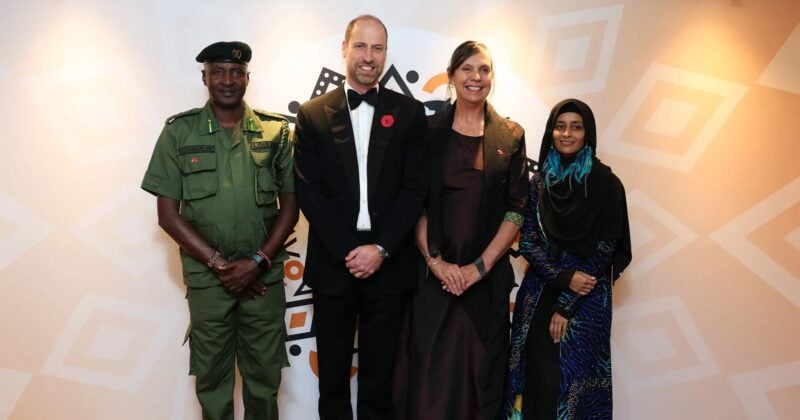
NAIROBI, Kenya, Nov 12– Two Kenyan conservationists have won international recognition for protecting endangered wildlife and threatened habitats, with efforts to restore black rhino populations at Loisaba Conservancy and safeguard coastal forests earning them the 2026 Tusk Conservation Awards.
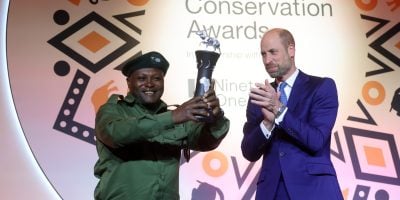
Raabia Hawa, founder of Ulinzi Africa Foundation, and Daniel Yiankere, Security Manager at Loisaba Conservancy, received the prestigious awards from the Prince of Wales, Prince William, during the 14th annual ceremony in London on November 12.
Hawa received the Tusk Award for Conservation in Africa for her work protecting wildlife and fragile ecosystems along Kenya’s northern coast, while Yiankere was honoured with the Tusk Wildlife Ranger Award for his contribution to wildlife protection and the recovery of eastern black rhinos in Laikipia.
Yiankere’s recognition comes against the backdrop of a significant conservation milestone at Loisaba, where the return of 21 critically endangered eastern black rhinos in 2024 has seen the population grow to 28 following the birth of seven calves.
The successful reintroduction, which required years of security preparations, has also opened discussions with neighbouring Koija communities about expanding rhino habitat onto community-owned land.
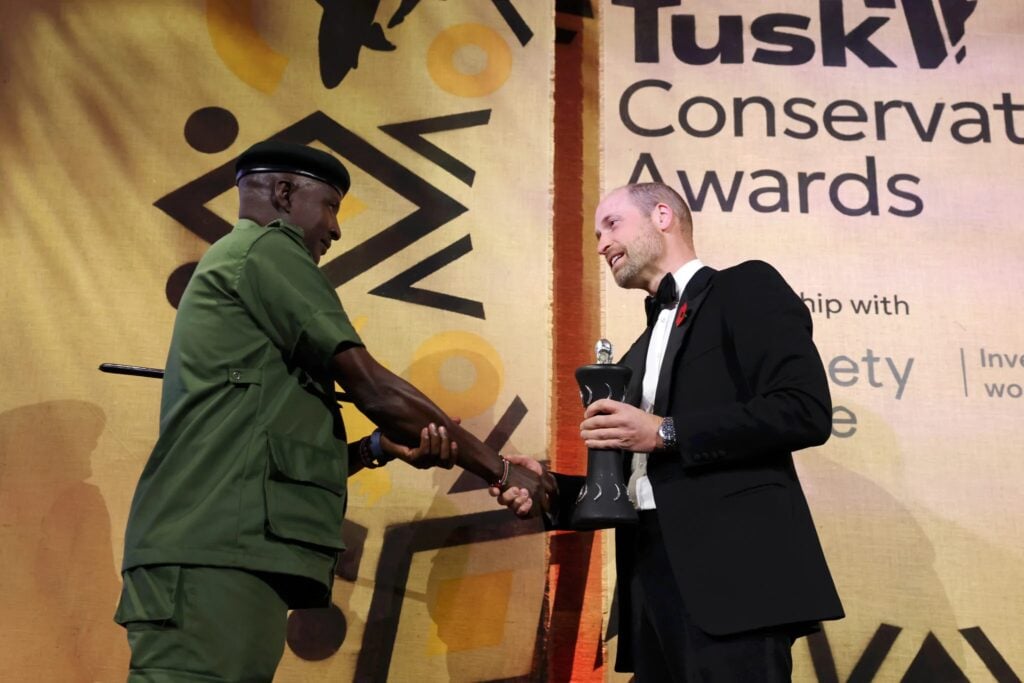
Yiankere, who began his career with the Kenya Wildlife Service (KWS) and has more than 30 years of frontline conservation experience, leads over 100 security and wildlife monitoring personnel at Loisaba.
Under his leadership, the conservancy has reported no poaching incidents since 2017, strengthening efforts to establish the area as a safe habitat for endangered species.
He said the award was recognition not only of his work but also of the collective efforts of rangers, conservation teams, KWS and neighbouring communities.
“After over two decades as a ranger, it means a great deal to see my work recognised. I share this award with our team at Loisaba, the Kenya Wildlife Service and neighbouring communities,” Yiankere said.
“Bringing black rhinos back took years of preparation, and seeing nine calves born makes that work feel worthwhile. I’m grateful to Tusk for recognising the people behind that achievement, especially the rangers who patrol and monitor the rhinos every day.”
He said the recognition would also support ongoing efforts to work with Koija residents to explore the possibility of providing additional space for rhinos on community land.
Along Kenya’s coast, Hawa has spent more than a decade leading conservation efforts through Ulinzi Africa Foundation, combining anti-poaching operations with community advocacy and legal action to protect threatened ecosystems.
Since 2014, she has coordinated patrols to protect elephants and endangered coastal topi while working with communities in the Tana Delta and Lamu to challenge destructive mining, illegal fishing and developments threatening forests, wetlands and mangroves.
These ecosystems provide critical habitats for wildlife while supporting the livelihoods of communities, particularly those dependent on fishing and other natural resources.
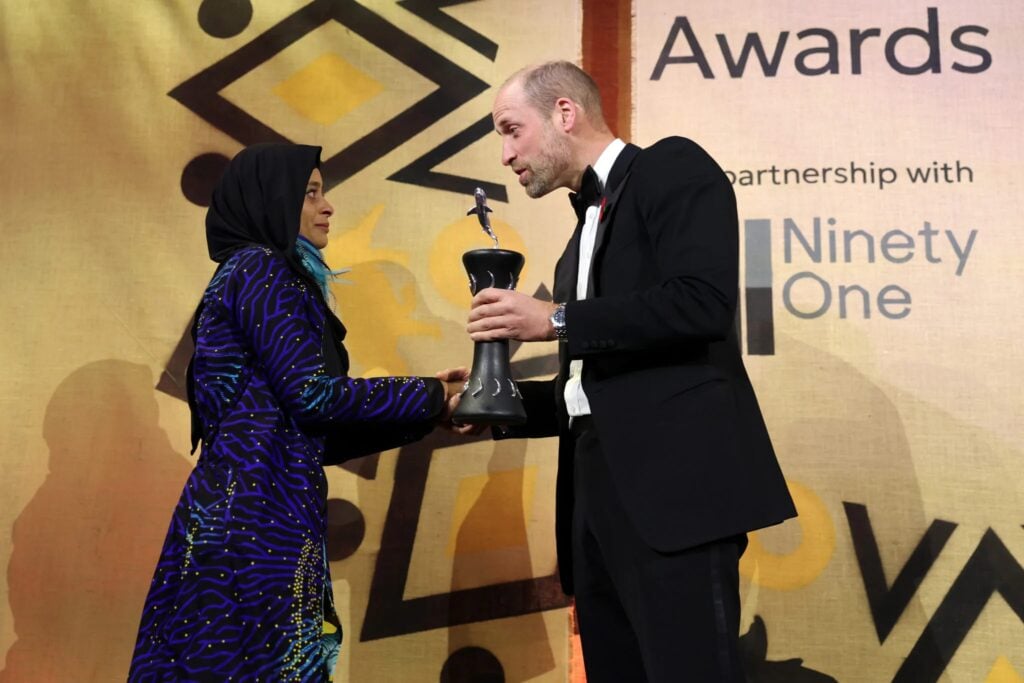
Hawa said the recognition would help strengthen the capacity of frontline conservation teams and draw attention to the communities whose efforts are central to protecting Kenya’s coastal ecosystems.
“When you’re out there trying to save a forest, you don’t expect anyone to give you an award for it. For more than a decade, our rangers and the communities we work with in the Tana Delta and Lamu have kept showing up for this place, even when the work was difficult, and few people knew what it took,” Hawa said.
She said the award would help the organisation provide rangers with the training, equipment and support needed to continue protecting threatened habitats.
“I am grateful for the collaboration with Kenya Wildlife Service, which is key to achieving our success,” she added.
The awards ceremony also recognised Dr Colleen Begg of Mozambique, who received the Prince William Award for Conservation in Africa for more than three decades of conservation leadership, including working with local communities to protect large carnivores and supporting more than 100 women conservation leaders across 24 African countries.
Prince William said supporting frontline conservationists was critical as communities increasingly experience the effects of climate change while playing a central role in protecting the environment.
“It is critical that we continue to support the vital work being spotlighted here this evening. We cannot forget that those who are among the most impacted by our changing climate are also at the forefront of protecting it,” he said.
The ceremony, hosted by animal biologist and natural history broadcaster Liz Bonnin at Raffles London at The OWO, also recognised Kenyan conservationist John Kamanga, who received the 2020 Tusk Award for Conservation in Africa but could not attend the ceremony in person because of COVID-19 travel restrictions.
Tusk President and Chief Executive Charlie Mayhew said the awards recognised conservationists working under increasingly difficult circumstances to protect threatened species and preserve vital habitats.
He said their achievements demonstrated the importance of local leadership and sustained commitment in ensuring people and nature could thrive together.
The awards also carry financial support for the winners’ organisations, with Ulinzi Africa Foundation set to receive £75,000 over three years, while Loisaba Conservancy’s organisation-level award allocation is £50,000 over three years.
The Prince William Award for Conservation in Africa carries £100,000 over three years for the recipient’s organisation.
Established in 2013, the Tusk Conservation Awards are organised by international conservation charity Tusk in partnership with investment manager Ninety One and in conjunction with Prince William, the charity’s Royal Patron.