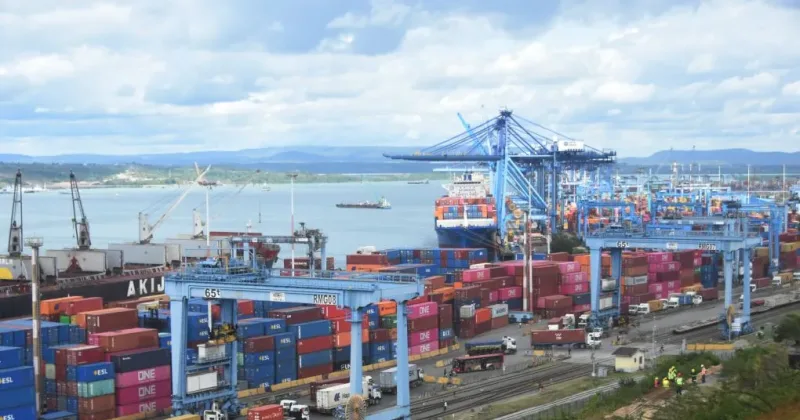
Trade statistics often tell a story far greater than numbers alone. The announcement that China-Africa trade reached a record 1.41 trillion yuan (US$197 billion) in the first half of 2026 is one such moment. Beyond setting a new benchmark, it signals the evolution of one of the world’s most consequential economic partnerships and demonstrates how market access, rather than aid, is becoming the defining feature of China-Africa relations.
At a time when global trade is increasingly shaped by geopolitical tensions, supply chain disruptions and rising protectionism, the latest figures offer a different narrative. They show that deeper market integration and mutually beneficial trade can still drive economic growth, industrialisation and shared prosperity. More importantly, they underscore the impact of China’s decision to grant zero-tariff treatment to all African countries with diplomatic ties to Beijing—a policy already reshaping commercial relations between China and the continent.
The results have been immediate. According to the Chinese Foreign Ministry, imports from Africa surged after the policy took effect. In May and June, the first two months of implementation, China imported goods worth 193.8 billion yuan (approximately US$27 billion) from Africa, representing a 23.5 percent increase compared with the same period last year. This momentum helped push bilateral trade to its highest-ever level for the first six months of the year and could deliver another annual record by the end of 2026.
These figures matter because they demonstrate that improved market access can generate tangible economic benefits. For decades, African leaders have argued that the continent needs better access to global markets rather than greater dependence on aid. China’s zero-tariff initiative directly addresses that aspiration by lowering barriers and creating new opportunities for African producers.
The policy is already broadening the range of African products entering the Chinese market. Coffee beans, dried chilies, cashew nuts and wild aquatic products now enjoy streamlined access under unified regional standards. This allows exporters to reach one of the world’s largest consumer markets more efficiently while encouraging greater production across the continent.
The greatest opportunity, however, lies beyond higher export volumes. Africa has long sought to move from exporting raw commodities to producing higher-value goods. Greater access to China’s market creates stronger incentives for value addition through food processing, packaging and manufacturing. Coffee sold as roasted and packaged products generates more income than green beans. Processed cashews create more employment than raw exports. Similar opportunities exist across agriculture and fisheries.
This complements the ambitions of the African Continental Free Trade Area, which seeks to strengthen regional value chains and accelerate industrialisation. Larger external markets encourage investment in production while supporting the growth of competitive African industries capable of serving domestic, regional and international demand.
The relationship is equally significant from China’s perspective. Around 75 percent of China’s exports to Africa consist of capital goods and intermediate products, including machinery, industrial equipment, electrical systems and production inputs. These are not simply consumer products. They are the tools needed to modernise agriculture, expand manufacturing and strengthen productive capacity.
This reflects an increasingly complementary relationship. Africa exports products in which it holds comparative advantages while importing equipment that supports industrial growth. Infrastructure built over the past two decades becomes more valuable when linked to expanding trade, investment and manufacturing.
For many years, China-Africa cooperation was defined primarily by infrastructure development. Roads, railways, ports and power projects transformed transport and connectivity across the continent. While these investments remain important, infrastructure alone cannot generate prosperity unless producers have access to reliable markets. The latest trade figures suggest that this next phase is now taking shape.
The partnership also arrives at an important moment for Africa. The continent has the world’s youngest population and one of its fastest-growing labour forces. Creating millions of jobs will require export-led industrialisation, private investment and stronger manufacturing. History shows that countries such as South Korea, China and Vietnam achieved rapid development by combining industrial policy with expanding access to international markets.
Market access alone, however, cannot guarantee success. African governments must continue improving infrastructure, reducing production costs, strengthening quality standards and creating business environments that encourage investment. Businesses must innovate, improve productivity and meet international standards to maximise these new opportunities.
The challenge now is to convert greater market access into broader economic transformation. By investing in value addition, industrial capacity and export competitiveness, African countries can ensure that rising trade with China translates into better jobs, stronger industries and more inclusive growth. That is the true promise behind today’s record trade figures.
Nevertheless, the record 1.41 trillion yuan in bilateral trade represents far more than commercial success. It reflects a partnership that is steadily maturing from one centred largely on infrastructure financing to one increasingly driven by production, investment and trade. It also demonstrates that policy choices promoting openness can produce measurable benefits even as parts of the world embrace protectionism.
If expanded market access continues encouraging value addition, industrialisation, job creation and stronger exports, the benefits will extend well beyond trade statistics. They will contribute to stronger economies, higher incomes and improved living standards across Africa while strengthening China’s economic partnership with the continent.
In an uncertain global economy, the latest trade milestone offers an encouraging reminder that inclusive growth remains possible when nations choose cooperation over protectionism. The challenge now is to ensure that today’s record becomes the foundation for even deeper economic integration, sustainable investment and shared prosperity. That would represent the true significance of this remarkable milestone.
Elijah Mwangi is a scholar based in Nairobi who comments on local and global affairs.