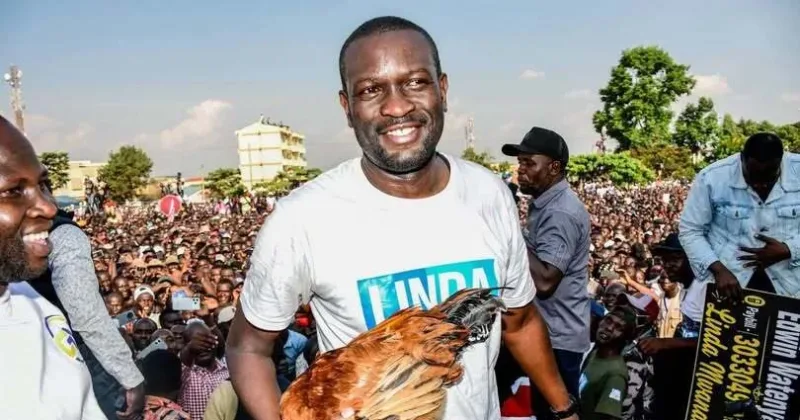
Senator Edwin Sifuna’s political star appears to be rising at a defining moment in Kenya’s politics. It comes at a time when many Kenyans are searching for renewed hope following the passing of Baba and amid growing disenchantment with the Kenya Kwanza administration. For many, Sifuna represents a fresh voice as the country gradually shifts its focus towards the 2027 General Election.
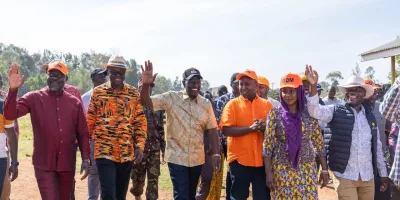
His recent homecoming in Trans Nzoia and the wider Western region may well mark the beginning of a new political chapter. Governor George Natembeya’s public endorsement has given his growing profile additional momentum. When seasoned politicians such as James Orengo, Bonny Khalwale and Natembeya publicly rally behind Sifuna, it suggests they have sensed a political tide worth investing in.
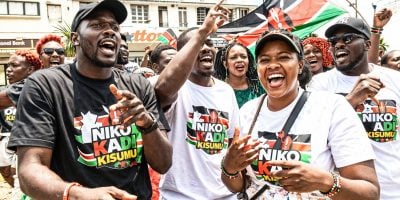
The support extends beyond Western Kenya. Young and energetic leaders from the Coast, Nyanza, Kisii and parts of Mt Kenya have increasingly identified with the “Sisi Ndio Sifuna” movement. While questions remain over who is driving and financing the mobilisation, the breadth of support increasingly points to a movement that could eventually outgrow any single political patron.
I have argued before that a presidential ticket featuring Sifuna would fundamentally alter the political landscape. His candidacy would immediately inject fresh energy into the opposition. But enthusiasm must be tempered with realism. We should resist the temptation to give him wings fashioned from wax and expect him to soar too close to the sun.
Winning the presidency in Kenya requires far more than popularity and viral political moments. It demands a formidable national political machine capable of fielding parliamentary candidates across virtually every constituency in the country. Presidential campaigns are sustained by party structures, grassroots networks and candidates competing simultaneously for parliamentary, gubernatorial and county assembly seats.
It is one thing to have influential regional leaders like Khalwale and Natembeya campaigning for Sifuna. It is another to have credible parliamentary candidates carrying the same political banner in Nyeri Town, Suna East, Kilifi North, Nandi Hills or Mandera. Without that nationwide infrastructure, presidential momentum risks dissipating long before polling day.
While regional kingpins may consolidate their own political bases through association with Sifuna, his success will ultimately depend on his ability to inspire confidence well beyond Western Kenya. National elections are won by building emotional connections across communities, not simply by attracting admiration.
Outside his traditional support base, what emotions does Sifuna evoke? Popularity alone rarely translates into votes. Kenyan politics remains deeply influenced by identity, trust and emotional connection. The “Sisi Ndio Sifuna” movement must therefore become more than a catchy slogan; it must persuade voters from every corner of the country that Sifuna represents their aspirations as much as he represents those of his home region.
His relentless criticism of President William Ruto has undoubtedly elevated his national profile. Yet opposition politics cannot rely solely on attacking government programmes. Many of the projects Sifuna criticises have benefited sections of the population, and dismissing them outright risks reinforcing the perception that he is speaking primarily to the already converted. Ultimately, voters will judge him not only by what he opposes but also by what he proposes.
Would Gen Z voters and the wider electorate see Sifuna as the leader capable of delivering economic opportunity, accountable governance and national unity? Does he inspire the same emotional attachment that once propelled Baba into the hearts of millions? Has he articulated a compelling national vision beyond opposing the current administration? These are questions his movement must answer convincingly.
The political arithmetic also remains extraordinarily complex. Where would a Sifuna presidential bid leave Eugene Wamalwa? What becomes of Fred Matiang’i if he is not the opposition’s flag bearer? How would Rigathi Gachagua respond, having repeatedly suggested he intends either to lead the opposition ticket or play kingmaker? More importantly, how would each of these leaders persuade their supporters to rally behind someone else?
Natembeya’s endorsement of Sifuna may have energised his supporters, but it has also shifted political calculations within Western Kenya. While presented as an act of political sacrifice, it has effectively positioned Sifuna ahead of several other opposition hopefuls who harbour presidential ambitions of their own.
Yet perhaps Sifuna’s greatest political test lies much closer to home.
Before he can realistically aspire to lead Kenya, he must first establish himself as the undisputed political leader of the Mulembe nation. That is no easy task while Moses Wetang’ula and Musalia Mudavadi remain influential pillars of the Kenya Kwanza coalition.
Wetang’ula, in particular, has repeatedly demonstrated remarkable political resilience. He survived sustained pressure on Ford Kenya during the previous administration, lost the Senate Minority Leader position, yet ultimately emerged stronger. His ability to deliver Bungoma overwhelmingly to Kenya Kwanza in 2022 significantly contributed to President William Ruto’s victory. As Speaker of the National Assembly and one of the country’s most experienced political strategists, he possesses the networks, resources and organisational strength required to blunt any challenge within Western Kenya.
Mudavadi, too, retains considerable influence across the region and remains central to the government’s political architecture. Together, they present formidable obstacles to anyone seeking to become the dominant political voice of Western Kenya.
The coming contest therefore extends beyond personalities. It is a battle between established political structures and an emerging movement seeking to redefine leadership in the region.
Can the “Sisi Ndio Sifuna” movement overcome decades of political organisation built by Wetang’ula and Mudavadi? Will the government’s grassroots empowerment initiatives, combined with Wetang’ula’s organisational machinery and leaders such as Didmus Barasa, contain Sifuna’s growing influence?
History suggests writing off Wetang’ula would be unwise. Time and again he has reached what storytellers describe as the “supreme ordeal”—moments when his political career appeared on the brink—only to emerge stronger each time. The rise of Edwin Sifuna presents yet another defining test.
One thing is certain: Western Kenya is once again becoming one of the country’s most consequential political battlegrounds. Whether Sifuna’s momentum evolves into a genuine national movement or stalls against the weight of established political structures may ultimately shape not only the future of the Mulembe nation, but also the trajectory of Kenya’s 2027 presidential race.