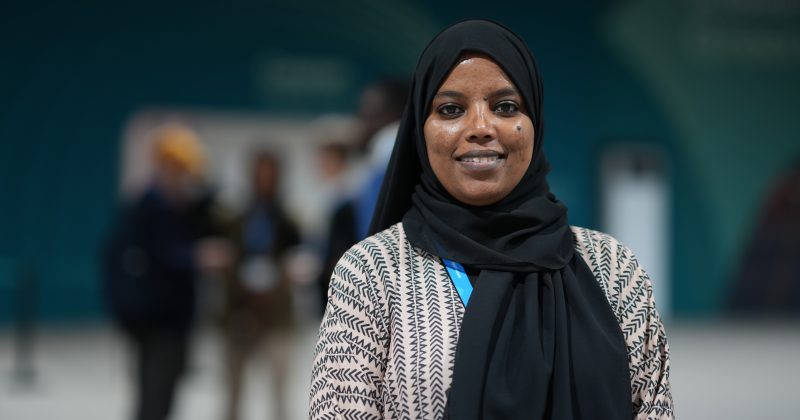
BY Saada Sala Mohamed
MAY 29 – A full plate awaits Sidi Ould Tah, the incoming president of the African Development Bank (AfDB). The Mauritanian was elected by AfDB’s board of directors during its annual meeting in Abidjan, Côte d’Ivoire, this week.
Africa’s Adaptation future looks bleak. Without urgent adaptation interventions, African countries are projected to incur losses of up to 3.8% of their GDP annually by 2100, even if global warming is limited to 1.5°C.
For a continent that’s already grappling with worsening fiscal balances and a skyrocketing debt crisis, this is detrimental.
The adaptation finance burden in Africa has steadily risen and is estimated to hit $50 billion annually by 2050.
But even against this background, the continent receives only about 3% of global climate finance against $277 billion it requires yearly to meet climate commitments in their Nationally Determined Contributions (NDCs) by 2030.
Alongside the vast adaptation finance gap, the enormous financing gap of $200 billion annually for the attainment of Sustainable Development Goals by 2030 is gravely concerning.
AfDB’s climate leadership, commitment to Paris Alignment
All is not lost, though.
In the last decade, the African Development Bank has demonstrated strong climate leadership, particularly on Africa’s adaptation priorities, by integrating and mainstreaming its impacts into its core strategy and project designs.
By using the Paris Alignment as a guiding framework, AfDB’s operations and institutional structure have a strong climate focus.
The Bank’s ‘‘Climate Change and Green Growth Strategic Framework’’, including its Action Plan for 2021-2025, outlines key financial commitments for climate action and investments that underpin the institution’s development mandate.
These include an aggregate climate finance mobilisation target of $25 billion and ensuring at least 40% of its overall annual finance is directed to climate action.
It also includes mobilising US$5.3 billion from private sector for both adaptation and mitigation projects.
To date, the AfDB has allocated 41% and 45% of its overall investment as climate finance in 2021 and 2022, respectively, surpassing its target.
There is reason to be even more optimistic.
The AfDB recently adopted a 10-year strategy until 2033 which will build upon its existing climate commitments. The strategy features climate change action and finance as priorities.
Prioritising adaptation finance
For Africa, adaptation is not just an environmental necessity. It is a fundamental lifeline – a necessity to facilitate inclusive growth and a climate-resilient development trajectory aligned with the African Union’s Agenda 2063.
Under its 2021-2025 Action Plan, the Bank pledged to allocate at least 50% of annual climate finance to adaptation interventions in climate-sensitive sectors, bringing it on par with mitigation finance.
Looking ahead: urgent need to safeguard and advance adaptation finance gains
This year marks a critical juncture for the AfDB with the election of a new president and an ambitious $25 billion target for the African Develpment Fund’s (ADF) 17th replenishment. Replenishing the fund will significantly shape the future of the bank’s developmental mandate in Africa in the coming critical decade.
These developments coincide with an increasingly challenging and fragmented geopolitical landscape, marked by tariff wars and significant cuts to development aid – further straining climate financing and threatening international cooperation.
This is a wakeup call for Africa to strengthen its financial independence. Greater self-reliance is essential for the continent to meet both its development and climate needs. The 2025 AfDB’s AGM theme of “Making Africa’s Capital Work Better for Africa’s Development” echoes this financial independence.
ADF remains a key vehicle for expanding concessional and innovative financing mechanisms to drive impactful climate resilient investments in Africa’s poorest countries. Garnering support for the ambitious ADF 17th replenishment should be an immediate priority for the incoming AfDB president.
The new leadership of Sidi Tah must be agile. It must also urgently address structural challenges to enhance its operational and lending capacity over the next decade as per the 2024-2033 strategy.
With its African-wide governance network, developmental mandate, technical expertise and convening power, the AfDB has the strategic leverage it needs to accelerate the mobilisation of development and climate finance at scale. This must be done with the speed commensurate with Africa’s growing needs.
President-elect Tah must go further, raising climate finance ambitions to protect hard-won adaptation gains and supporting Africa’s call for adoption of a needs-based adaptation finance goal under the New Climate Finance Goal (NCQG) and the Baku to Belém Roadmap to $1.3T.
This goal should ensure a 50:50 balance between adaptation and mitigation, with finance delivered annually in grants and grant-equivalent terms. It must also include a clear and actionable commitment that enables effective implementation of the UAE
Framework for Global Climate Resilience.
More importantly, the new goal should be needs-based. To be truly transformative, the new AfDB president must pick up the baton and continue to amplify Africa’s influence globally – starting with reforms to international financial and debt architecture.
Working with other MDBs, the African lender can push for the speedy implementation of the G20’s “Better, Bolder, Bigger” roadmap on reforms and the AU’s recent Lomé Declaration on Debt, which seeks to review the current G20 Common Framework for Debt Treatments, and calls for a legally binding UN framework convention on sovereign debt.
These reforms are crucial for resolving the current debt challenges and unlocking new financing while safeguarding debt sustainability in Africa.
If President Tah could make Africa’s capital work for Africa’s development, he will have succeeded.
Mohamed is a climate finance associate at Power Shift Africa