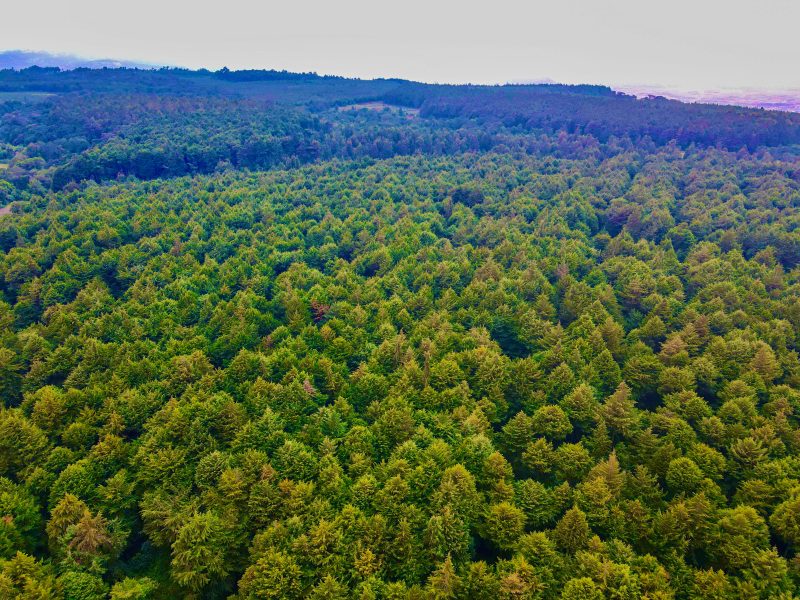
NANDI, Kenya, June 26 – Senior government officials, professionals and local residents have planted about 75,000 indigenous trees in Chepkiep/Kiptangus Forest as part of efforts to restore the Nandi Escarpment and support the government’s target of growing 15 billion trees by 2032.
The initiative, organised by the Nandi Integrated Forum for Environmental Conservation, aims to plant 150,000 indigenous trees through a partnership involving the national government, Nandi County, local communities, professionals and development partners.
The restoration drive seeks to rehabilitate one of Kenya’s key water towers while improving climate resilience and protecting livelihoods that depend on the forest ecosystem.
Head of Public Service Felix Koskei, who led the exercise, urged landowners across Nandi County to plant trees along farm boundaries, saying conservation efforts should also generate economic benefits for communities living around forests.
Environment, Climate Change and Forestry Cabinet Secretary Deborah Mlongo Barasa challenged households to plant at least 80 trees on their farms as part of the country’s forest restoration programme.
Nandi Governor Stephen Sang called for structured community benefit programmes to encourage residents living near forests to protect restored ecosystems.
State Department for Immigration and Citizen Services Principal Secretary Belio Kipsang praised schools for taking part in the exercise, saying learning institutions have a critical role in nurturing environmental stewardship among young people.
Forestry Principal Secretary Gitonga Mugambi said Nandi County had already achieved about half of its tree-planting target under the national programme.
The initiative is being spearheaded by Nandi professionals led by Dr. Henry Rotich, Chairperson of the forum, Dr. Hosea Kili, the forum’s patron, and community representative Abraham Koech.
Koech, a resident of Chepkiep village, said years of deforestation had taken a toll on the area’s climate.
“Deforestation had disrupted rainfall patterns in the area for over 15 years.”
Rotich said long-term conservation efforts would only succeed if local communities were fully involved in protecting forests.
“Communities must be empowered as active owners of conservation, not passive observers, if restoration efforts are to endure.”
Climate action advocate Laura Sang called on schools and local communities to establish tree-planting initiatives in learning institutions to nurture a new generation of environmental stewards.
Beyond tree planting, organisers donated wheelchairs to persons living with disabilities and safety helmets to boda boda riders as part of community support activities.
The Nandi Escarpment stretches about 40 kilometres along the Nandi-Kakamega border and serves as an important water catchment and biodiversity corridor. Conservationists say restoring the forest will help reduce flooding in parts of the Nyanza region while protecting water sources that serve neighbouring communities.
The exercise attracted support from several public and private institutions, including the National Industrial Training Authority (NITA), Kenya Bureau of Standards (KEBS), County Pension Fund (CPF), Tourism Regulatory Authority (TRA), KASNEB Foundation, Kenya Forest Service (KFS), Kenya Seed Company, Eastern Produce Kenya Ltd, Kenya Red Cross, Green Belt Movement, Seedballs Kenya, the County Government of Nandi and the Chepkiep community.