NAIROBI, Kenya, April 29 – For Hillary Kiplagat Kibiwott, the recognition has come quickly and in waves. Only days after receiving a new Toyota Probox from the Kaptagat Integrated Conservation Programme (Kaptagat- ICP) to support his work in transporting tree seedlings, Kibiwott has been appointed Ambassador for Kenya’s 15 Billion Trees Campaign, placing him at the centre of the country’s push to restore tree cover to 30% by 2032. The appointment by the Cabinet Secretary for Environment, Climate Change and Forestry, Dr. Deborah Barasa, follows his Guinness World Records attempt to plant 23,326 trees in 24 hours in Kaptagat Forest, a feat that, if ratified, would mark one of the most intensive individual tree-planting efforts recorded.
The decision, according to the Ministry of Environment, reflects more than a single achievement. It recognises a broader ability to rally communities around conservation, turning what is often seen as technical policy into visible, collective action. The Cabinet Secretary described the role as earned and necessary. “It was a privilege to host Kenya’s tree-planting champion, Hillary Kibiwott, who planted 23,326 trees in 24 hours. I congratulate him on his appointment as Ambassador for Kenya’s 15 Billion Trees Campaign, a well-deserved role, as he awaits ratification of his record-breaking challenge by Guinness World Records. His leadership, commitment, resilience and expertise in mobilising diverse stakeholders will help scale forest conservation and inspire a nationwide restoration movement.”
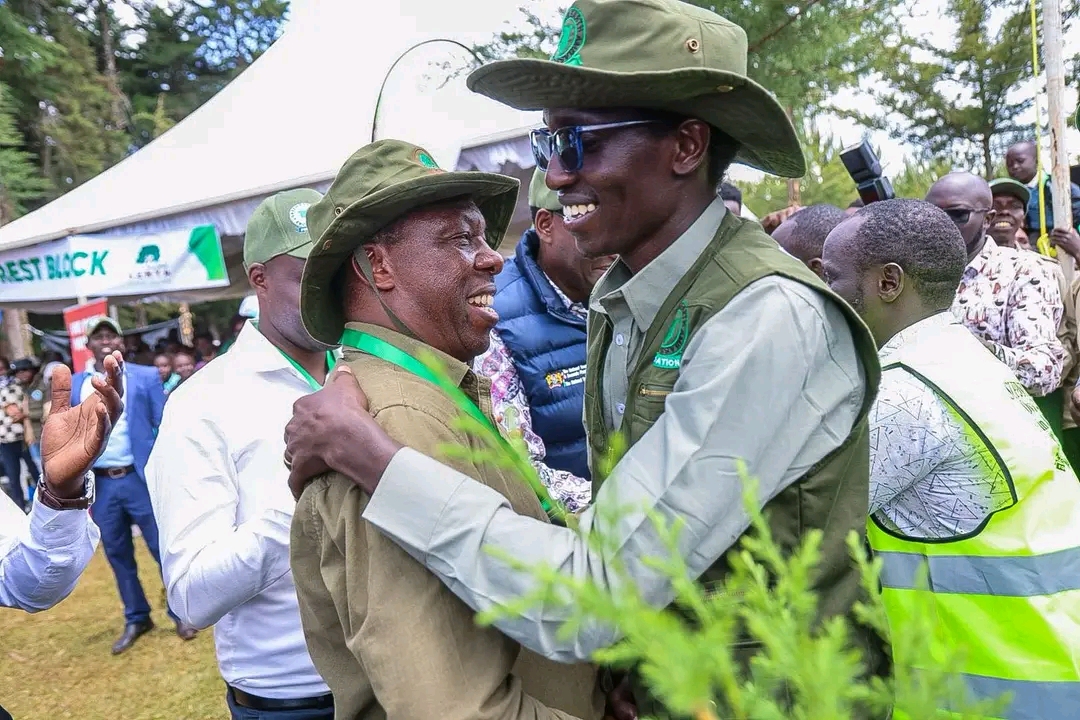
That urgency is echoed by the Principal Secretary in the State Department for Forestry, Gitonga Mugambi, “The speed at which he planted the trees sends us a clear message: we do not have the luxury of time, we must move with urgency to restore our forests. His appointment as Ambassador for the 15 Billion Trees Campaign is one of many recognitions to come for putting nature first. Hillary, you have our full support as you mobilise young people across all 47 counties to drive rapid forest restoration.”
Kaptagat Forest, where Hillary Kibiwott launched his record attempt, is increasingly being cited as a model for forest conservation. The approach places communities at the centre, shifting away from restrictive protection to a more inclusive model that asks a fundamental question, why do people turn to the forest in ways that lead to degradation?
The answers have shaped a strategy that links conservation with livelihoods, ensuring that communities sustainably benefit economically from the forest. In doing so, they are not excluded from the ecosystem but become its custodians, protecting the very resource that sustains their economy. As Kenya accelerates its restoration efforts, Kaptagat offers a glimpse of what scaled, community-led conservation could look like, grounded not only in environmental need but in economic reality.