JAKARTA, Indonesia, July 5 – Indian Prime Minister Narendra Modi arrived in Indonesia on Monday, kicking off a three-nation tour aimed at strengthening New Delhi’s engagement in the Indo-Pacific region and advancing its Act East Policy.
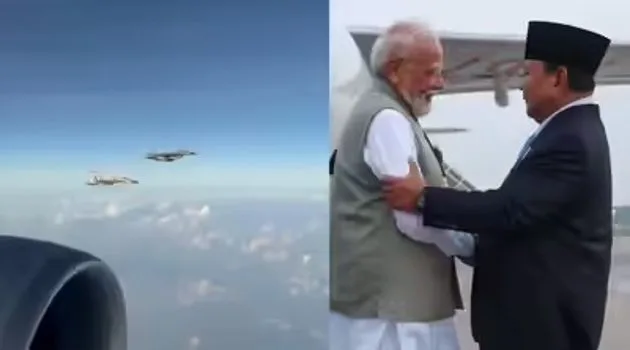
Modi was received at the airport by Indonesian President Prabowo Subianto, underscoring the growing strategic partnership between the two countries.
Ahead of his departure from New Delhi, Modi said the visits to Indonesia, Australia and New Zealand would reinforce India’s commitment to a free, open and inclusive Indo-Pacific while advancing its MAHASAGAR Vision.
MAHASAGAR, which stands for Mutual and Holistic Advancement for Security Across the Regions, is India’s framework for promoting regional security, connectivity and economic growth.
The Indian leader noted that India and Indonesia elevated their relationship to a Comprehensive Strategic Partnership during his visit to Jakarta in 2018.
“This will be my first bilateral visit to Indonesia since the elevation of our ties and follows President Prabowo’s State Visit to India as Chief Guest during the Republic Day celebrations in January 2025,” Modi said.
He added that the two countries share strong historical, cultural and people-to-people connections and expressed confidence that the visit would further strengthen cooperation across multiple sectors.
During his stay, Modi is expected to engage with members of the Indian diaspora and visit the historic Prambanan Temple complex in Yogyakarta alongside President Prabowo.
The centuries-old Prambanan complex, located about 17 kilometres northeast of Yogyakarta, is Indonesia’s largest Hindu temple and is regarded as a symbol of the longstanding cultural links between India and Indonesia.
After concluding his visit to Indonesia, Modi will travel to Melbourne for talks with Australian Prime Minister Anthony Albanese before heading to Auckland for meetings with New Zealand Prime Minister Christopher Luxon, completing the final leg of his tour.
The three-country visit comes as India seeks to deepen economic, strategic and diplomatic ties across the Indo-Pacific region.