NAIROBI,Kenya,Nov 16 – Kenya’s second-hand clothing trade is supporting millions of livelihoods while extending the useful life of garments, placing it at the centre of the debate on how the global textile industry should address waste and embrace a circular economy.
As governments consider tighter regulations on textile imports and disposal, there is a need to distinguish between wearable second-hand clothing and garments that have reached the end of their useful life.
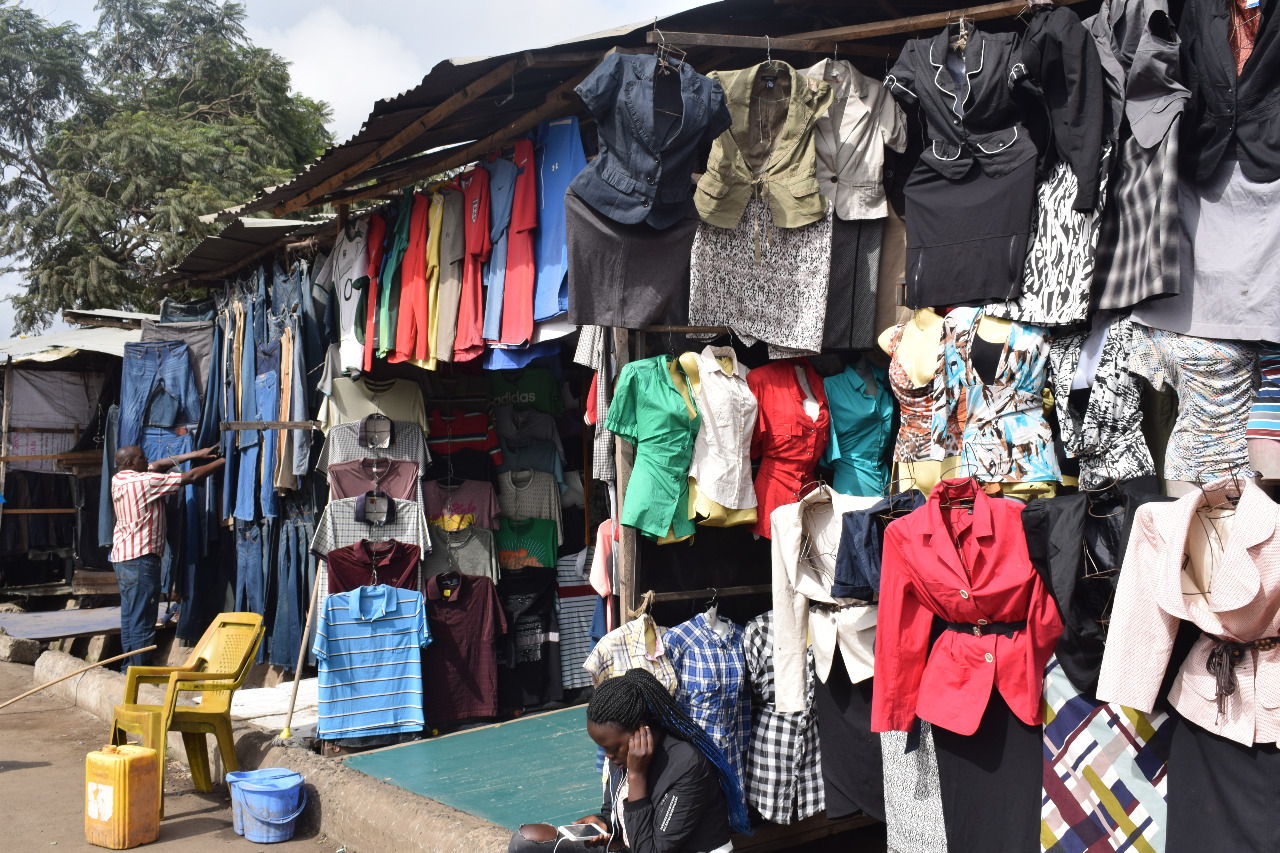
In Kenya, the trade supports importers, wholesalers, transporters, market vendors, tailors and repair businesses.
It also provides affordable clothing to millions of households, creating economic opportunities for women, young people and small-scale entrepreneurs.
According to the Kenya National Bureau of Statistics’ Economic Survey 2026, the value of second-hand clothing imports increased from Sh18.96 billion in 2021 to Sh30.26 billion in 2025. Industry estimates indicate that the sector supports more than two million livelihoods nationally.
These figures demonstrate the economic significance of a trade that is frequently discussed in international textile policy debates primarily through the lens of waste management.
A garment does not become waste simply because its first owner no longer needs it. When it remains wearable, its continued use by another consumer preserves the resources invested in its production.
This is the principle underpinning a circular economy: keeping products in use for as long as possible before considering recycling or disposal.
Scientific research also supports prioritising reuse. A 2024 review published in Waste Management, titled Life Cycle Assessment Applications to Reuse, Recycling and Circular Practices for Textiles: A Review, examined 45 life-cycle assessment studies and found that reuse generally delivers greater environmental benefits than recycling.
While recycling remains important for garments that can no longer be worn or repaired, it should not displace reuse where clothing remains functional.
Kenya’s experience demonstrates how second-hand clothing markets can support this model at scale. Beyond extending the lifespan of garments, the trade sustains businesses and income streams across the supply chain.
However, recognising these benefits does not mean overlooking the environmental challenges associated with the industry.
Garments that cannot be reused require responsible disposal, while inadequate waste collection, poor sanitation and limited recycling infrastructure remain concerns in many markets.
Improper disposal can contribute to pollution and increase pressure on municipal waste-management systems.
These challenges require targeted interventions rather than a blanket classification of second-hand clothing as textile waste.
A February 2026 report by the United Nations Economic Commission for Europe and the Economic Commission for Latin America and the Caribbean, titled Making Trade Work for Circularity: Improving Circularity in Second-Hand Clothing Through Trade Regulation, recognises that international trade can support textile circularity by connecting the supply of reusable clothing with consumer demand.
The report also identifies declining garment quality, inadequate sorting and the transfer of environmental burdens to importing countries as significant challenges, proposing stronger quality controls and technical regulations to improve the sustainability of the trade.
The priority should therefore be to ensure that garments entering international markets are genuinely suitable for reuse, rather than eliminate a trade that supports established economic networks.
Kenya’s position as a regional trading and distribution hub also needs consideration when assessing textile flows.
Some imported garments move through cross-border networks into neighbouring markets, meaning assessments should account for regional distribution, consumption and disposal patterns.
Regulations that fail to distinguish reusable clothing from unusable textile materials risk imposing unnecessary costs and restrictions on an industry operating on relatively tight margins.
Small-scale traders and informal businesses could bear a disproportionate share of the impact.
A just transition towards sustainable textiles must protect both the environment and the people whose livelihoods depend on existing economic systems.
This requires shared responsibility across the international textile industry.
Exporting countries should strengthen collection, sorting and quality-control systems to ensure garments entering international markets meet appropriate reuse standards.
Importing countries, meanwhile, should invest in market infrastructure, waste collection, repair enterprises and recycling capacity.
National and county governments also have a responsibility to provide the public services and policy frameworks needed to manage textile flows responsibly.
In Kenya, this means recognising the second-hand clothing sector as a partner in the country’s circular economy ambitions.
Better trading spaces, sanitation, drainage and waste collection would address environmental concerns while improving traders’ working conditions.
For the Mitumba Consortium Association of Kenya, investment in infrastructure, quality control and shared responsibility must accompany regulatory interventions.
Reuse systems should be strengthened, while materials that cannot be reused must be managed responsibly.
Africa should not be viewed merely as a destination for unwanted clothing or the final stage in the global textile waste chain. Its markets are home to consumers, entrepreneurs and established reuse networks that create economic value from garments beyond their first use.
The global circular economy will not succeed by treating these systems as obstacles to progress.
It must recognise and invest in them.
The challenge is to strengthen legitimate reuse markets, improve the management of non-reusable materials and ensure environmental responsibility advances alongside economic opportunity.
Teresia Njenga is the Chairperson of the Mitumba Consortium Association of Kenya (MCAK).