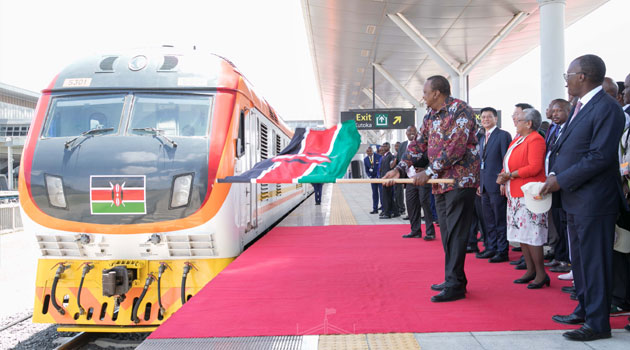
NAIROBI, Kenya, Nov 15 – President William Ruto has challenged opposition leaders over their interpretation of a World Bank report that raises concerns about corruption and procurement weaknesses in the construction of the Standard Gauge Railway (SGR), arguing that the project was undertaken under a previous administration.
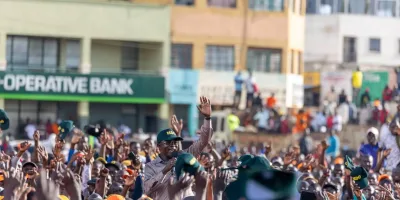
Speaking in Narok, Ruto accused opposition politicians of selectively quoting the report while questioning their own possible links to the procurement dealings surrounding the railway.
“I have heard some leaders saying that the World Bank report said there was some corruption in procurement in government. What they are not saying is that the SGR was built under a different regime,” Ruto said.
“It could be that part of the money sponsoring your campaigns are proceeds of the SGR tenders. Don’t read part of the report and give us a lecture. Read the whole report,” he added.
The President’s remarks come days after the World Bank released its November 2026 Kenya Economic Update, which identified governance weaknesses in public procurement and cited the SGR as an example of how non-competitive contracting and questionable land compensation practices can increase infrastructure costs.
The report estimates that Kenya could have saved up to US$900 million (Sh117 billion) in initial construction costs had the Mombasa-Nairobi railway been delivered at the same cost per kilometer as Tanzania’s Dar es Salaam-Dodoma line.
It attributes at least 30 percent of the potential savings to governance challenges, including preference for direct contracting over competitive tendering, land speculation and alleged fraud involving land titling, valuation and compensation.
The World Bank estimates that Kenya’s railway cost approximately Sh988 million per kilometer, compared with Sh741 million for Tanzania’s electrified railway and Sh689 million for the Djibouti-Addis Ababa line.
The findings have also drawn criticism from opposition leaders, with Nairobi Senator Edwin Sifuna arguing that the report validates longstanding concerns over opaque government transactions and inadequate accountability in public spending.
Sifuna questioned the limited disclosure of government procurement information, noting that although public procurement accounts for approximately 10 percent of Kenya’s Gross Domestic Product (GDP), only Sh410 billion had some procurement information published for the 2024/25 financial year.
He further argued that the country needed stronger institutions and accountability mechanisms rather than an exclusive focus on infrastructure development.
The World Bank report identifies procurement transparency as a major governance challenge, noting that more detailed information, including contract amounts and successful bidders, was available for only Sh186 billion during the same financial year.
The disclosure gap raises concerns about public oversight of government contracts, particularly as procurement remains a significant channel through which public resources are spent.
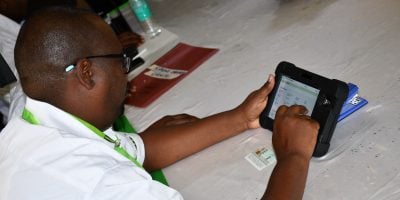
The findings come as the government pursues reforms, including the rollout of an electronic government procurement system intended to improve transparency, competition and oversight.