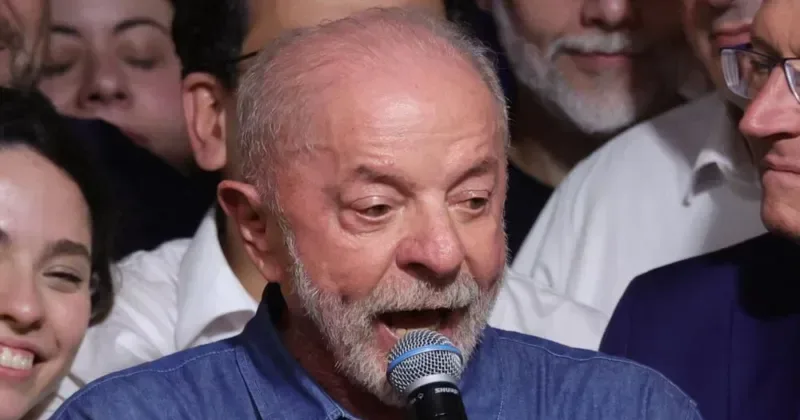
BRASILIA, Brazil, Oct 26 — Brazil’s left-wing President Luiz Inácio Lula da Silva has won an unprecedented fourth presidential term after defeating right-wing challenger Flávio Bolsonaro in a dramatic election comeback that defied expectations.
Lula, 80, secured approximately 51.8 per cent of the valid votes in Sunday’s presidential runoff, against 48.2 per cent for Bolsonaro, according to official results.
The victory marks a historic achievement for the Workers’ Party (PT) leader, who overturned his first-round defeat to emerge victorious in the October 25 election.
Brazil’s electoral authorities confirmed Lula’s victory after the final round of voting, handing him another four years in office beginning January 5, 2027.
The result makes Lula the first Brazilian president since the country’s return to democracy to win four presidential elections through direct popular voting.
He previously served two consecutive terms between 2003 and 2010 before returning to power in January 2023 following his victory over Bolsonaro’s father, former President Jair Bolsonaro.
Lula’s latest victory also marks the first time a presidential candidate who finished second in Brazil’s first round has gone on to win the runoff election.
The election outcome represents a remarkable political turnaround for Lula, who entered the runoff facing a difficult challenge after trailing Bolsonaro in the October 4 first round.
Bolsonaro had secured 47.03 per cent of the valid votes in the initial round, compared with Lula’s 45.16 per cent, forcing the two candidates into a second contest.
However, Lula mounted an aggressive campaign in the weeks leading up to the runoff, mobilising supporters through public rallies, social media engagements and efforts to attract undecided voters.
His campaign focused on the cost of living, workers’ rights, social welfare programmes and defending democratic institutions.
The president also sought to appeal to lower-income voters by highlighting his administration’s policies aimed at reducing poverty and improving access to public services.
The mobilisation helped Lula overcome his initial disadvantage and secure a narrow victory over Bolsonaro.
The result triggered celebrations among supporters in major Brazilian cities, particularly in São Paulo, where Lula followed the vote count.
Flávio Bolsonaro, a senator and son of former President Jair Bolsonaro, had sought to capitalise on dissatisfaction with the government and growing support for conservative politics.
His campaign received backing from supporters of his father, who remains a prominent figure in Brazil’s right-wing movement.
However, the younger Bolsonaro refused to accept defeat following the announcement of Lula’s victory and indicated that he would seek to challenge the election outcome.
The election was also marked by disputes over voting arrangements, including transportation difficulties reported in several regions.
Brazil’s Supreme Court authorised an extension of voting hours in response to concerns about access to polling stations.
The electoral authorities subsequently confirmed Lula’s victory, with the final result reflecting a closely contested race between the two candidates.
Despite his electoral victory, Lula faces significant challenges as he prepares to begin his fourth term.
Brazil remains politically divided, with a strong conservative presence in Congress expected to complicate efforts to implement his legislative agenda.
The president will also have to contend with economic pressures, including high interest rates, public debt and concerns about household spending.
His administration is expected to prioritise social programmes, economic growth, workers’ rights and measures aimed at reducing inequality.
Lula has also pledged to defend Brazil’s sovereignty and strengthen the country’s international partnerships.
The president’s fourth term will begin on January 5, 2027, following his inauguration.
Lula’s victory represents a setback for Brazil’s conservative political movement, which had hoped Flávio Bolsonaro would succeed in returning the Bolsonaro family to the presidency.
The result also carries implications for regional politics, as several Latin American countries have experienced a shift towards right-wing leadership in recent years.
Lula’s re-election is expected to reinforce the influence of Brazil’s left-wing political movement and maintain his country’s role in regional diplomatic and economic initiatives.
The president has previously positioned Brazil as a leading voice on issues including climate change, international cooperation and economic development.
His victory is expected to shape the country’s political direction for the next four years as the administration seeks to balance social spending, economic stability and relations with a divided Congress.
Lula’s fourth presidential election victory concludes a remarkable political comeback for the veteran leader, who returned to power in 2023 after losing the presidency in 2018 and subsequently winning the 2022 election.
The 2026 result now sets the stage for another term in office as Brazil prepares for a new chapter under his leadership.