NAIROBI, Kenya, July 10 – President William Ruto has said that the planned oil refinery in Lamu, being developed in partnership with Nigerian billionaire Aliko Dangote, will create at least 60,000 jobs while positioning Kenya as a regional energy and industrial hub.
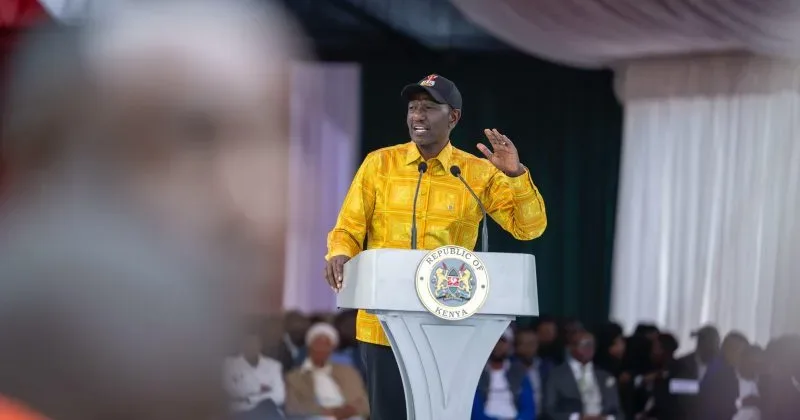
The head of state, who spoke during the NYOTA Tranche II disbursement, linked the proposed refinery to the government’s broader industrialization agenda, arguing that large-scale infrastructure projects will play a critical role in creating jobs and attracting long-term investment.
“That refinery in Lamu that I have agreed with the Investor Aliko Dangote will create jobs for our young people,” he said.
The planned refinery represents one of the largest private investment projects ever proposed in Kenya.
According to Bloomberg, Africa’s richest man, Aliko Dangote, has selected Lamu County as the preferred site for the refinery, which is estimated to cost about Sh2.2 trillion.
Once completed, the facility is expected to process up to 700,000 barrels of crude oil per day, making it the largest refinery in East Africa and the second largest in Africa after Dangote’s flagship refinery in Lagos, Nigeria.
The investment would significantly expand Kenya’s role in the regional petroleum value chain at a time when East African countries continue to rely heavily on imported refined fuel despite increasing oil discoveries across the region.
Preliminary work on the project has already begun, with a site identified on Lamu Island and engineering design, soil testing and feasibility assessments currently underway.
The construction is expected to take approximately five years.
Financing is expected to come from a combination of Dangote Group’s internal resources, corporate bond issuances and proceeds from a planned initial public offering.
The refinery proposal builds on Dangote’s announcement earlier this year that he intended to replicate his Nigerian refining model in East Africa.
Speaking during the Africa We Build Summit in Nairobi in April, Dangote said his group was prepared to invest in a large-scale refinery if governments in the region provided the necessary policy and regulatory support.
“I can give commitment… if they will support the refinery, we’ll build the identical one that we have in Nigeria,” he said earlier, adding that the project could be completed within four to five years.
The proposed facility is expected to supply refined petroleum products across Kenya, Uganda, Tanzania, South Sudan and the Democratic Republic of the Congo, potentially reducing the region’s dependence on imported fuels while improving energy security and lowering supply chain costs.
For Kenya, the investment could also unlock new opportunities in logistics, storage, shipping, petrochemicals and manufacturing, leveraging Lamu Port’s strategic position under the Lamu Port-South Sudan-Ethiopia Transport (LAPSSET) Corridor.