NAIROBI, Kenya, Aug 27 – The chairperson of the Kenya National Commission on Human Rights (KNCHR), Claris Ogangah, has called for new rules to restrict demonstrations around key government and judicial institutions, including Parliament, State House and Judiciary buildings.
Ogangah said the proposed regulations should define where demonstrations can take place, the hours within which they can be held and the public institutions that should be protected from direct protest action.
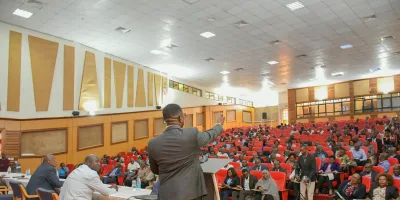
Speaking on Thursday during the Katiba at 16 symposium at the Kenyatta International Convention Centre (KICC), Ogangah said the proposal should be considered through a broad public debate before any legislation is introduced.
“Having seen how protests are done in Kenya, it is very important that we go ahead and provide legislation to provide the parameters within which people can demonstrate,” she said.
She specifically identified Parliament, the Judiciary and State House as institutions whose immediate surroundings could be placed under restrictions because of their security significance.
“If you look at international best practices, places like Parliament, Judiciary and State House buildings are considered national security, and citizens are not allowed to protest around those areas,” Ogangah said.
Her proposal comes amid renewed debate over the conduct of demonstrations following a series of protests that have at times been accompanied by clashes, destruction of property and allegations of criminal elements infiltrating otherwise peaceful gatherings.
Ogangah said Kenya should examine how other countries regulate demonstrations, arguing that restrictions on access to certain sensitive government installations are not unique to the country.
“Kenya will not be the first country to do this. It is done globally,” she said, adding that some jurisdictions prescribe the locations protesters can use, areas they cannot approach and the periods during which demonstrations can be held.
The proposal comes against the backdrop of the events of June 25, 2024, when anti-Finance Bill protests escalated into some of the most serious unrest Kenya had witnessed in years.
The demonstrations, which had initially been largely peaceful, turned violent after lawmakers passed the Finance Bill 2024. Protesters breached Parliament grounds, with sections of the parliamentary complex set on fire, while police responded with live ammunition, tear gas and water cannons.
The Kenya National Commission on Human Rights later reported that the violence that followed the June 25 protests resulted in deaths, injuries, arrests and extensive damage to property. By July 1, 2024, the Commission had recorded 39 deaths and 361 injuries linked to the protests between June 18 and July 1. It also documented 627 arrests and 32 reported cases of enforced or involuntary disappearances.
The Commission has, however, consistently maintained that the right to peaceful protest is protected by the Constitution. Article 37 guarantees every person the right to assemble, demonstrate, picket and present petitions to public authorities, provided the conduct is peaceful and unarmed. KNCHR invoked the provision even during the first phase of the 2024 protests, while condemning arbitrary arrests and police brutality.
The June 25, 2024 violence also shaped subsequent discussions about the security of critical government installations. KNCHR said the protests later involved attacks on several government buildings, including sections of Parliament and the Supreme Court, while also condemning excessive force against protesters and attacks on medical personnel, lawyers and journalists.
The debate resurfaced during the June 25, 2025 anniversary demonstrations, when thousands of Kenyans returned to the streets to commemorate the first anniversary of the deadly 2024 protests. KNCHR reported eight fatalities by the evening of June 25, 2025, more than 400 casualties and at least 61 arrests. The Commission also reported the infiltration of demonstrations by groups it described as criminal elements, including alleged hired goons involved in violence, looting and destruction of property.
Ogangah’s proposal therefore places renewed focus on how Kenya can balance the constitutional right to protest with the protection of critical public institutions and the safety of demonstrators, security officers and the wider public.
She said any proposed restrictions should not be imposed without public participation, signalling the need for a wider national conversation on the scope and limits of demonstrations.
The proposed framework would need to strike a delicate balance between preventing violence around sensitive installations and ensuring that restrictions do not effectively undermine Kenyans’ constitutional right to hold their leaders and public institutions to account.
The KNCHR chairperson said the discussion should consequently focus not on abolishing demonstrations but on establishing clear rules governing how, when and where they can be conducted.