NAIROBI, Kenya, July 23 – Kenya’s Small and Medium Enterprises (SMEs) must shift from simply trading products to building value-added enterprises capable of competing in regional and global markets, industry leaders said on Thursday.
The leaders speaking during the Third Annual SMS Conference Awards and Exhibitions warned that the sector continues to face a Sh3 trillion financing gap despite growing policy support.
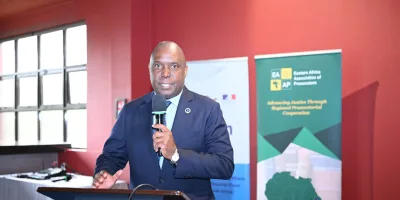
Equity Bank Kenya Commercial Director Kagiso Moloi said unlocking SME growth will require more than access to credit, calling for stronger value chains, market linkages and financial products tailored to entrepreneurs.
“Our job as financiers is to walk that whole journey with them,from the first till number to the first export invoice.”
“A market is worth more than a loan. You can finance a workshop, but if nobody is buying, you only have a funded warehouse.”
Moloi said Kenya’s revised MSME Policy 2026 estimates that SMEs face a financing deficit of about Sh3 trillion, a gap that cannot be bridged by government alone but requires banks, development partners and entrepreneurs to work together.
According to Moloi,value addition remains one of Kenya’s biggest untapped opportunities, noting that businesses can significantly increase earnings by processing, branding and redesigning products before selling them to local and international buyers.
Separately, Konrad-Adenauer-Stiftung (KAS) Kenya Programme Coordinator Victor Oteku urged policymakers to create an enabling business environment that encourages innovation, formalisation and adoption of emerging technologies.
“Innovation requires more than creativity. It requires supportive policies, access to finance, strong institutions, vibrant markets and collaboration.”
“Our responsibility is to make sure that MSMEs are not left behind in this transformation.”
Oteku said many SMEs continue operating in the informal economy because of regulatory and compliance challenges, urging government to create incentives that encourage voluntary formalisation rather than imposing punitive costs on young businesses.
He called for greater investment in artificial intelligence, stronger institutions and closer collaboration between government, academia and the private sector to help enterprises withstand economic shocks and become globally competitive.
Speakers agreed that building stronger value chains, expanding access to affordable finance and creating a more supportive policy environment will be critical to transforming Kenya’s SMEs into sustainable businesses capable of creating jobs, boosting exports and driving inclusive economic growth.