NAIROBI, Kenya, Jul 22 – President William Ruto has intensified plans to establish the Kenya Home of Human Origins Museum and Science Park in the Lake Turkana Basin, positioning the ambitious project as a catalyst for the repatriation of thousands of Kenyan cultural artefacts currently held abroad while transforming northern Kenya into a global hub for archaeology, scientific research and heritage tourism.
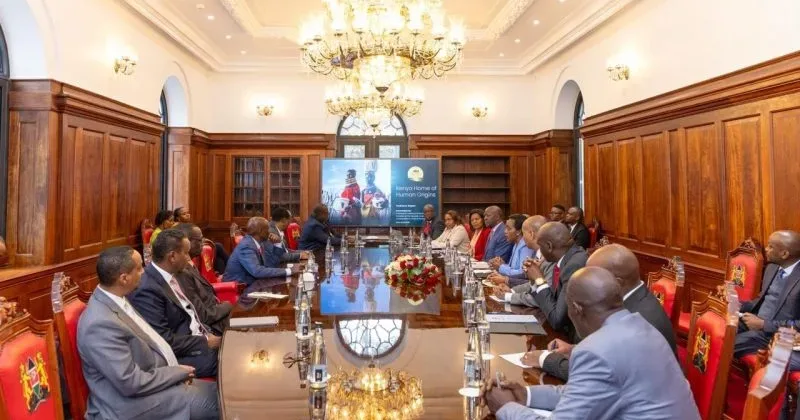
The President said he had received a progress briefing on the flagship project, which is being spearheaded by a presidential taskforce in collaboration with the National Museums of Kenya.
According to Ruto, the museum and science park will be established in the Kalokol area, strategically located between Turkana and Marsabit counties, to capitalize on the region’s globally significant archaeological heritage.
A key objective of the initiative is to facilitate the return of approximately 32,000 Kenyan heritage collections currently housed in museums and institutions across the world.
“Received a progress brief on the Kenya Home of Human Origins Museum and Science Park project that is set to be established in the Lake Turkana Basin,” Ruto said.
He noted that the project aims to transform the region into a global centre for research, preservation of heritage and eco-tourism, leveraging Lake Turkana’s internationally renowned archaeological sites.
Beyond its cultural significance, the President said the project is designed to spur socio-economic development in one of Kenya’s most marginalized regions.
He said surrounding communities are expected to benefit from investments in water infrastructure for households and livestock, improved security, enhanced digital connectivity, better roads and other infrastructure, upgraded health and education facilities, and the renovation of existing museums.
The initiative is also expected to stimulate tourism, create jobs, attract researchers from around the world, and generate new economic opportunities for residents through heritage-based development.
Lake Turkana has long been regarded as one of the world’s most important archaeological landscapes, earning global recognition for discoveries that have reshaped understanding of human evolution.
Among its most celebrated finds is the 1.6-million-year-old Turkana Boy, one of the most complete early human skeletons ever discovered, as well as some of the oldest known stone tools used by early humans.