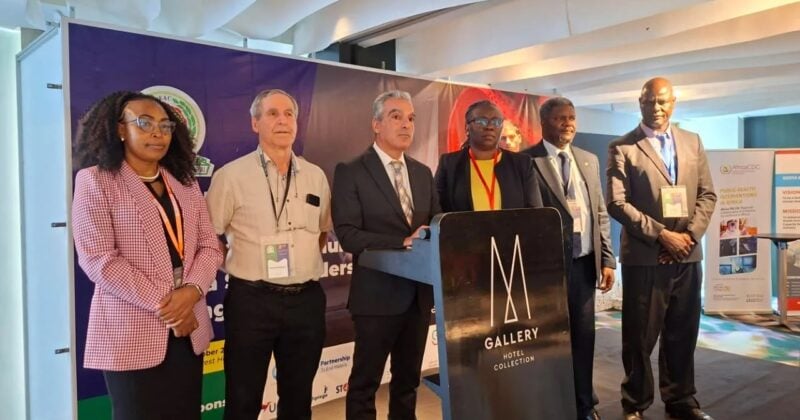
NAIROBI, Kenya, Oct 8— The malaria threat in East Africa could worsen as climate change and an impending El Niño episode create conditions favourable for mosquito breeding and transmission, Israel’s Ambassador to Kenya Gideon Behar has warned, urging governments to move quickly from planning to action.
Behar said rising temperatures, changing rainfall patterns and increased water availability were enabling malaria-carrying mosquitoes to spread into areas where they had previously been less prevalent.
“Malaria is on the rise,” Behar told the 2nd East African Community Malaria Stakeholders Meeting in Nairobi, where regional health experts are assessing progress towards the 2030 elimination target.
“One of the reasons, of course, is climate change,” he said, noting that mosquitoes could now reach “higher places, colder places, [and] northern places” as environmental conditions change.
Behar, who earlier served as Israel’s special envoy for climate change and sustainability, said the region must prepare for the additional malaria burden that could accompany changing weather patterns.
“And now we are just in front of an El Niño. And El Niño will have an effect on malaria in Eastern Africa. That’s for sure,” he said.
He challenged governments and health agencies to assess whether they had done enough to prepare for the potential increase in cases.
“How do we prepare ourselves for that, for the rise of malaria? Do we take all the necessary measures? Have we taken the necessary measures? Have we prepared the plans?” Behar asked.
Behar’s warning came as the World Health Organization said Africa remains off track on both malaria morbidity and mortality targets under the Global Technical Strategy.
WHO Kenya Deputy Representative Dr. Boston Zimba said the World Malaria Report 2025 estimated 282 million malaria cases globally in 2024, an increase of nine million from the previous year.
Africa accounted for 94 per cent of global malaria cases and 95 per cent of malaria deaths, highlighting the continent’s central role in the global fight against the disease.
“Analysis of the progress towards meeting Global Technical Strategy (GTS) 2025 target shows that in 2024 the African region was off track for both malaria morbidity and mortality milestones,” Zimba said.
He identified six priorities that must underpin Africa’s push towards elimination: political leadership and advocacy; innovation and new tools; data and digital health; health financing and quality of care; tackling emerging biological threats; and addressing the intersection between climate change, health and malaria.
Zimba said climate change was increasingly altering malaria transmission patterns by creating conditions favourable for mosquito breeding and survival.
“Climate change has become a crisis, especially for vulnerable regions and populations,” he said.
He warned that flooding, extreme weather, temperature variations and high humidity could create new mosquito breeding sites and increase mosquito survival, potentially affecting transmission in different parts of Africa.
“The implication is that programmes must incorporate in their intervention mixes … the effects of climate change to ensure proper adaptation and strategies,” Zimba said.
Regional response
The warnings come as the EAC seeks to strengthen regional cooperation on malaria, including surveillance, drug-resistance monitoring, diagnostics, vector control and cross-border interventions.
Edwin Onyango, representing the Ministry of Health, said malaria elimination would ultimately depend on strong community and primary healthcare systems, with Kenya’s community health promoters playing a key role in identifying illnesses and linking households to health services.
He said East African countries must also strengthen cooperation on drug resistance, surveillance and cross-border malaria control.
“East Africa cannot eliminate malaria by working in isolation; we must all come together,” Onyango said.
The EAC is also pushing the establishment of a regional network to monitor and mitigate antimalarial drug resistance, following earlier regional meetings on the threat.
The EAC Secretariat said the Nairobi meeting was intended to take stock of recommendations made at the first stakeholders meeting in 2024 and translate them into concrete policy actions.
The regional body called for stronger political commitment and financing, including consideration of a proposed regional malaria fund.
Israel offers expertise
Behar said Israel’s experience could help strengthen the region’s response. Israel eliminated malaria after previously battling the disease domestically and now has expertise in malaria research, surveillance and elimination.
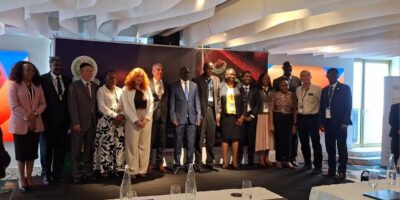
He said Israeli researchers from institutions including Hadassah Hospital, the Weizmann Institute, Hebrew University and Tel Aviv University were participating in the Nairobi meeting to share expertise with East African counterparts.
“For us, to work with the East African Community is very important. We want to strengthen the work of the East African Community, and we want to collaborate also on a regional basis,” Behar said.
He stressed that malaria elimination could not be achieved by countries acting individually, arguing that regional cooperation was essential because transmission and population movement cross national borders.
From talk to action
Behar also challenged delegates to ensure the meeting produces tangible action rather than another set of recommendations.
“The most important thing finally is to move from talk to action. We need to see progress on the ground,” he said.
He urged participants to identify immediate actions they could undertake after the meeting, alongside longer-term strategic interventions and new partnerships.
“Actions are what matters,” he said. “No one is working solo. We are working together and this is the thing that we have to do.”
The ambassador said Israel would continue supporting the EAC malaria meetings and cooperation with regional experts.
China’s experience was also presented to delegates as an example of how sustained political commitment, surveillance and targeted interventions can drive malaria towards elimination. China eliminated indigenous malaria transmission in 2017 and was certified malaria-free by the WHO in 2021.
With four years remaining to the 2030 deadline, the Nairobi meeting is focusing on whether East Africa can accelerate progress while confronting the growing impact of climate change, drug resistance, funding constraints, and changing transmission patterns.