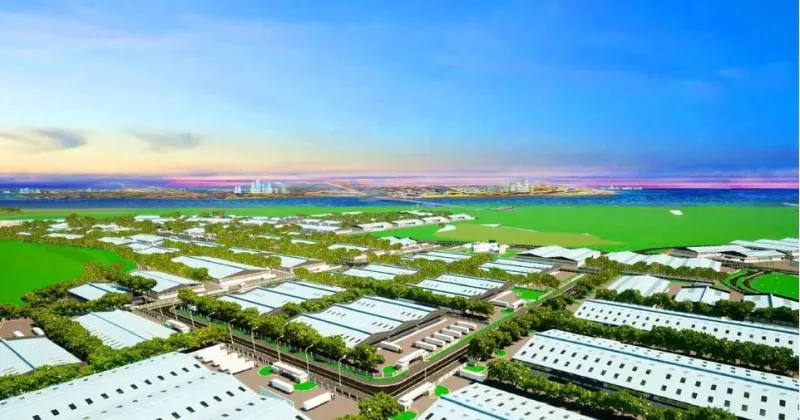
NAIROBI, Kenya, Jul 29 – Kenya has long wrestled with a familiar problem: while services account for more than half of the country’s economy, manufacturing has remained stubbornly below the 10 per cent contribution to Gross Domestic Product (GDP) envisioned under Vision 2030.
Kenya National Bureau of Statistics (KNBS) data show manufacturing’s share of GDP slipped further to 7.1 per cent in 2025 from 7.3 per cent in 2024, even as the broader economy continued to expand.
Successive governments have sought to reverse that trend through Special Economic Zones (SEZs)—purpose-built industrial enclaves offering tax incentives, simplified regulation and dedicated infrastructure to attract export-oriented manufacturers, logistics firms and value-addition industries.
Nearly a decade after the Special Economic Zones Act came into force, however, the question is no longer whether SEZs can drive industrialisation in theory, but whether Kenya’s flagship zones are delivering the investment, factories and jobs they were established to create.
Kenya has at least thirty-six gazetted Special Economic Zones spread across fourten counties, although figures published by the Special Economic Zones Authority (SEZA) vary slightly between reporting periods as additional zones and enterprises are licensed.
According to the National Investment Strategy 2024–2028, realized investment in SEZs had reached approximately US$960.7 million by early 2024, creating 4,392 jobs against an initial projection of 26,000.
The figures suggest investor interest is growing, but also highlight a significant gap between approved investments and fully operational industrial activity.
That contrast is most evident in Kenya’s three flagship developments: Dongo Kundu, Naivasha and Tatu City.
Dongo Kundu: Building Kenya’s maritime industrial gateway
Occupying roughly 3,000 acres south of the Port of Mombasa, Dongo Kundu is designed to capitalize on one of Kenya’s greatest competitive advantages—its position as East Africa’s principal maritime gateway.
The zone sits adjacent to the Port of Mombasa, the Dongo Kundu Bypass, the Standard Gauge Railway, Moi International Airport and regional highway corridors serving Uganda, Rwanda and South Sudan, while also offering manufacturers preferential access to African Continental Free Trade Area (AfCFTA) markets.
Despite those advantages, commercial development has progressed more slowly than initially anticipated.
The Ministry of Investments has acknowledged delays in the rollout of both Dongo Kundu and Naivasha, while the World Bank has identified land acquisition, compensation and financing constraints among the factors slowing implementation.
To accelerate development, the government signed lease agreements with Afreximbank in February 2025 to mobilize approximately US$1 billion (about Sh128.5 billion) for industrial infrastructure at Dongo Kundu and Naivasha.
President William Ruto said the financing would support pharmaceuticals, textiles, footwear, petrochemicals, agro-processing and electric mobility.
“It fuels industrialisation, manufacturing and agro-processing, reinforcing Kenya’s position as a regional export powerhouse,” the President said.
Government has also invested about Sh3 billion in additional SEZ infrastructure at Sagana, Thika, Eldoret and Busia as part of a broader industrialisation strategy.
Progress at Dongo Kundu is increasingly visible. Government disclosures indicate the Kenya Ports Authority has received 97 land applications covering nearly 7,000 acres, while Afreximbank has secured a further 500 acres for its own industrial park. Compensation for approximately 1,684 affected families has largely been completed, removing one of the project’s longest-standing bottlenecks.
Named investments include Taifa Gas’ LPG terminal, which is nearing completion, and Ruike Energy Group’s proposed oil refinery.
However, publicly available government data still does not provide a consolidated picture of how many licensed investors are fully operational or the total value of realized investment within the zone.
The World Bank argues this pattern is neither unusual nor unique to Kenya.
Its comparative study of African Special Economic Zones, led by economist Thomas Farole, concluded that successful zones depend less on generous tax incentives than on reliable infrastructure, efficient logistics, skilled labour and integration with the broader economy.
On Kenya specifically, the study found that port-related inefficiencies reduced many of the advantages offered by the country’s export-oriented industrial zones.
For now, Dongo Kundu is better described as a high-potential industrial platform than a mature manufacturing hub.
If Dongo Kundu represents Kenya’s maritime industrial strategy, the Naivasha Special Economic Zone reflects a different approach—leveraging inland logistics and abundant renewable energy to attract manufacturers.
Naivasha: Betting on logistics and geothermal power
Located adjacent to the Naivasha Inland Container Depot and the Standard Gauge Railway, the Naivasha Special Economic Zone was conceived as an inland extension of Mombasa’s logistics corridor.
Its biggest selling point is access to low-cost geothermal electricity from nearby Olkaria.
The government has reinforced that advantage through a dedicated 90 MVA substation costing approximately Sh700 million, enabling manufacturers within the zone to access electricity at around Sh5 per kilowatt hour.
Commissioning the facility, President Ruto described it as the location where manufacturers would access Kenya’s cheapest industrial electricity.
The zone has expanded rapidly from an initial 1,000 acres to about 6,000 acres, with a further 5,000-acre Naivasha II development planned at Mai Mahiu.
Investor interest has grown steadily. The zone initially hosted five companies before expanding to between fourteen and nineteen licensed investors by mid-2024.
Six additional companies licensed in 2025 announced plans to invest a combined Sh30 billion while creating more than 3,000 jobs.
Investors span agro-processing, electric vehicle assembly, packaging, glass manufacturing, logistics and energy equipment production.
Among the better-known projects are TAD Motors’ electric vehicle assembly plant, Crystal Frozen and Chilled Foods’ potato-processing factory, Horizon SEZ’s planned glass manufacturing facility and Africa Global Logistics’ logistics operations.
Combined investment commitments now exceed Sh50 billion, although consolidated figures for realized investment and operational employment remain unavailable.
As with Dongo Kundu, the challenge lies not in attracting investor commitments but in converting those commitments into operating factories and sustained production.
Tatu City: A private-sector benchmark
Where Dongo Kundu and Naivasha illustrate the opportunities and challenges of publicly developed industrial zones, Tatu City provides a useful private-sector comparison.
Developed on approximately 5,000 acres north of Nairobi, Tatu City has largely built infrastructure ahead of investor demand, allowing companies to begin operations soon after committing investment.
The results have been markedly different.
The mixed-use Special Economic Zone hosts approximately 88 companies that are operational or under development, employing more than 25,000 people and attracting investment exceeding Sh400 billion.
Around 40 enterprises hold formal SEZ licences, representing more than half of Kenya’s licensed SEZ companies.
Manufacturing tenants span medical products, pharmaceuticals, food processing, logistics, packaging and industrial services, with roughly 70 percent of manufacturers being Kenyan-owned.
Among the flagship investors is FullCare (Kenya) Medical SEZ, whose planned US$100 million medical apparel facility is expected to expand employment from approximately 1,800 workers to 7,000 once fully operational.
Hewa Tele SEZ Enterprises has similarly secured US$20 million from international development finance institutions to expand production of medical oxygen and gases for domestic and export markets.
Several manufacturers are already producing for export, with one solar-powered medical manufacturer projecting annual exports worth about US$60 million.
The contrast is instructive.
Rather than relying primarily on fiscal incentives, Tatu City’s performance suggests investors respond most strongly to serviced land, reliable infrastructure, efficient approvals and the ability to commence operations quickly.
Beyond incentives: Why implementation matters
Kenya’s SEZ strategy initially relied heavily on preferential tax rates, customs exemptions and simplified licensing procedures to attract investors.
Increasingly, however, policymakers acknowledge that incentives alone cannot overcome weaknesses in the wider business environment.
UN Trade and Development (UNCTAD) argues that successful Special Economic Zones function as integrated industrial ecosystems supported by efficient regulation, reliable infrastructure and strong investment facilitation rather than tax incentives alone.
Kenya has already begun shifting in that direction. The Business Laws (Amendment) Act, 2024 introduced a 10-year limit on certain SEZ tax incentives, signalling a gradual move toward performance-based investment support.
Even so, implementation remains the defining challenge.
The National Investment Strategy acknowledges that while Kenya has licensed dozens of zones and attracted substantial investor commitments, realized investment and employment continue to lag behind approved projects.
Manufacturers argue that the remaining constraints are increasingly practical rather than legislative.
The Kenya Association of Manufacturers (KAM) has consistently identified electricity costs, logistics efficiency, regulatory predictability and the overall cost of doing business as the principal barriers to industrial expansion.
KAM Board Vice Chair Hitesh Mediratta has urged greater collaboration between government and industry to increase manufacturing output and create jobs.
“The challenge is no longer just access, but the cost, efficiency and predictability,” KAM Chief Executive Tobias Alando said following publication of the association’s logistics study, which found transporting containers along key regional corridors remains both expensive and time-consuming.
Although the government reduced electricity tariffs by Sh0.27 per kilowatt hour in June 2026, manufacturers maintain that broader structural reforms remain necessary if Kenya is to compete effectively with regional industrial hubs.
The evidence suggests Kenya’s Special Economic Zone strategy is beginning to deliver—but unevenly.
Privately developed Tatu City has translated serviced land, completed infrastructure and investor certainty into thousands of jobs and billions of shillings in investment.
Publicly backed flagships such as Dongo Kundu and Naivasha have made substantial progress in land preparation, infrastructure development and investor commitments, but much of that momentum has yet to translate into large-scale manufacturing output.
International experience indicates that trajectory is not unusual. Industrial zones such as Shenzhen in China, Morocco’s Tangier Med and Ethiopia’s industrial parks all required years of sustained investment before emerging as globally competitive manufacturing hubs.
For Kenya, the challenge is therefore less about proving that Special Economic Zones can work than ensuring its own flagship developments move from construction to production before investors choose competing destinations.
Ultimately, Kenya’s industrial ambitions will not be measured by the number of zones it gazettes or investment agreements it signs, but by factory floors in operation, export growth, productivity gains and the quality of jobs those investments create.