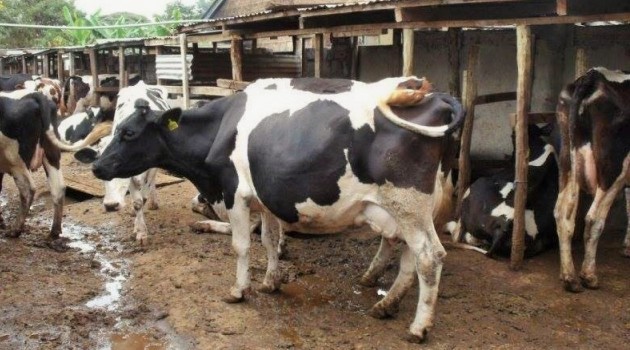
NAIROBI, Kenya, Nov 19 – Kenya’s dairy sector is losing opportunities to increase milk production and farmer incomes due to high animal feed costs, seasonal fodder shortages and weak market systems, a new assessment by Heifer International Kenya has found.
The report, titled Unlocking Kenya’s Dairy Potential Through Better Feed and Fodder Systems, identifies persistent gaps in feed production, quality assurance, animal health services and milk marketing as some of the structural challenges limiting the sector’s growth.
It notes that farmers continue to rely on expensive commercial concentrates during dry periods, while inadequate fodder conservation and inconsistent feed quality undermine milk production and profitability.
The assessment, which examines dairy systems across 11 counties, with deeper analysis in Nyandarua, Embu and Elgeyo Marakwet, argues that addressing the sector’s challenges will require investments beyond farm-level interventions to establish commercially viable feed and fodder supply chains.
In Nyandarua, rising feed prices, inadequate storage and limited mechanization have reduced the benefits of favorable agricultural conditions. In Embu, small land holdings of between 0.5- and 0.7-hectares limit farmers’ ability to produce enough fodder throughout the year, while stakeholders have raised concerns about the nutritional quality and safety of commercially available feeds.
Elgeyo Marakwet faces seasonal fodder shortages, weak feed markets and limited access to essential dairy services, with average milk production reported at approximately 1.7 litres per cow daily.
Likewise, the report highlights gaps in veterinary and extension services, noting that improved cattle breeds alone cannot deliver higher milk yields without adequate nutrition, preventive healthcare and consistent advisory support.
In a sample of 18 farmers surveyed in Nyandarua, 66 percent reported receiving no veterinary or extension visits in the preceding year, illustrating the challenges farmers face in accessing essential services.
The assessment also points to weaknesses in milk collection and marketing, despite investments in cooperative infrastructure and cooling facilities.
Although approximately 79 percent of farmers reportedly had access to functional milk cooling before sale, delayed payments from cooperatives and processors continue to push some producers towards informal traders who offer immediate cash.
In Nyandarua, cooperative payments can take between 30 and 60 days, while consultations in Embu found that informal buyers offered farmers up to Sh50 per litre at the farm gate.
The report argues that expanding cooling infrastructure alone will not necessarily increase milk deliveries to cooperatives unless farmers are offered competitive prices, reliable payments and incentives for supplying quality milk.
It also identifies limited access to affordable financing as a barrier to investment in commercial fodder production, mechanization, transport, cooling and processing, particularly for women, young people and emerging agribusinesses.
The report comes against the backdrop of a milk supply shortage that has disrupted distribution across the country, with supermarkets in Nairobi and other urban centers reporting dwindling stocks and limited availability of popular milk brands.
The shortage has been attributed largely to prolonged dry weather, which has reduced pasture and fodder availability, forcing farmers to spend more on animal feed while recording declining milk yields.
Data from the Kenya Dairy Board showed that formal milk deliveries to processors declined from 84.4 million litres in June 2026 to 81.3 million litres in July before falling further to 75 million litres in August, tightening supplies available to processors.
The developments have exposed the vulnerability of Kenya’s dairy supply chain to weather shocks and reinforced concerns raised in Heifer’s assessment about the high cost of feed, inadequate fodder conservation and limited investment in climate-resilient production systems.
The assessment recommends developing commercially sustainable fodder enterprises, strengthening feed-quality assurance and expanding access to mechanized harvesting and conservation services.
It also calls for integrating animal health, breeding, feeding and extension services to improve productivity, alongside stronger cooperative governance and more responsive financing models.
“Feed-system development needs to move beyond one-off fodder demonstrations towards reliable, commercially sustainable markets and services that connect producers, contractors, cooperatives and dairy farmers throughout the year,” the report states.
“Resilience needs to be integrated into viable dairy business models, rather than treated only as a training theme.”
The findings come as the government identifies commercial feed production, fodder conservation and mechanized production as investment priorities under the National Agri-food Systems Investment Plan.
The plan includes indicative allocations of Sh15 billion for commercial feed enterprises and aquaculture, and Sh10 billion for irrigated and mechanized feed and fodder production and reserves.
However, the report stresses that investments must reflect differences in county-level dairy systems, market maturity and local production conditions.
It recommends prioritizing commercially viable interventions over the next one to two years, while scaling quality seed systems, private-sector-led veterinary networks, processing capacity and climate-resilient infrastructure over the medium term.