JULY 18 – For years, pastoralist communities in Kenya have been marginalized and often excluded from participating in national affairs. Many are unable to engage in even the most basic civic duties, such as voting.
The reason? A lack of identification documents.
In West Pokot, 26-year-old Nancy Chepkemei is a living example of this reality.
A mother of one, she has faced tremendous hardship, most notably her inability to access basic services because she herself is undocumented.
Standing in a long queue at a national ID registration center, Chepkemei cradles her three-month-old child.
With quiet strength, she shares her story. She became pregnant while in Form One and was forced to drop out of school. She then moved in with her aunt in the remote village of Serewa.
It was only when she sought medical services for her newborn that she discovered neither she nor her child had birth certificates, marking the start of a long and difficult journey to claim legal recognition.
Talau Location Senior Chief David Biwott recalls the day Chepkemei came to him for help.
“When she came to me, she had no birth certificate, not even for her child, because she had given birth at home and had moved to a remote area. She had just returned,” he explains.
Determined to support her, Chief Biwott personally escorted her to her former school to obtain a leaving certificate, an essential document for adults registering for an ID without a birth certificate.
With this verification of her school attendance, her ID registration process began.

Most days, Chepkemei and her mother, Salome Maiyo, walk 8 kilometers each way to reach the nearest registration center.
Occasionally, they get a lift from the chief on his motorcycle. But on this particular day, they weren’t so lucky, they endured the entire 16-kilometer round trip on foot, baby in tow.
“This document means everything,” says Chepkemei. “I want to get my ID so I can register my child and ensure they never go through what I’ve gone through.”
Her story mirrors the struggle of thousands in similar situations, which is why the government’s rollout of live capture mobile kits is being hailed as a breakthrough.
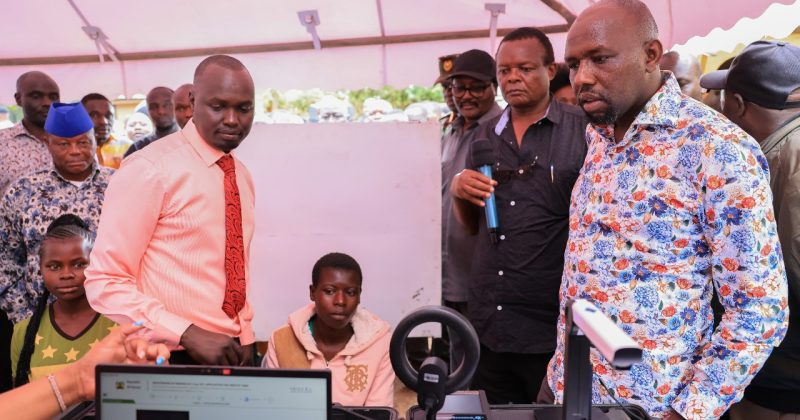
Interior Cabinet Secretary Kipchumba Murkomen recently termed the technology a game changer.
“Almost 50 percent of the adult population in West Pokot do not have IDs. We want to accelerate this process,” he said.
Referencing remarks made in Turkana, Murkomen emphasized that all pastoralist communities deserve equal opportunities to acquire birth certificates for their children, register for the Social Health Insurance Fund and participate in national development, including the right to choose their leaders.
On the vetting process, Murkomen stressed the importance of accuracy and accountability.
“Both the chief and the applicant have a responsibility to provide correct information. They sign binding documents, which are then subjected to strict security verification to prevent abuse.”
He added, “There are over 400,000 adults in Turkana alone without ID cards. This is a serious injustice. It denies them the right to fully participate in building the nation.”
“To address this, we are deploying mobile registration kits to every corner including remote pastoralist areas. Turkana alone spans 77,000 square kilometers. We must ensure affirmative action so that all eligible citizens are registered.”
Murkomen reiterated that the core objective is equity.
“Our goal is to ensure a person in Turkana is treated the same as someone in Nairobi. These mobile kits will follow nomadic communities wherever they go, so no one is left behind.”
Four kits are currently being piloted inTurkana and the results are promising.
Henry Kabao, an ICT officer at the National Registration Bureau, described the kits as portable and ideal for fieldwork.
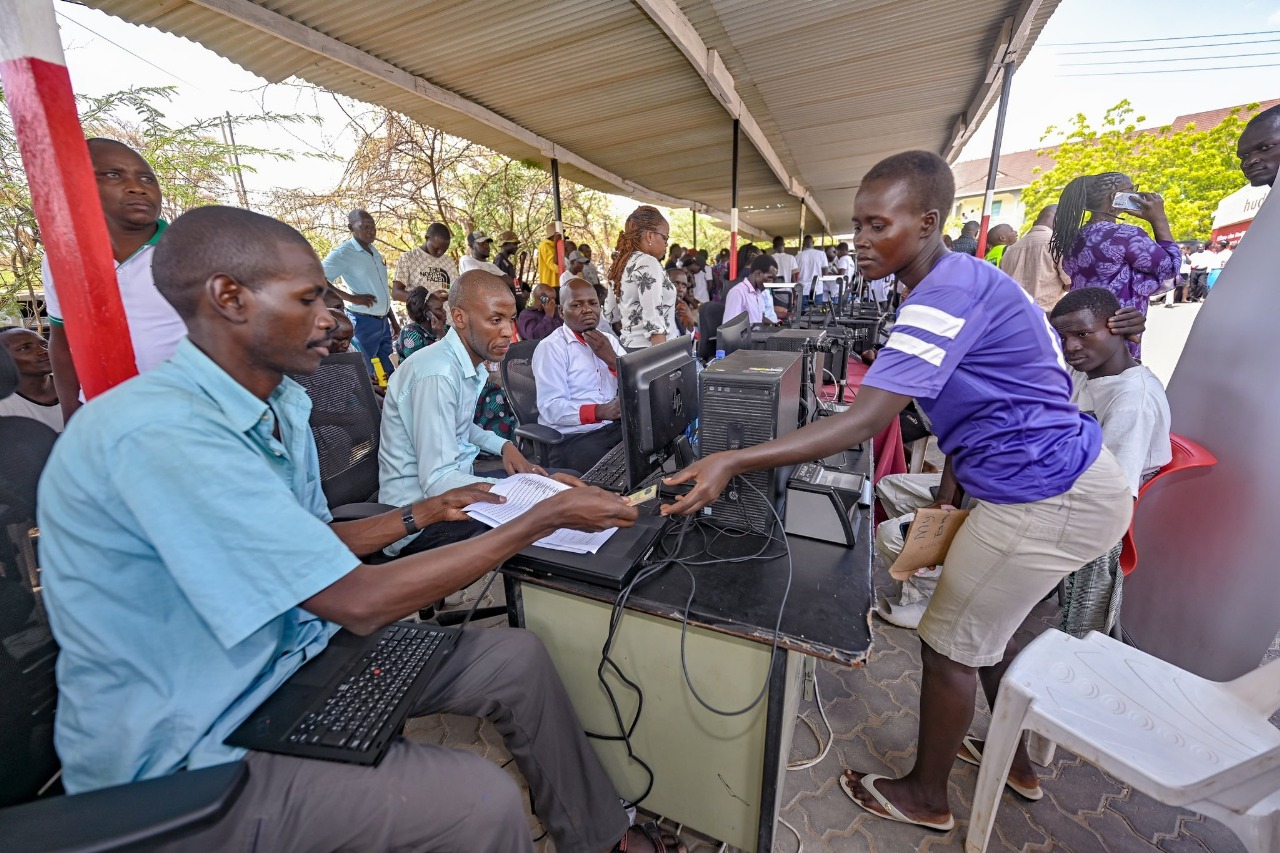
“These kits allow officers to register people right where they are. No need to travel to offices. We use portable modems for internet connectivity,” he said.
Even without immediate network coverage, the process isn’t disrupted.
“The kits have an offline backup feature. Once you reach an area with a network signal, the data syncs automatically,” Kabao added.
With this innovation, the government hopes to end the cycle of exclusion.
For women like Nancy Chepkemei, it could be the first step toward a future where she and her child are no longer invisible and where pastoralist communities finally have a fair chance to exercise their full rights as Kenyan citizens.