NAIROBI, Kenya, Oct 5 – The government has activated a comprehensive national response plan ahead of the expected onset of El Niño rains, placing key emergency agencies and relief resources on standby across the country.
The response is being coordinated under the National Contingency Plan through the National Disaster Operations Centre (NDOC), with interventions set to be scaled up depending on the severity and geographical spread of flooding and other rain-related hazards.
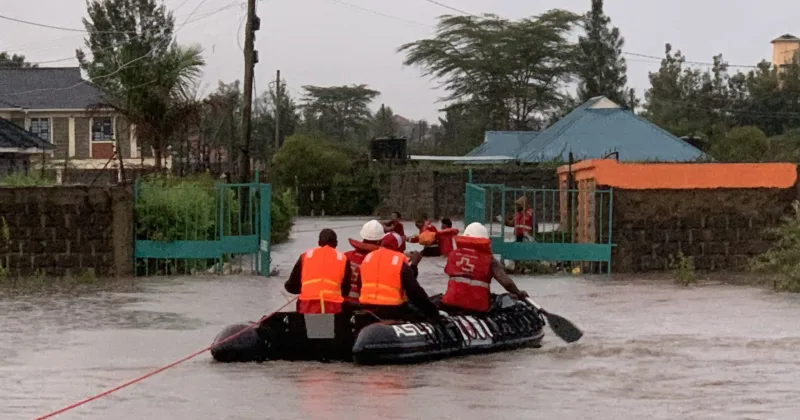
The Kenya Coast Guard Service, Kenya Defence Forces, National Police Service, Kenya Red Cross Society and National Youth Service will undertake round-the-clock search-and-rescue operations in areas affected by emergencies.
The government has also established designated evacuation and displacement centres and prepared a standardised registration system to identify, track and provide assistance to displaced populations.
Alternative access routes will be activated where roads and other transport infrastructure are disrupted, while air support will be mobilised through NDOC where necessary.
The government has deployed the Public Health Emergency Operations Centre (PHEOC) and the Incident Management System to coordinate emergency health services and strengthen surveillance amid the risk of waterborne and vector-borne diseases.
Water-quality surveillance will be intensified in affected areas, alongside the distribution of water-treatment products.
Authorities will also assess sanitation facilities in affected settlements to reduce contamination and other public health risks.
Supply chains for therapeutic and supplementary nutrition commodities have been secured to ensure continuity of essential services during the emergency.
To protect food security and livelihoods, pre-positioned food stocks are ready for release in 10 Priority 1 counties.
They are Tana River, Garissa, Kisumu, Busia, Nakuru, Mombasa, Kilifi, Wajir, Mandera and Turkana.
The government has also pre-positioned relief supplies and emergency shelter materials for deployment to evacuation and displacement centres.
Protection monitoring mechanisms are ready to identify and respond to the needs of vulnerable groups who may be affected by displacement.
Location-specific agricultural advisories will be issued to guide farmers as weather conditions evolve.
Animal disease surveillance will also be intensified to protect livestock and reduce the risk of disease outbreaks linked to the rains.
In the education sector, authorities will assess the condition and functionality of learning institutions in affected areas.
Measures have also been put in place to safeguard learning materials where schools are required to serve as temporary displacement centres.
The government said Governors, working with County Commissioners, will coordinate preparedness, response and recovery through County Disaster Risk Management Committees and County Emergency Operations Centres.
Counties will serve as the lead implementers within their jurisdictions while receiving technical support from national institutions.
At the sub-county level, Disaster Management Teams and Steering Groups will coordinate local preparedness, early warning and first-response activities.
They will work with National Government Administration Officers, community disaster management committees, community health promoters and other local partners.
The government said national and county institutions will coordinate resources through designated lead ministries, departments and agencies to minimise service gaps and duplication.
Humanitarian partners have also aligned their interventions with government priorities through established coordination structures.
Meanwhile, refugee operations in the Dadaab Complex, Kakuma and Kalobeyei will continue to be coordinated by the United Nations High Commissioner for Refugees (UNHCR) in partnership with the Department of Refugee Services.
The government said it will continue monitoring the situation through NDOC and county-level coordination structures and will update emergency plans and response measures as risks evolve.