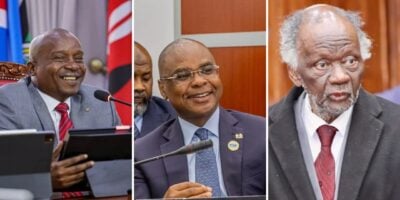
NAIROBI,Kenya Oct 21- Deputy President Kithure Kindiki has declared illicit alcohol a major threat to Kenya’s future, warning that the government will introduce tougher laws and intensify enforcement to dismantle networks involved in the production and sale of harmful alcoholic drinks.
Prof Kindiki said the government had elevated the fight against illicit brews and drug abuse, with the Office of the Deputy President coordinating a multi-agency response to strengthen enforcement and improve the effectiveness of interventions.
“We have classified this matter as among the top three threats to Kenya’s future. This alcohol menace can wipe out all the gains we have made as a country. This time round we are focused to make sure we complete the journey successfully,” he said.
The Deputy President, however, maintained that the crackdown was not intended to target legitimate businesses but to protect Kenyans, particularly young people, from the dangers posed by illicit alcohol.
“We are not fighting against businesses nor against the industry. We are just protecting the nation from collapse. No person will be allowed to benefit from the destruction of Kenyans, especially young people,” he said.
Prof Kindiki spoke on Wednesday at the Official Residence in Karen, Nairobi, where he received progress reports and held discussions on the measures with Inspector-General of Police, the Director of Public Prosecutions, representatives of the Council of Governors, Principal Secretaries and heads of relevant government agencies.
He said the campaign had been intensified over the past month through a whole-of-government approach bringing together agencies tasked with tackling illicit alcohol, counterfeit products and narcotics.
The agencies involved include the National Authority for the Campaign Against Alcohol and Drug Abuse (NACADA), the Anti-Counterfeit Authority, the Kenya Bureau of Standards (KEBS) and the Anti-Narcotics Unit of the Kenya Police Service, among others.
To sustain the operation, the government has established a permanent secretariat at Harambee House Annex to coordinate enforcement activities and ensure continued collaboration among the agencies.
“We established a permanent secretariat based at Harambee House Annex which will coordinate this matter on a continuous basis. We have resolved to support the agencies to beef up their capacity,” Prof Kindiki said.
He added that law enforcement agencies had been directed to support NACADA in strengthening operations, with the government seeking improved results from the crackdown.
The Deputy President said intensified coordination over the preceding 10 days had resulted in nine successful raids on premises involved in the illegal sale of ethanol and 116 raids targeting sellers of illicit brews across the country.
The government is also pursuing tougher penalties and amendments to the legal framework governing the manufacture, distribution and sale of illicit alcoholic drinks, as it seeks to close loopholes exploited by criminal networks.
Prof Kindiki said legislative proposals had been finalised to increase pressure on manufacturers, distributors and other individuals facilitating the supply of dangerous, chemically adulterated alcoholic drinks.
“The law is under review to make it extremely punitive. The government has finalized legislative proposals that will tighten the noose on manufacturers, distributors and enablers of ethanol and drug cartels that are supplying dangerous chemical-laced alcoholic drinks to members of the public,” he said.
The proposed changes will also strengthen the government’s ability to seize and confiscate assets linked to the illicit alcohol and drug trade, cutting off the financial resources used to sustain the criminal networks.
Prof Kindiki said the government was finalising provisions on asset forfeiture and the confiscation of funds intercepted from cartel networks, with proceeds from recovered assets and funds intended to support the rehabilitation of people battling alcohol and drug addiction.
“Law on forfeiture, asset seizure and confiscation of funds intercepted from cartel networks in the illicit alcohol and drug business is being finalized, to disable, dismantle and paralyze the networks and their economic wherewithal, the proceeds of such assets and funds to go towards rehabilitation of addicts,” he said.
The government has also developed a framework to involve local communities in the campaign, with its rollout expected in the coming week.
The planned community involvement is intended to complement enforcement operations as the government seeks to disrupt the supply of illicit alcohol, hold those responsible accountable and reduce the harm caused by substance abuse.