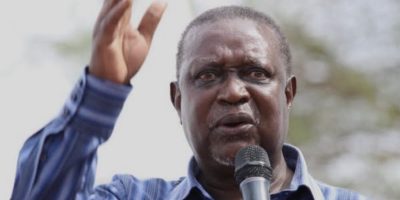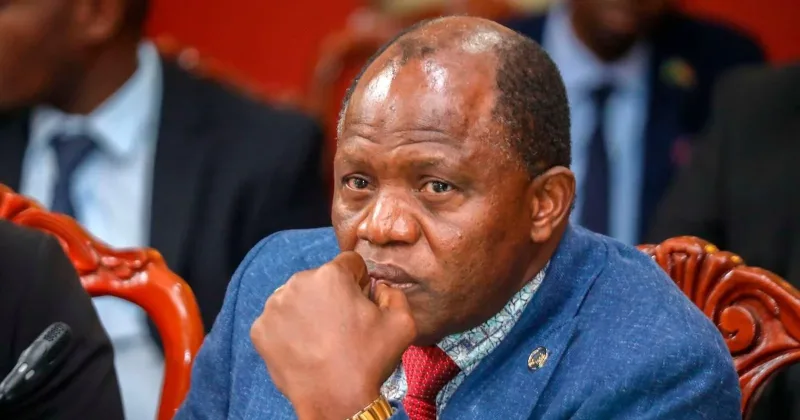
NAIROBI, Kenya Aug 11 – Tana River Governor Dhadho Godhana has been endorsed by delegates from the Coast region to take over as party leader and chairman of the Federal Party of Kenya (FPK), in a move that could trigger a fresh political realignment in the region ahead of the 2027 General Election.
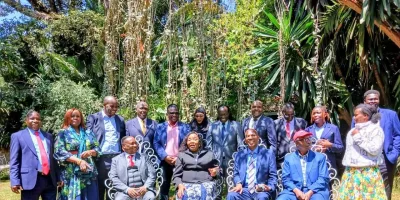
The proposed leadership change emerged from consultations involving Coast-based delegates and civil society representatives seeking to reposition the party and give it a stronger foothold in the region while retaining a national political outlook.
The delegates want Godhana to spearhead the restructuring and grassroots mobilisation of FPK, with the party expected to build a stronger presence across the six Coast counties of Mombasa, Kwale, Kilifi, Tana River, Lamu and Taita Taveta.
The six counties are also members of the Jumuiya ya Kaunti za Pwani (JKP), a regional bloc that has brought Coast governors together to pursue common economic, infrastructure and development interests.
Godhana’s proposed elevation comes at a time when political parties are beginning to position themselves for the 2027 contest, with the Coast emerging as an important battleground because of its sizeable voting population and history of shifting political alliances.
The delegates said they were seeking to create a political vehicle through which Coast residents could articulate their interests while avoiding the region being reduced to a voting bloc for parties controlled from outside the region.
They cited what they described as growing influence of national political parties in Coast politics and argued that the region needed a stronger and more coordinated political voice ahead of the next elections.
The proposed FPK restructuring is expected to focus on establishing party structures at the county, constituency, ward and grassroots levels, as well as recruiting new members and attracting political leaders ahead of the 2027 polls.
The party could also seek to field candidates for elective positions across the six counties, potentially putting it in competition with established parties that have traditionally enjoyed significant support in the region.
The move is likely to attract attention because of Godhana’s position as a sitting governor and his political experience in Tana River.
His involvement would give FPK a high-profile figure with an established political base as the party seeks to expand beyond its relatively low national profile.
The development also comes as FPK seeks to revive its political fortunes. In June, the party announced a nationwide membership recruitment drive targeting increased representation in the Senate, National Assembly and county assemblies ahead of the 2027 General Election.
The party’s national chairman, Philip Obonyo Oluoch Abuba, said FPK was seeking to rebuild a political movement that had previously enjoyed representation in several parts of the country.
FPK has also sought to present itself as a party with a national agenda rather than one restricted to a particular region. Its constitution describes the party as seeking to promote a federal, non-discriminatory and non-ethnic democratic society, with greater distribution of resources through Kenya’s devolved system of government.
The party’s federalist orientation could provide a platform for the Coast delegates’ push for greater regional influence while allowing it to campaign nationally.
Official records from the Office of the Registrar of Political Parties (ORPP) show that the Federal Party of Kenya was issued its certificate of registration on May 24, 2012, under certificate serial number 049. Its symbol is a fist and its registered slogan is “Inawezekana Tukijipanga.” This differs from claims that the party was registered in 2018.
The ORPP’s current register continues to list FPK as a fully registered political party. FPK’s constitution, however, traces the party’s origins to 1997 and says its founding objective was to champion democratic change and advocate for a federal system of government that would promote equitable distribution of resources through the counties.
The proposed change of leadership will therefore be closely watched in Coast political circles, particularly as leaders and political parties position themselves for the 2027 elections.
For Godhana, taking a national party leadership role would also mark an expansion of his political profile beyond Tana River and place him at the centre of efforts to forge a common political platform for the Coast region.Whether the proposed realignment succeeds will depend on the ability of FPK to translate the delegates’ endorsement into formal party processes, establish functioning grassroots structures and attract influential political figures across the six counties.
It could also test whether Coast leaders can build a regional political movement capable of negotiating with national political formations from a position of strength rather than entering election alliances individually.