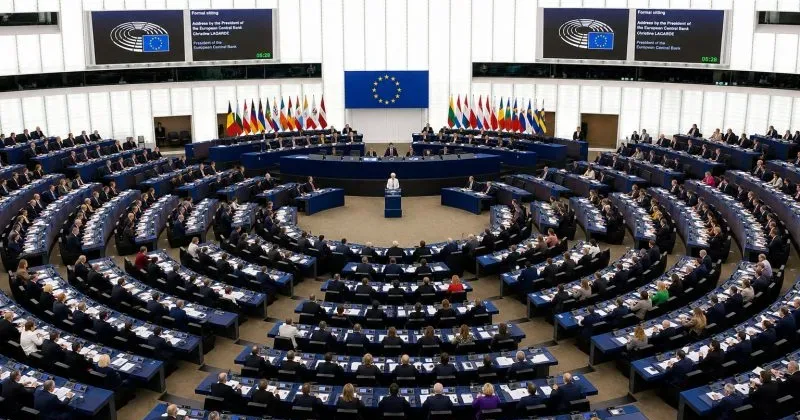
July 20 – The European Parliament has adopted a resolution condemning the abduction, forced conversion and child marriage of a Pakistani Christian girl, urging Islamabad to protect religious minorities and review its human rights record.
The resolution centres on the case of Maria Shahbaz, who was 13 when she was allegedly abducted in Lahore in July 2025 by a 30-year-old man, Shehryar Ahmad. According to her family, she was forced to convert to Islam and marry her alleged abductor.
Despite official documents showing Maria was a minor, Pakistan’s Federal Constitutional Court upheld the marriage and returned her to Ahmad, a decision that sparked widespread condemnation from human rights organisations, Christian groups and women’s rights activists.
The ruling triggered protests across Pakistan, with demonstrators gathering outside the Karachi Press Club and church leaders leading rallies in Lahore and southern Punjab. Protesters demanded justice for Maria and called for an end to forced conversions and child marriages involving religious minority girls.
The case also drew international attention, with members of Pakistan’s Christian diaspora staging demonstrations in the Dutch city of Groningen, urging European governments to pressure Pakistan to protect minority communities.
Responding to growing domestic and international pressure, Pakistan’s federal government established a 37-member consultative committee comprising Catholic and Protestant bishops and other stakeholders to examine the case and recommend measures to prevent forced conversions and marriages. Rights groups welcomed the move but said meaningful reforms would depend on implementation.
In its resolution, the European Parliament called on Pakistani authorities to ensure Maria’s immediate protection, restore her access to her family, provide independent legal representation and psychological support, and conduct a “thorough, transparent and impartial” review of her case. It also urged authorities to allow independent human rights organisations to monitor her welfare.
Lawmakers said Maria’s case reflects a broader pattern affecting girls from Pakistan’s religious minorities, particularly Christian and Hindu communities, who are allegedly abducted, forcibly converted and married while still underage.
Citing United Nations figures for 2025, the Parliament said about 75 percent of women and girls subjected to forced conversion through marriage were Hindu, while the remaining 25 percent were Christian.
The resolution urged Pakistan to establish a national complaints mechanism for families of abducted or forcibly converted girls, supported by safe shelters, legal assistance, psychological counselling and reintegration programmes.
Alliance Defending Freedom (ADF) International, which is supporting Maria’s legal case, welcomed the Parliament’s action, saying the teenager is awaiting a new hearing after the Constitutional Court failed to properly verify her age.
“No child should be entrapped in a sham marriage, nor stripped of their basic rights or religious freedom,” the organisation said.
ADF International’s Director of Advocacy for Asia, Tehmina Arora, described Maria’s case as part of a disturbing pattern in which underage girls are abducted, coerced into marriage and denied their personal and religious freedoms.
The European Parliament also linked the issue to Pakistan’s participation in the European Union’s Generalised Scheme of Preferences Plus (GSP+) trade programme, which grants preferential access to the EU market in return for implementing 27 international conventions on human rights, labour standards, environmental protection and good governance.
The European Commission confirmed that Pakistan remains under continuous monitoring under the GSP+ framework. A monitoring mission visited the country in late 2025, and its findings will help determine Pakistan’s future status under the scheme.
The Parliament said its resolution was intended not only to secure justice for Maria Shahbaz but also to strengthen protections for children and religious minorities and ensure accountability for human rights violations.