NAIROBI, Kenya, Apr 27 – Education Ministers from the Commonwealth countries are meeting in Nairobi this week to discuss major issues and challenges in education.
The two-day conference starts on Wednesday under the theme: ‘Rethinking Education for Innovation, Growth and Sustainability post Covid-19’.
The Nairobi conference is the 21st meeting of Commonwealth Education Ministers and comes ahead of CHOGM in Rwanda later in the year.
The high-level assembly convenes education ministers, senior government officials, educators and teachers, development partners, civil society, and policymakers to address key education priorities within the Commonwealth towards the 2030 Sustainable Development Goal (SDGs) Agenda.
Large scale and practical solutions to the learning crisis enveloping countries has become a primary focus for political leaders who need to offer hope to their increasingly large youthful populations.
The conference comes on the back of an unprecedented period that saw governments worldwide closing schools and learning institutions to help slow the spread of Covid-19.
Kenya was no exception with children losing a year of schooling.
The pandemic hit the education sector with considerable disruption and uncertainty, aggravating poor learning outcomes and intensifying the socio-economic inequalities already plaguing education outcomes.
In most developing countries, this has deepened the challenges for vulnerable children, including those with disabilities and from economically or politically fragile communities.
Speaking prior to the official opening of the Commonwealth conference, Kenya’s Education Cabinet Secretary Prof. George Magoha said:“The COVID-19 pandemic brought education systems across the world to a near standstill. Low-income countries were especially hit hard. With the future of our children and young people on the line, we need to work together to build back better and refocus on investing in inclusive and equitable quality education.”
“We must build resilient education systems that can address emerging issues and withstand future crises as part of measures to minimise and protect learning from disruption,” he stated.
How this will be done in practical terms, at scale and within a timeframe that is meaningful, will hopefully be one of the things up for discussion.
On her part, the Commonwealth Secretary-General, The Patricia Scotland QC said:
“The pandemic has already taken so much from us. We must act now to prevent it from taking away the human right to education.”
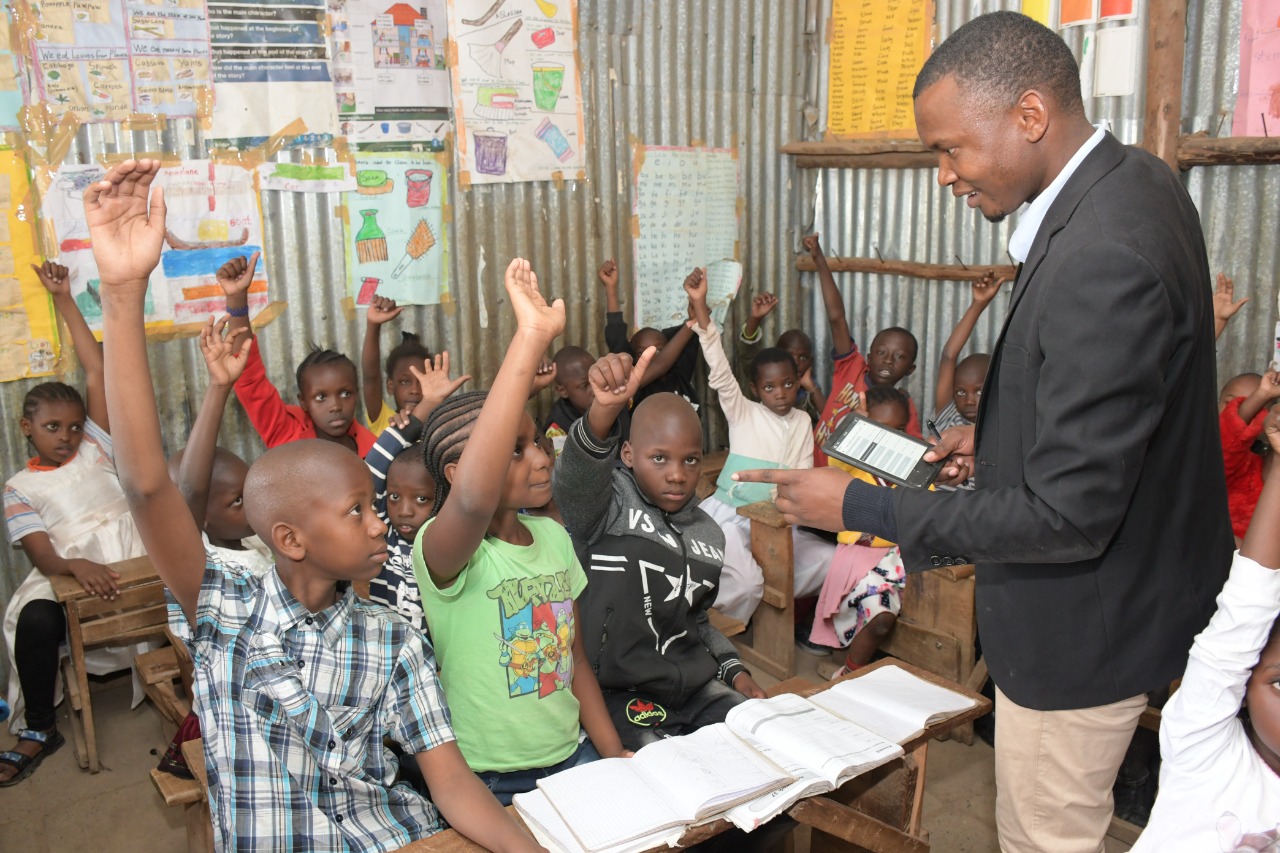
As Ministers lead the pack in pondering the question of how to innovatively rethink education provision for growth and sustainability post Covid-19, education partners like Bridge Kenya have 15 years of experience in using technology to provide more children in underserved communities with affordable high-quality education; evidenced once again by the recent outstanding KCPE results seen in the school network.
It’s appropriate that the conference is being held in Nairobi as some of the solutions that are being delivered at scale; first began in Nairobi’s underserved neighborhoods. NewGlobe, a leader in learning, which has gone on to serve governments and their public systems; built their model in Kenya.
While lauding such partners that are leveraging technology to increase access to education, President Kenyatta is on record for urging government leaders to embrace new innovative technological solutions to improve education systems and help build back better post Covid-19. At the Global Partnership for Education (GPE) Summit in June 2021; leaders came together highlighting the need for action and urgency – a year on, not much has changed.
During the pandemic, school closures took a heavy toll, not only on learning outcomes but also on the education infrastructure. In Uganda, schools were closed for nearly two years. During this period, school buildings collapsed exacerbating the challenges of re-opening. Learners have been left stranded because plans to rehabilitate or rebuild damaged school infrastructure in government-aided schools can only be considered for the next financial year, which begins in June this year; that’s before considering how materials for teaching will be provided or how the teachers that are needed to deliver them will be re-trained and supported after years of sitting at home.
It is evident that for Governments to begin to tackle the crisis that faces them partnerships and collaborations will be essential to rebuilding strongly post Covid-19. Partnerships are playing an increasingly important role in education for governments who are tired of slow economic growth and societal insecurity. From running low-cost private schools to mobilizing and deploying education capital, to acting as technical support partners for state and nationwide programming, education partners are playing a significant role in complementing government efforts to increase access to quality education. In Kenya, Bridge Kenya is one such player which works to closely complement the government’s education policies and programmes particularly in underserved communities.
Last year, ahead of the GPE Education Summit in London, President Uhuru Kenyatta took the lead on education, acknowledging the importance of domestic education budgets and technological partnerships in increasing the access and quality of education.
The President said: “Protecting domestic education budgets and ensuring that we do not lose education momentum because of the COVID-19 pandemic will enable us to create more prosperous and resilient economies. We need to make smart investments in education technology to help close the digital divide and leapfrog infrastructure deficits in schools.”
In the Nadi declaration – that came out of the preceding Commonwealth conference in Fiji – Ministers acknowledged that good governance and effective educational management practices are central to realizing equitable access to quality education. They agreed that high quality teaching is a priority, and that Member States should focus on how teachers and school leaders are trained, recruited and motivated and how the profession is governed.
As the next commonwealth conference takes place, the question is, has much changed following the Nadi declaration and have the member states implemented programmes or undertaken partners that start the conversation this year in a better place?
Bridge Kenya believes that improving teachers’ well-being and professional development is essential to improving outcomes and will underpin any form of successful education recovery. It is well versed in this space and the organization’s data-driven approach provides teachers, schools leaders and staff with tools to learn and develop their skills, with every teacher receiving bespoke training to enable them to succeed in the classroom.
Teachers are provided with teacher guides that display lessons, record attendance and assessment scores, and track lesson pacing and pupil comprehension in near real time. This takes away the administrative burden from teachers, allowing them to focus their attention on teaching.
The Nadi declaration recognised the need to strengthen education management systems through collection and use of accurate, timely and relevant data to assure quality and evaluate results against targets.
This allows evidence-based interventions within the education system, improving accountability and supporting global efforts to enhance the quality and use of educational data. Yet, last year the UN General Assembly made clear that in most countries, there is no data available for education systems.
The World Bank Director of Education, Jaime Saavedra, explained it very clearly in a joint session with UNESCO and UNICEF, the UN’s education and children’s organizations. According to Saavedra, if we don’t have data, we are really flying blind.
It’s impossible to know where systems are and it’s impossible to know if the policies that we are implementing are working or not. So, we need to focus on the outcome and make sure that kids are in school that they are learning.
Data is essential to build stronger education systems. Without accurate and timely data on education it is impossible to know how many children are not in school or not learning, where they live, and what their education needs are. Education partners, such as NewGlobe, are data-driven and evidenced-based, its programmes such as Bridge Kenya, have re-defined every part of the education system from teacher training to lesson delivery, making schools as effective and as transparent as possible.
The World Bank and other multilaterals are investing in organizations and programmes that are taking a holistic approach to the improvement of education. A small-scale piecemeal approach to programming and initiatives can no longer be considered a meaningful response to the challenge facing education.
The fragmented approach to funding and programming used globally, has been ineffective. According to the World Bank, the learning losses caused by the Covid-19 pandemic is the greatest crisis in global education for a century. There is no doubt that the challenges faced are complex.
This week, as Ministers and other education stakeholders from the Commonwealth gather in Nairobi to discuss – once again – how to ‘build back better’, we urge them to strongly embrace the use of education data and technology for evidence-based decision making and to focus on implementation before another generation of children lose out.
They should effectively implement partnerships and collaborations that will aid a stronger recovery post Covid-19. The time for talking is over.