NAIROBI, Kenya, July 21 – China has thrown open one of the world’s largest consumer markets to Kenyan exports, eliminating import duties on everything from tea and coffee to avocados and macadamia nuts in what analysts describe as one of the most significant trade concessions Beijing has ever extended to Africa.
The policy, which took effect on May 1, grants duty-free access on 100 per cent of tariff lines to exports from 53 African countries that maintain diplomatic relations with China, expanding preferential market access beyond the continent’s least-developed economies to include middle-income countries such as Kenya.
For Nairobi, the announcement presents an opportunity years in the making.
Successive governments have sought to deepen trade with China while reducing Kenya’s heavy dependence on traditional export markets in Europe and the Middle East.
Yet despite growing diplomatic and commercial ties, the relationship has remained heavily skewed towards imports, with Chinese manufactured goods far outweighing Kenya’s exports.
The zero-tariff initiative offers an opportunity to begin narrowing that imbalance—not by importing less, but by exporting more.
But it also raises a more difficult question.
Is Kenya ready to seize the opportunity?
While duty-free access removes one of the biggest barriers to entering the Chinese market, exporters and trade experts argue that tariffs were never the only obstacle.
Production capacity, logistics, quality standards, certification, value addition and the ability to compete with producers from across Africa may ultimately determine whether Kenyan businesses benefit from Beijing’s latest trade opening.
In effect, China has opened the door. Whether Kenyan exporters can walk through it will depend on far more than tariff policy.
A strategic opening
Beijing’s decision is widely seen as part of its broader effort to deepen economic engagement with Africa while encouraging greater value addition across the continent.
For Kenya, whose economy relies heavily on agricultural exports, the timing is significant.
Tea, coffee, avocados, macadamia nuts, flowers, herbs and processed agricultural products now stand to become more competitive in one of the world’s fastest-growing consumer markets.
The policy also aligns with Nairobi’s long-standing ambition of diversifying export destinations and reducing its persistent trade deficit with China, which has widened steadily over the past decade.
According to international trade data, Kenya imported goods worth approximately $4.31 billion from China in 2024, compared with exports valued at just $196.56 million.
That imbalance has made China one of Kenya’s largest trading partners—but not one of its largest export destinations.
Trade economists say expanding exports under the zero-tariff framework offers one of the clearest opportunities yet to rebalance that relationship while generating foreign exchange, creating jobs and strengthening rural incomes.
“Removing tariffs expands market access. Our access to global markets has been limited, partly due to tariffs. While tariffs are just one barrier, they are a key one. Removing them eliminates a major obstacle,” said University of Nairobi lecturer Dr. Mulaku Lemi Nyongeza.
Tea takes centre stage
Among the sectors expected to benefit most is tea.
Kenya remains the world’s leading exporter of black tea, yet China—a nation with one of the world’s oldest and largest tea-drinking cultures—has historically represented only a modest export destination.
Until recently, Kenyan tea faced import duties of up to 15 per cent, making it more expensive than locally produced tea and supplies from countries enjoying preferential access.
Removing those tariffs immediately improves Kenya’s price competitiveness while opening access to a consumer market of more than 1.4 billion people.
The first signs of that opportunity are already emerging.
Last month, Kenya exported its first commercial consignment of tea under the zero-tariff arrangement to Fujian Province, one of China’s principal tea-producing and trading regions.
The shipment, comprising 15.125 tonnes valued at more than Sh5 million, marked Kenya’s first export under the new framework and is being viewed by industry players as an important proof of concept rather than a one-off transaction.
Whether similar shipments become routine will depend on Kenya’s ability to supply consistent volumes while meeting increasingly demanding quality, packaging and traceability requirements.
Tea may have captured the headlines, but it is far from the only Kenyan product expected to benefit from China’s expanded market access.
Coffee, avocados, macadamia nuts, leather products, textiles and seafood are all among the sectors identified as having significant export potential under the new duty-free regime.
For Kenya’s coffee industry, the opportunity comes at a time when producers are increasingly seeking premium markets willing to pay higher prices for specialty beans.
Although China remains a relatively small coffee consumer compared with Europe and North America, demand has expanded rapidly over the past decade as coffee culture takes hold among younger urban consumers.
Exporters believe the removal of tariffs could make Kenyan coffee more competitive while creating opportunities for value-added exports such as roasted and branded coffee rather than green beans alone.
Agriculture Cabinet Secretary Mutahi Kagwe recently disclosed that Kenya exported tea and coffee worth $24 million to China in 2025, accounting for about 10.8 per cent of the country’s agricultural exports to the Chinese market.
Horticultural exports are also expected to receive a significant boost.
China’s growing middle class has become an increasingly attractive market for premium fresh produce, creating fresh opportunities for Kenyan avocados, herbs and cut flowers.
The first batch of Kenyan avocados entered China duty-free shortly after the policy took effect, making Kenya one of the first African countries to utilise the expanded market access.
Industry figures indicate Kenya exported 6.7 metric tonnes of avocados to China in May under the new arrangement, with exporters targeting a sharp increase in volumes as supply chains mature and consumer awareness grows.
Companies such as Kakuzi, already established in international avocado markets, are expected to benefit from lower market entry costs while expanding their presence in China.
Macadamia producers are equally optimistic.
China has emerged as one of the world’s fastest-growing markets for premium nuts, offering Kenyan processors an opportunity to expand exports beyond their traditional buyers in Europe and North America.
Industry players argue that greater value will come not simply from exporting raw nuts but from expanding the export of processed kernels and consumer-ready products.
The opportunity extends beyond agriculture.
Kenya’s leather industry, long constrained by limited value addition, could find new opportunities if manufacturers move beyond exporting raw hides and semi-processed leather to producing finished footwear, bags and industrial leather products for Chinese consumers.
Likewise, textile manufacturers stand to benefit from lower market entry costs, particularly if they can leverage Kenya’s cotton value chain and growing apparel manufacturing sector to supply niche segments of the Chinese market.
Seafood exporters also see potential, particularly for premium fish and seafood products, although expanding exports will require sustained investment in cold-chain infrastructure, certification and traceability systems demanded by Chinese regulators.
The tariff is gone. The hard work begins.
For many exporters, however, tariffs were only one part of the equation.
Trade experts caution that lower import duties will mean little if Kenya cannot consistently produce sufficient volumes, maintain international quality standards and deliver products competitively.
Exporters continue to cite high freight costs, limited cold-chain capacity, lengthy certification processes and inconsistent logistics as among the biggest obstacles to expanding trade with China.
Fresh produce presents perhaps the clearest example.
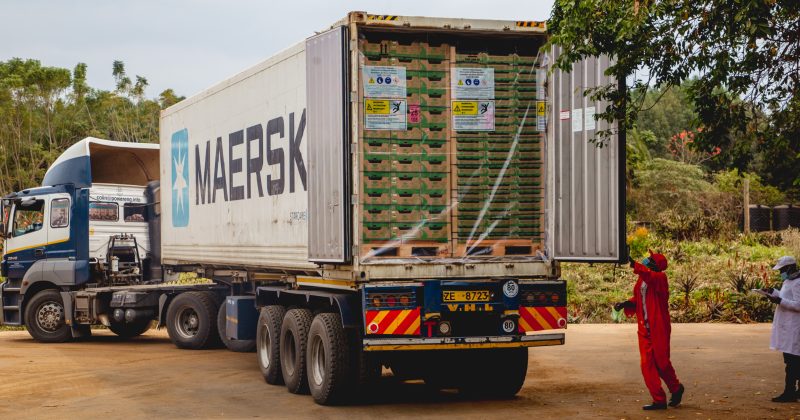
Avocados, flowers and seafood require uninterrupted refrigerated transport from farms and processing facilities to ports and airports before enduring journeys of thousands of kilometres to Chinese consumers.
Any break in that chain can result in rejected shipments and significant financial losses.
Similarly, exporters of tea, coffee and macadamia increasingly argue that long-term competitiveness will depend on branding, processing and value addition rather than simply increasing export volumes.
Trade specialists say Kenya’s greatest opportunity lies not in exporting larger quantities of raw agricultural commodities, but in capturing more value before products leave the country.
Roasted coffee commands higher prices than green beans.
Packaged tea earns more than bulk exports.
Processed avocado oil generates greater returns than fresh fruit.
Finished leather products command significantly higher margins than raw hides.
That shift would align closely with both Kenya’s industrialisation agenda and China’s stated objective of encouraging greater value addition across Africa.
Kenya is not competing alone
Yet Kenya’s greatest challenge may not be China itself.
It may be Africa.
China’s zero-tariff initiative applies to exports from 53 African countries, meaning Kenyan producers will compete directly with manufacturers and farmers across the continent for the same consumers, supermarket shelves and supply contracts.
South Africa is expected to expand fruit, wine and processed food exports.
Ethiopia is likely to strengthen coffee and leather exports.
Morocco and Egypt possess more developed manufacturing sectors, while countries such as Tanzania, Rwanda and Ghana are also positioning themselves to take advantage of the preferential market access.
In effect, China has levelled the tariff playing field.
The next contest will be decided by productivity, reliability, logistics and price competitiveness.
Erick Rutto, President, Kenya National Chamber of Commerce and Industry (KNCCI), said lower tariffs improve Kenya’s competitiveness, but exporters will still need to strengthen production capacity, logistics and compliance with Chinese standards to fully capitalize on the opportunity.
Government betting on exports
The government insists it is laying the groundwork for Kenyan businesses to capitalize on the expanded market access.
China has become a central pillar of Kenya’s export diversification strategy, with trade officials stepping up commercial diplomacy, trade missions and business-to-business engagements aimed at connecting local producers with Chinese buyers.
Speaking ahead of the China-Africa Economic and Trade Expo, KNCCI Director of Programmes and Partnerships Lucy Muchoki said the private sector had already begun preparing businesses to take advantage of the new trading environment.
“China has already granted Kenya and the rest of Africa tariff-free access and we are working very hard to ensure our businesses seize this opportunity,” she said.
KNCCI says it has facilitated exports worth more than Sh765 million over the past two years across products including macadamia, avocado, coffee, tea, leather and avocado oil, while helping businesses aggregate supply, identify buyers and comply with international quality standards.
Government agencies are also seeking to strengthen export readiness by promoting value addition, supporting certification and encouraging greater participation by small and medium-sized enterprises in international trade.
But industry observers caution that implementation will determine whether those ambitions translate into sustained export growth.
“Government institutions are working closely with exporters to ensure they are certified, market-ready, and well-positioned to access the Chinese market,” Trade Cabinet Secretary Lee Kinyanjui stated.
Are exporters ready?
That question increasingly dominates discussions within Kenya’s export sector.
While larger companies have the financial resources to invest in certification, processing facilities, cold-chain infrastructure and international marketing, many small and medium-sized enterprises continue to face significant barriers.
Export finance remains expensive.
Meeting China’s sanitary and phytosanitary standards requires substantial investment.
Many producers still struggle to aggregate sufficient volumes to fulfil large export contracts, while others lack the market intelligence needed to identify opportunities or establish relationships with Chinese distributors.
For horticultural exporters, maintaining product quality throughout lengthy transport routes remains another significant challenge.
Industry leaders argue that strengthening logistics, reducing freight costs and improving access to export finance will be just as important as tariff reductions in determining Kenya’s success.
They also say greater investment is needed in traceability systems, packaging, branding and digital trade platforms if Kenyan products are to compete effectively in China’s increasingly sophisticated consumer market.
“Despite the favourable trade terms, market access alone will not guarantee success. Kenya must prioritize consistent product quality and traceability, efficient logistics and cold chain systems, strong national branding, and deeper international trade partnerships,” Hasit Shah, Managing Director, Sunripe noted.
Trade analysts also caution against viewing the policy as a guaranteed solution to Kenya’s export challenges noting that while preferential access creates opportunity, sustained success depends on competitiveness.
“The Kenya-China trade relationship is entering a new phase. Duty-free access alone is not enough; we must build the productive capacity, quality standards and export readiness needed to compete sustainably in the Chinese market,” Kinyanjui added.
Countries able to produce at lower cost, meet quality requirements consistently and deliver goods reliably will be best placed to secure long-term contracts and expand market share.
From market access to market success
China’s decision marks one of the most significant openings for Kenyan exports in decades.
It provides duty-free access to the world’s second-largest economy at a time when Kenya is actively seeking to diversify export markets, strengthen manufacturing and generate more foreign exchange.
For tea, coffee, avocados and macadamia producers, the policy removes an important cost barrier.
For leather manufacturers, textile producers and seafood exporters, it creates fresh opportunities to move further up the value chain and reach one of the world’s largest consumer markets.
Yet tariffs alone will not determine the outcome.
Success will depend on whether Kenya can produce more, process more and export more competitively than its continental rivals.
That means investing in value addition rather than raw commodity exports, improving logistics and cold-chain infrastructure, lowering the cost of doing business, strengthening certification systems and helping small businesses navigate international markets.
The next phase of Kenya-China trade will not be decided in Beijing.
It will be determined in Kenyan factories, farms, packhouses, ports and export corridors.
China has opened the door.
Whether Kenya walks through it—and whether its exporters emerge among the biggest beneficiaries of Africa’s expanded access to the Chinese market—will depend on how quickly the country converts a diplomatic breakthrough into commercial competitiveness.