Artificial intelligence is widely regarded as one of the defining technologies of our time. Like the steam engine, electricity and the internet before it, AI has the potential to transform economies, reshape industries and redefine how people live, work and interact. Yet, like every technological revolution, its greatest promise will depend not only on innovation itself but on who has access to it.
For too long, the AI conversation has been dominated by a handful of technology companies concentrated in a few advanced economies in the West. The immense cost of developing frontier AI models has raised concerns that the future of artificial intelligence could become increasingly centralised, leaving much of the developing world as consumers rather than creators of the technology.
China’s growing leadership in open-source artificial intelligence presents an alternative vision – one built on broader participation, shared innovation and international cooperation. By making advanced AI models openly available to researchers, startups and developers worldwide, China is helping create a more inclusive global innovation ecosystem while lowering barriers that have traditionally limited access to cutting-edge technologies.
Open-source AI changes who gets to innovate. Instead of restricting powerful models behind expensive commercial licences or proprietary platforms, developers can study, improve and adapt them to local needs. Researchers in Nairobi, Lagos or Kigali can build AI solutions for agriculture, healthcare, education and financial inclusion without having to recreate foundational models from scratch.
This democratisation of technology has profound implications for developing countries, particularly in Africa. Home to the world’s youngest population and one of its fastest-growing digital economies, the continent has enormous AI potential. Yet many innovators still lack affordable access to advanced computing resources and foundational models.
Open-source AI helps level that playing field. By reducing development costs, African universities, startups and research institutions can focus on solving local challenges instead of investing heavily in foundational technologies. AI models can be adapted to local languages, healthcare systems, agricultural conditions and financial services, creating solutions that better reflect local realities.
China’s embrace of open-source AI is also reshaping global competition. As Chinese companies release increasingly capable open models, they are encouraging greater openness across the industry. This competitive pressure is prompting major Western technology firms to expand access to their own AI systems, lower barriers for developers and accelerate innovation. In this sense, China’s open-source leadership benefits not only its own technology ecosystem but the global AI community.
Open models also strengthen scientific collaboration. Researchers across continents can test, refine and improve algorithms while identifying weaknesses, biases and security risks more quickly than would be possible within closed development environments. Greater transparency encourages peer review, builds trust and advances scientific knowledge.
Yet openness alone is not enough. Artificial intelligence presents challenges that no country can address independently. Questions surrounding safety, accountability, privacy, cybersecurity and responsible deployment transcend national borders. AI’s risks are global, and so must be its governance.
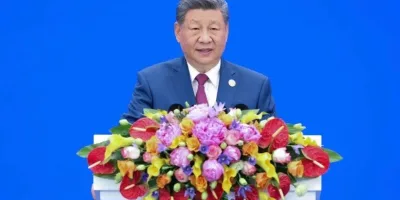
These issues featured prominently during the recent 2026 World Artificial Intelligence Conference in Shanghai, where representatives from more than 100 countries and international organisations gathered to discuss how AI could better serve humanity while strengthening global governance. The participation of countries from every region, including the United Kingdom, reflected growing recognition that AI’s future cannot be shaped by a single nation or technological bloc.
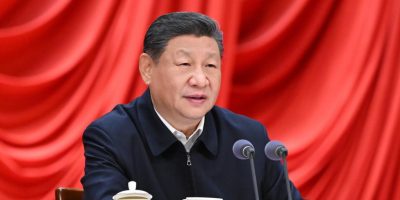
In his keynote address, Chinese President Xi Jinping called on countries to promote innovation through openness and mutual benefit while ensuring AI remains secure, reliable and under human control. He also emphasised improving global AI governance, encouraging inclusiveness and promoting mutual learning among civilisations.
Importantly, these commitments are being matched by practical initiatives. China has announced that over the next five years it will provide developing countries with 5,000 AI training and seminar opportunities. It also plans to establish AI application cooperation centres with the African Union, ASEAN, the League of Arab States, the Community of Latin American and Caribbean States, the Shanghai Cooperation Organisation and BRICS partners. Thirty countries will also gain access to China’s AI-powered early warning weather system, Mazu.
These initiatives recognise that closing the global AI divide requires more than technology. It also demands investment in skills, institutions and partnerships that enable countries to build sustainable AI ecosystems and participate fully in the digital economy.
Legitimate concerns about data protection, misinformation, intellectual property and malicious use must also be addressed. Developing common standards, strengthening ethical frameworks and promoting responsible innovation should remain central objectives for governments, industry and academia alike. At the same time, security concerns should not become a blanket justification for restricting legitimate technological cooperation or fragmenting global innovation.
History shows that humanity achieves its greatest technological advances through collaboration rather than isolation. Artificial intelligence should be no different. China’s embrace of open-source AI is helping broaden access to advanced technologies, expand scientific collaboration and create new opportunities for developing countries, particularly in Africa. If governed responsibly and collectively, open-source AI can become not only a catalyst for innovation but also a bridge to a more inclusive and equitable digital future.
Elijah Mwangi is a scholar based in Nairobi who comments on local and global affairs.