NAIROBI, Kenya, May 24 – The dream of almost every young boy in Kenya back in the 80s and 90s was to be involved with the Safari Rally and experience the rush of adrenaline that coursed through their veins whenever they heard the purring of the powerful engines as the Safari Rally cars zoomed past.
As he prepares to end his call of duty as the Chief Executive Officer (CEO) of the popular motorsport event in Africa, Charles Gacheru can reflect on having lived that dream during a turbulent, yet hugely rewarding, tenure.
He is set to exit his role ahead of schedule, having successfully transitioned the iconic World Rally Championship (WRC) Safari Rally from a state-run and funded event into a corporate operation.
Gacheru, who boasts vast experience in corporate organisation and sports marketing, was head-hunted from the private sector and appointed to lead the organisation in February 2024 by former Sports Minister Ababu Namwamba.
Brought up in the Nairobi neighbourhood of Shauri Moyo, Gacheru was bitten by the sports bug at an early age, with the sprawling low-income neighbourhood located in Pumwani, Nairobi a hotbed of football, wrestling and boxing among others.
“Sports provided the space we needed to hide from the reality of poverty and to escape the vices that consumed so many of our friends. Luckily, there were sports all around us, basketball at the YMCA and the Baptist Church, table tennis, volleyball, and badminton at the BAT staff quarters and at the Jericho Social Hall,” he started.

From his humble beginnings, Gacheru went on to build IMG Kenya, which manages over USD20m (over KSh2.53b) of sponsorship funds annually across golf, football, rugby, athletics, cycling, and the Olympics.
That made him the prime candidate to lead the transformation of the world-famous Safari Rally.
“Accepting that role led me down an unfamiliar path, you see, whilst I had a strong sports background and had attended all Safari Rally events since its return to the WRC Calendar, I did not have much motorsports experience!” he admitted.
“I had a vague idea about how rally routes were marked and even less knowledge of how pace notes were read. I was new to FIA and WRC sporting codes and regulations; it was an extremely steep learning curve with very short timelines,” he admitted.
Gacheru was called in to manage the rally, cut costs, and make it attractive for the corporate world.

It’s an assignment he has delivered in just over two years, with the WRC Safari Rally now set to be fully funded by the corporate sector from next year.
Despite his contract running until January 2027, Gacheru has opted to formally hand over early to give a new team ample time to familiarise themselves and organise next year’s WRC Safari Rally.
He leaves behind an event that has exponentially grown into the most followed rally in the world.
“Running the rally from 2024 to 2026 was like solving a constant jigsaw puzzle with many missing pieces whilst blind folded.
“Pieces were stolen and hidden by my own team members, other pieces were not procured due to lack of funds, some were torn apart by past team members who thought running the rally was their God-given right, and occasionally, the whole puzzle would go missing for days on end, stolen by warring motorsport federations.”
Given barely a month to get his maiden WRC Safari Rally off the ground, Gacheru has successfully navigated a toxic minefield to get the job done.
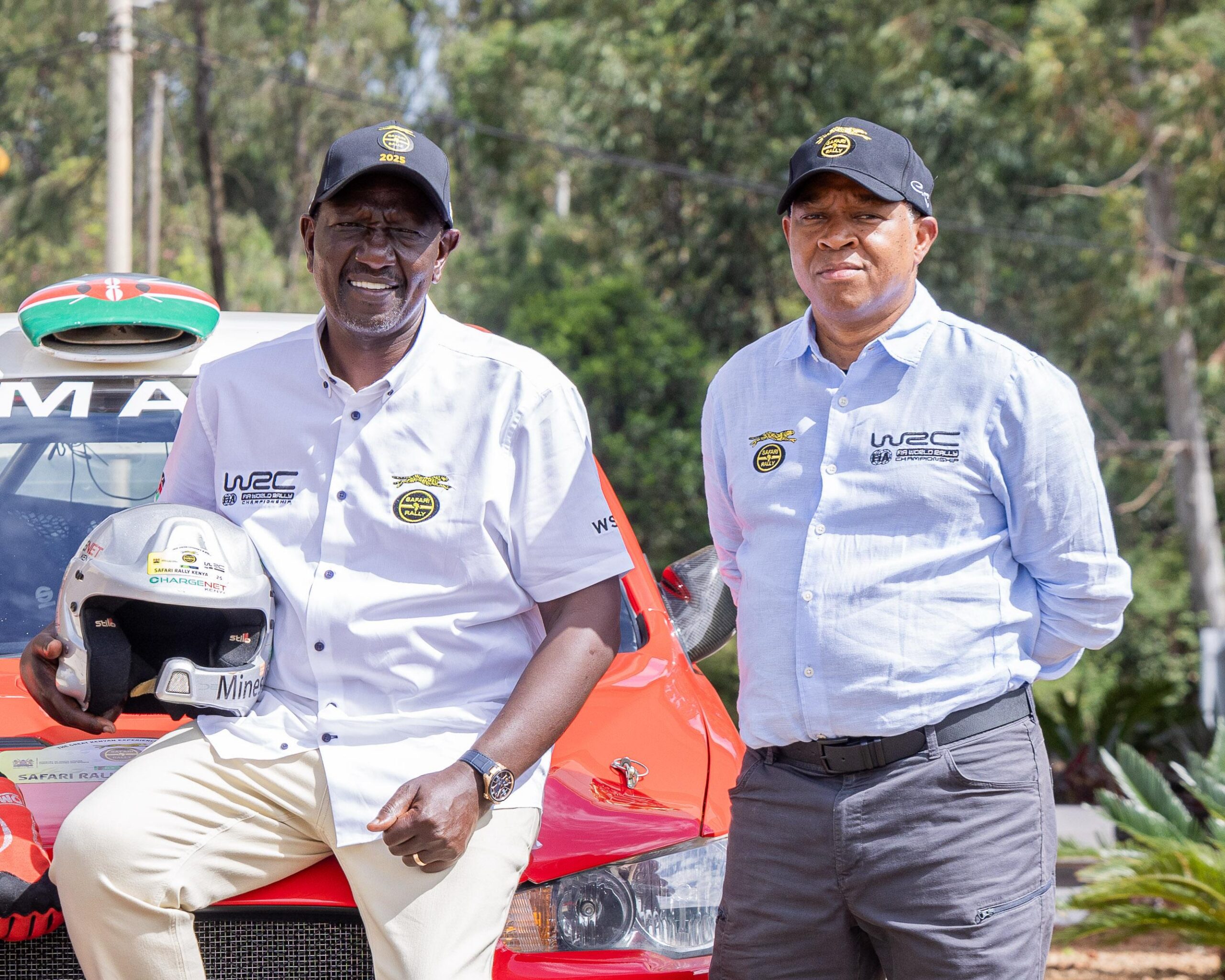
Delayed funding, corporate-sponsor interests, and huge demands of the Munich-based WRC Promoter GmbH, the media company that owns the commercial rights to the FIA World Rally Championship, proved to be a big challenge.
According to figures circulating online, the WRC Promoter Fee increased from 1.8m Euros (over KSh273m) in 2025 to 2m Euros (over KSh302m) this year.
The Development Fees, a contractual payment to the Promoter of 1.8m Euros (over KSh273m) was not captured in the 2025 Safari Rally budget, and it also shot up to 2m Euros (over KSh302m) this year.
In addition to television licence fees from both years, the amount due to the Promoter alone spiked from 3.775m Euros (KSh567m) in 2025 to 4.4m Euros (KSh665m) this year.
It means the Promoter slapped the government with a 7.775 million Euro (KSh1.323b) bill for the last two editions of the WRC Safari Rally.
“Overall, we were on track to reduce the Safari Rally expenses within our control, but the high and escalating WRC Promoter fees were not in our control.
“For example, the WRC Development Budget increased ninefold from 2020 to 2026. The WRC Organiser Contribution, the money we pay for the WRC license doubled from 2021 to 2026. The WRC TV fees also double from 2022 to 2026.
“All these fees put a heavy financial burden on the government-funded budget,” Gacheru explained.
A split Kenya Motorsport Federation and unpaid suppliers who threatened to derail this year’s Safari Rally compounded matters.
He is now looking back with pride at what he has achieved as he clears out his desk at the Secretariat, with most of what he set out to accomplish done, and he lives behind a rich legacy.
“In my time as CEO, we had many wins. We introduced new rally stages, focusing on giving rally teams a new challenge and giving rally fans a better experience.
“In 2024, I worked with the Rally routes I found in place, but in 2025 and 2026, I led the team in mapping new routes and reversing existing routes. We introduced the Rally Village at Morendat, and it became the Safari Rally “paddock” – a beautiful rally viewing and entertainment area.”
Besides becoming a huge hit on social media, the last three editions of the WRC Safari Rally have doubled up as a massive digital marketing campaign for destination Kenya.
“I leave the WRC Safari Rally post having learnt a lot and am proud of the difference I was able to make. The team that now takes over will be building on a firm foundation and solid ground. The Safari Rally belongs to the people of Kenya, and part of its commercialization plan must include a concession fee being paid by whoever takes over the running of the same,” Gacheru emphasised.
He believes the country can gain even more value from the Safari Rally in the future.
“The commercial rights of the Safari Rally need to be evaluated to ascertain the true commercial value of this global event. I believe the Safari Rally is worth at least USD5m (over KSh648.27m). An international tender would be the best way to identify those who may want to acquire those rights. The Safari Rally is Kenya’s most watched sporting asset; it must not be given away for free.”
Gacheru departs with an agreement in principle in place to extend the contract between the Safari Rally and the WRC Promoter for another five years from 2027 to 2031.
However, with the current deal expiring on June 15, the extension is at risk due to the unpaid WRC Promoter fees for the 2025 amounting to 3.775m Euros (KSh567m).