NAIROBI, Kenya, July 1 – For many young entrepreneurs, accessing affordable credit remains one of the biggest hurdles to starting or expanding a business.
With bank lending rates still considered high and collateral requirements locking out many first-time borrowers, thousands are increasingly turning to chamas and Savings and Credit Cooperative Societies (Saccos) for cheaper and more accessible financing.
While some entrepreneurs swear by the flexibility of chamas, others prefer the larger loan limits offered by Saccos. Increasingly, however, many are opting for both, using each to meet different financial needs.
Capital FM spoke to several young entrepreneurs across the country, most of whom belong to either a chama, a Sacco or both.
From a Sh20,000 Chama loan to a thriving mitumba business
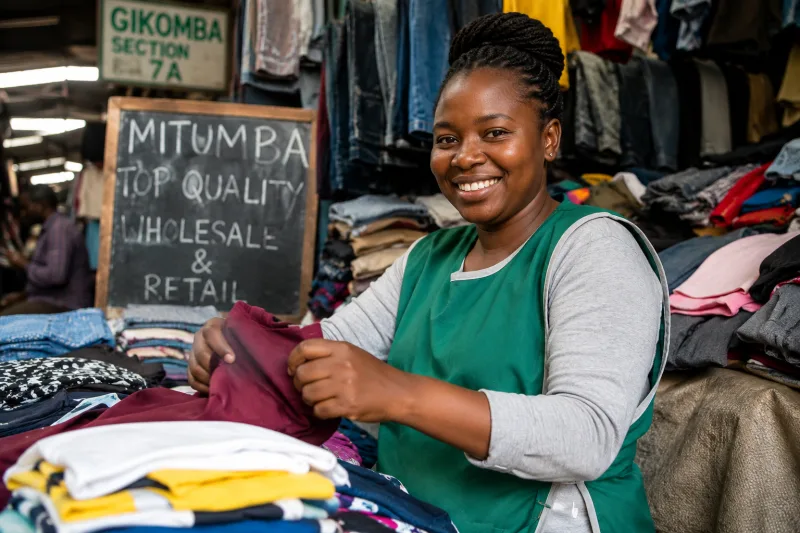
For Joyce Mumo, a second-hand clothes trader at Nairobi’s Gikomba market, a chama provided the foundation for her business.
Five years ago, she joined a savings group where members contributed Sh2,000 each. When her turn came, she received Sh20,000, which she used to buy her first bale of mitumba clothes.
She sold the entire bale within a few days, making a profit of about Sh10,000.
“With Sh30,000, I bought another bale of mitumba and from the remaining Sh10,000, I managed to save Sh8,000 after spending Sh2,000 on my personal needs,” Mumo told Capital FM.
She says the cycle of saving and reinvesting helped her steadily grow the business.
Two years later, Mumo had moved from selling clothes on the fringes of Gikomba to operating from a semi-permanent stall, giving her a more secure and visible business location.
As her business expanded, she realised she needed access to larger amounts of capital.
That is when she joined a Sacco.
By making daily savings, she accumulated about Sh200,000, allowing her to qualify for loans worth up to three times her savings.
“The Sacco gave me room to expand faster because I could borrow more money whenever I needed additional stock,” she said.
Despite the growth of her business, Mumo says she has no intention of leaving either platform.
“The chama helps me with quick money and discipline in saving, while the Sacco allows me to access bigger loans. They complement each other.”
Chamas remain popular
Mumo’s experience reflects a wider trend across Kenya.
According to digital lender Zenka, informal savings and investment groups remain one of the country’s most popular financial support systems.
The lender estimates that more than 40 percent of Kenyan adults participate in chamas, translating to between 2.5 million and over 10 million people, depending on the measurement used. The country is estimated to have between 300,000 and 500,000 active chamas.
Financial experts say the groups remain attractive because they require little paperwork, offer flexible repayment arrangements and rely on trust among members.
Unlike banks, most chamas do not require formal collateral, making them especially attractive to young entrepreneurs and workers in the informal sector.
Saccos offer bigger opportunities
While chamas are often the first source of capital, many entrepreneurs eventually graduate to Saccos as their financing needs grow.
According to the Sacco Societies Regulatory Authority (SASRA), Kenya’s deposit-taking Saccos serve more than 6.84 million members and manage assets worth over Sh1.15 trillion, underlining their growing importance in the country’s financial sector.
SASRA data also shows that Kirinyaga County has the highest proportion of active Sacco membership at 35.6 percent, followed by Nairobi at 15.6 percent, while Mandera County records the lowest participation at 0.1 percent.
The cooperative movement has become a major source of affordable credit, particularly for salaried workers, traders and small businesses that may not qualify for bank financing.
Saving Sh200 a day
For Frank Njuguna, who now runs a retail shop, joining a Sacco changed his fortunes.
He began as a roadside vegetable vendor, saving just Sh200 every day through his Sacco.
Over time, the savings enabled him to access affordable loans that helped him grow into a larger retail business.
“If it were not for the Sacco, I would not have reached where I am today,” he said.
Recently, Njuguna also joined a men’s chama comprising 20 members, each contributing Sh3,000 every month.
Although the monthly contribution appears modest, he says it has become an important financial cushion.
“The money helps me restock my shop and also pay my children’s school fees.”
His advice to other entrepreneurs is to avoid relying on a single source of financing.
“Use both. They complement each other.”
Chamas also provide social support
For Felix Korir, a boda boda rider in Marigat, Baringo County, the value of a chama goes beyond business financing.
Korir belongs to a riders’ savings group where members contribute Sh1,000 every month.
Instead of focusing purely on loans, the group supports members during major life events such as paying school fees, buying household items and handling emergencies.
“Our chama has really helped members improve their lives,” he said.
Even so, Korir says he plans to join a nearby Sacco to increase his borrowing capacity as he looks to expand his income.
“My next step is joining a Sacco because it will give me access to larger loans than what I currently get from the chama.”
Experts advocate a blended approach
Financial experts say the growing preference for belonging to both chamas and Saccos reflects changing financing needs among small businesses.
Chamas provide quick, flexible and relationship-based financing, while Saccos offer structured savings, larger loans and lower borrowing costs than many commercial lenders.
For entrepreneurs operating in Kenya’s informal sector, combining the two provides both financial security and room for expansion.
As access to affordable credit continues to shape the fortunes of small businesses, many young entrepreneurs are discovering that the debate is no longer about choosing between a chama and a Sacco.
Instead, success increasingly lies in leveraging the strengths of both—using chamas for flexibility and community support while relying on Saccos for larger investments and long-term business growth.