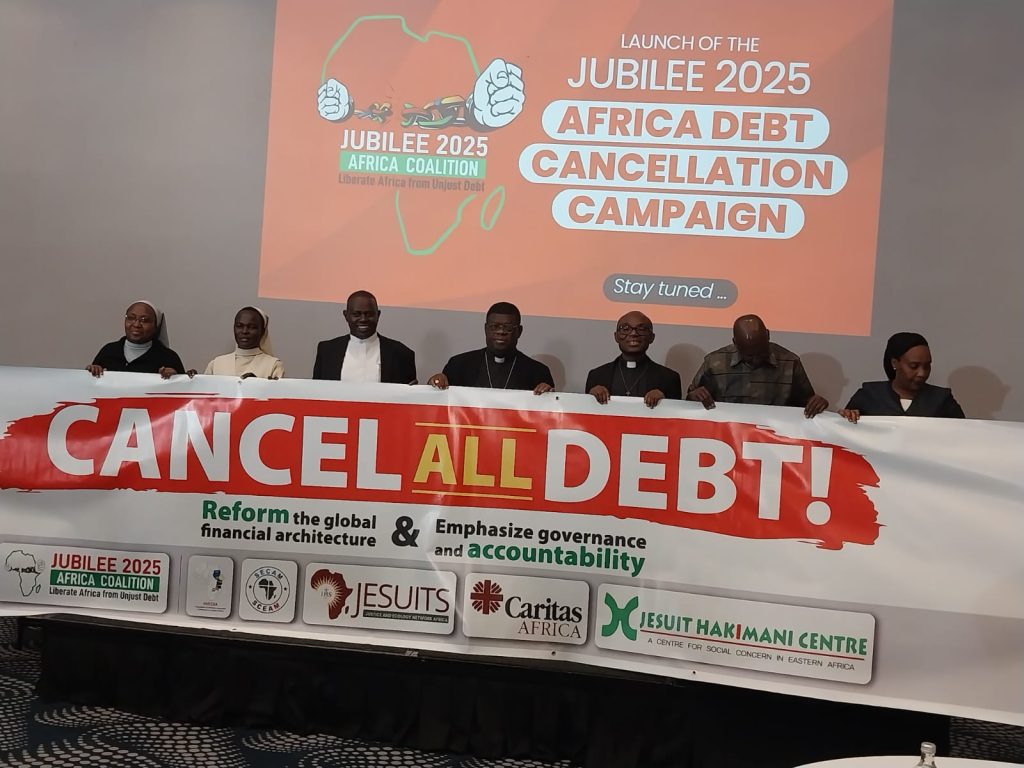
NAIROBI, Kenya, February 13 – The Catholic Church has launched its Jubilee 2025 campaign, urging global action to cancel the mounting debt distress faced by African nations.
The church, through its organisations, including the Association of Member Episcopal Conferences in Eastern Africa (AMECEA), the Jesuit Justice and Ecology Network Africa (JENA), Caritas Africa, and the Symposium of Episcopal Conferences of Africa and Madagascar (SECAM), is calling for the cancellation of what it describes as “unjust debts” and for wide-ranging reforms in the global financial system.
This follows a directive from the Vatican over what the church says is grounded in its longstanding commitment to social justice and its deep concern for the economic hardship faced by the global south.
According to Church, debt cancellation would allow African countries to redirect resources towards crucial sectors like health, education, and infrastructure, ultimately lifting millions of people out of poverty.
“Our vision for Jubilee 2025 is to see an Africa liberated from the constraints of unjust debt, thriving within a fair global financial system, and strengthened by ethical leadership and robust governance,” said Bishop Charles Sampa Kasonde, Chairman of AMECEA.
Fr. Charles Chilufya, Director of JENA, emphasized that debt is not only an economic issue but also a moral one, underscoring the moral obligation to address the crushing effects of unsustainable debt on millions of lives.
The Catholic Church argues that the weight of unjust debt undermines human dignity, stifles progress, and keeps nations trapped in a cycle of poverty.
The Church draws on the success of its 2009 Jubilee campaign, which secured $100 billion in debt relief for some of Africa’s most impoverished countries at the time, including Uganda, Mozambique, and Tanzania.
Despite these past successes, the situation in Africa remains dire.Several countries, including Ghana, Zambia, Sudan, Zimbabwe, and Somalia, have already defaulted on debt payments, while over 22 African nations are currently either in debt distress or at high risk.
This includes Kenya, though recent ratings by global agency Moody’s reflect a slightly improved outlook for the country.
The COVID-19 pandemic and ongoing global economic shocks have worsened Africa’s debt crisis, leaving governments struggling to balance debt repayment with meeting the basic needs of their citizens.