NAIROBI, Kenya Jan 31 – Kenyan police lack the authority to fully investigate crimes allegedly committed by British soldiers stationed in the country, a situation that has renewed concerns over justice, accountability and national sovereignty ahead of a planned review of the UK–Kenya Defence Cooperation Agreement (DCA).
Under the 2021 UK–Kenya Defence Cooperation Agreement, Britain retains primary jurisdiction over offences committed by its personnel while on official duty.
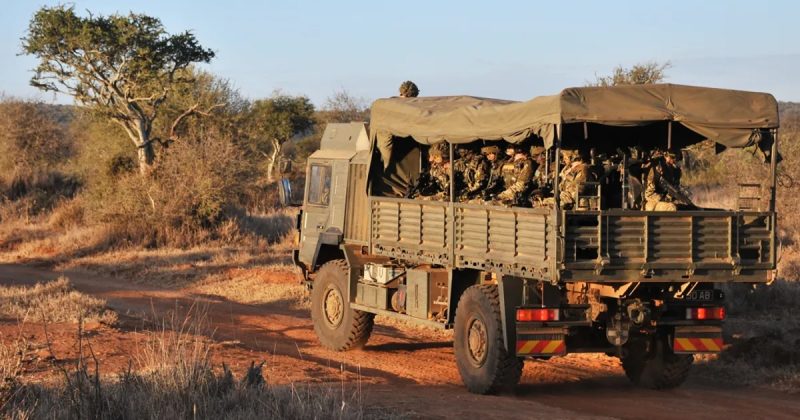
This means Kenyan police cannot arrest, charge or independently investigate British soldiers attached to the British Army Training Unit Kenya (BATUK).
In practice, local police can only record complaints.
They are barred from accessing BATUK barracks, questioning suspects, conducting identification parades or securing crime scenes.
Police in Nanyuki, where BATUK is based, have repeatedly been denied entry to locations linked to reported crimes.
The issue has been thrust back into the spotlight by a 94-page report released in November 2025 by the National Assembly Committee on Defence, Intelligence and Foreign Relations, following nearly two years of investigations.
The committee criticised BATUK, documenting patterns of sexual misconduct, including rape and assault, environmental damage from waste dumping, injuries and deaths caused by unexploded ordnance, and what it described as “contempt for Kenya’s sovereignty.”
One of the key cases cited is the 2012 shooting of 27-year-old herder Tilam Leresh during a military training exercise.
A Kenyan inquest concluded in March 2024 that the killing was “unlawful” and recommended murder charges.
However, the report notes that British soldiers blocked Kenyan police from accessing both the crime scene and the body.
In May 2025, UK prosecutors declined to charge the soldier involved, citing insufficient evidence to counter a self-defence claim.
The soldier later left Kenya without facing local proceedings.
The parliamentary report also revisits the 2012 murder of Agnes Wanjiru, whose body was found in a septic tank at a Nanyuki hotel after she was last seen with British soldiers.
In late 2025, former British soldier Robert Purkiss was arrested in the UK and now faces possible extradition in relation to the case.
According to the report, access to BATUK by victims, families and human rights groups is “virtually nonexistent,” with some interactions involving intimidation or settlement offers aimed at silencing complainants.
Lawmakers also raised concerns over children fathered by British soldiers.
An October 2025 ruling by a London Family Court confirmed paternity for seven Kenyan individuals linked to six BATUK personnel.
Campaigners say many more children in Nanyuki remain unrecognised and unsupported, facing poverty and stigma.
The committee pointed to the scale of funding flowing into the region, noting that approximately Sh200 billion has been disbursed to Mandera County and surrounding areas over the years through the Exchequer, Equalisation Fund, CDF, road agencies and international donors. Despite this, serious humanitarian and accountability concerns persist.
MPs recommended key amendments to the Defence Cooperation Agreement to better protect Kenyan civilians and uphold the rule of law. Previous efforts to reform the pact were rejected by the UK, but the agreement allows for periodic review.
The next review window opens in mid 2026, a moment lawmakers say could be decisive in addressing civilian safety, restoring public trust and rebalancing the UK–Kenya defence partnership.