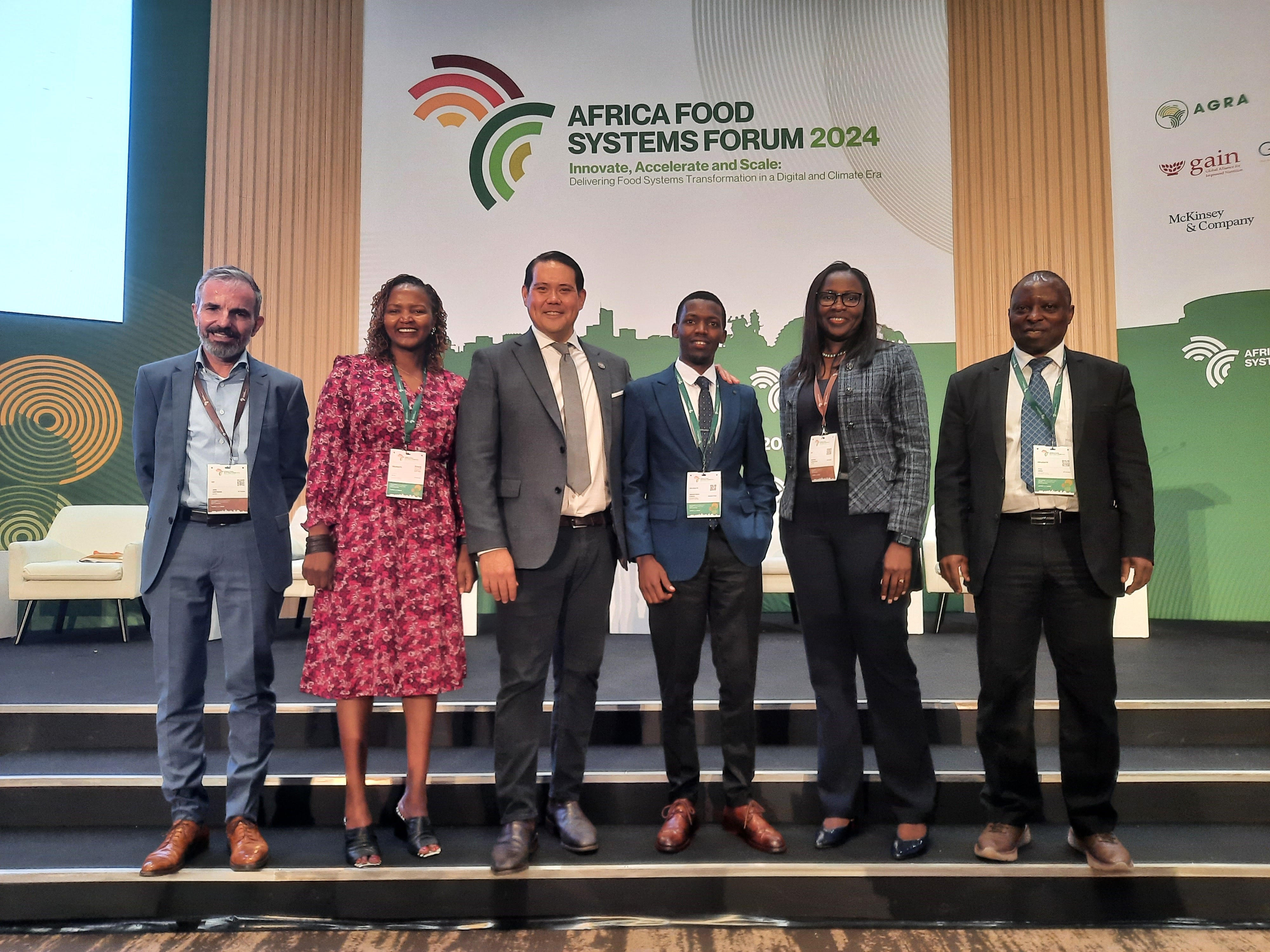
OCT 30 – A lack of information is slowing the adoption of regenerative agriculture among smallholder farmers, as discussed at the Africa Food Systems Forum during a panel titled ‘Regenerative Revolution: Building Sustainable Solutions for Smallholder Farmers’.
This session brought together leaders from Bayer, Opportunity International, and the International Potato Center to explore new regenerative interventions across the agricultural value chain.
Rwandan farmer Samuel Nsengiymva, affiliated with AgriResearch Unguka, underscored the need for training and knowledge-sharing platforms, emphasizing that partnerships are essential for educating smallholder farmers on sustainable practices.
The panel and audience also highlighted the need for collaboration within the agricultural sector to help smallholder farmers fully benefit from regenerative agriculture.
“Forging stronger partnerships is key to unlocking the potential of regenerative agriculture for smallholders. Producing more while restoring more is at the heart of regenerative agriculture, but it requires a concerted effort to support farmers already impacted by climate change,” said Jens Hartmann, Head of Bayer Crop Science EMEA.
Why Regenerative Agriculture Matters
Smallholder farmers contribute to a third of the global food supply, with some African nations relying on them for 70-80% of their food production. These communities face significant challenges related to poverty, climate change, and hunger, yet regenerative agricultural practices are increasingly viewed as a solution. Jens Hartmann noted, “The acceptance and understanding of regenerative agriculture by smallholder farmers is crucial to Bayer’s mission of achieving Health for All, Hunger for None.”
Audience Feedback and Future Directions
A survey conducted during the event revealed that farmers are eager for more knowledge on regenerative agriculture, particularly regarding its benefits, along with improved access to financing and markets. Panelists emphasized the importance of expanding understanding and adoption of practices that sustain land productivity, restore resources, and mitigate climate impacts.
“We need to align efforts across research, knowledge transfer, and farmer enablement. African farmers are already implementing elements of regenerative agriculture that protect soil health, biodiversity, and water sources. These initiatives must be recognized, supported, and encouraged through agricultural policies,” concluded Mildred Nadah Pita.