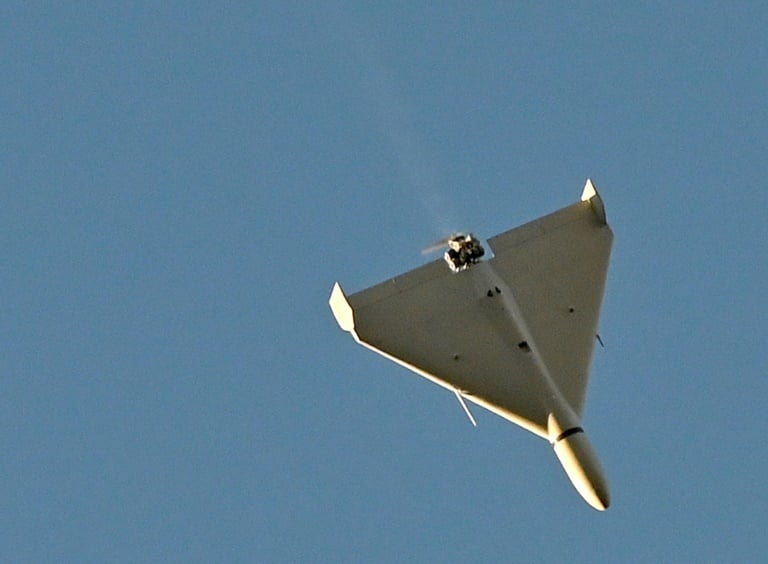
NAIROBI, Kenya, Aug 19-Cheap and increasingly accessible armed drones are emerging as a deadly new threat to humanitarian workers, with the United Nations warning that the technology is putting lethal force into more hands and making aid operations increasingly dangerous.
The warning came as the world marked World Humanitarian Day, with the UN Office for the Coordination of Humanitarian Affairs (OCHA) reporting that 907 aid workers were killed, injured or kidnapped in 202.
While the number killed fell slightly to 350 last year, 322 aid workers were injured, and 235 were kidnapped, according to Humanitarian Outcomes’ Aid Worker Security Database.
Gaza remained the world’s deadliest environment for aid workers for the third consecutive year, recording 186 deaths, followed by Sudan with 71.
The threat has continued into 2026. OCHA said 82 aid workers have so far been killed, 97 injured and 39 kidnapped worldwide.
But beyond the statistics, the UN is increasingly concerned about the changing nature of attacks, particularly the proliferation of cheap and adaptable armed drones capable of delivering explosives into populated areas.
“More than 1,000 aid workers have been killed in just three years, and that is utterly unacceptable,” said Tom Fletcher, UN Under-Secretary-General for Humanitarian Affairs and Emergency Relief Coordinator.
“But just calling it out will not protect the next aid worker. States must uphold international humanitarian law and use every tool to protect civilians and our colleagues. And for those who break the rules, there must be real consequences.”
Drones threaten humanitarian operations
OCHA said armed drones are sending more explosive weapons into towns and cities, increasing the risks faced by humanitarian workers operating in conflict zones.
In Sudan, armed drones accounted for 80 per cent of civilian deaths during the first four months of 2026, striking markets and health facilities, according to OCHA.
In Ukraine, drone attacks killed 80 civilians in April alone, while attacks in the Russian Federation have killed civilians and damaged civilian infrastructure.
Colombia has also recorded a sharp increase in attacks involving weaponized drones, with such incidents quadrupling between 2024 and 2025.
Humanitarian workers themselves have increasingly been caught in the crosshairs.
In March, an aid worker was killed when a drone struck a residential building in the Democratic Republic of Congo.
In Ukraine, four humanitarian convoys were hit within a single week in May, highlighting the growing danger facing aid teams moving supplies and assistance through conflict-affected areas.
“Weaponized drones have become the new face of an old danger: the deliberate or reckless destruction of civilian life,” Fletcher said.
“The technology may change, but the laws of war do not.”
Aid work more dangerous than ever
UN Secretary-General António Guterres said humanitarian workers are facing unprecedented dangers as they attempt to deliver life-saving assistance to millions of people affected by conflict and disasters.
“Serving others has become more dangerous than ever. More than a thousand humanitarians have been killed in the last 3 years,” Guterres said.
He noted that most of those killed were local staff supporting their own communities, while countless others survived shootings, shelling, bombings, kidnappings and sexual violence.
Guterres said schools and hospitals are also coming under attack, while armed drones and other new tools of warfare are creating fresh risks for humanitarian personnel.
At the same time, humanitarian operations are being undermined by shrinking funding and restrictions on access, he said, with aid convoys blocked and humanitarian workers threatened, arrested or detained.
“Attacks on humanitarian workers are illegal,” Guterres said, warning that the consequences extend far beyond the victims themselves to families struggling to survive, children waiting for food and patients seeking urgent medical care.
He called for states to uphold international law, guarantee safe humanitarian access, hold perpetrators accountable and provide adequate resources for humanitarian operations.
“Humanitarian workers stand up for people in need. We must stand up for them. We must act for humanity now,” Guterres said.
This year’s global World Humanitarian Day campaign, Act for Humanity, is highlighting aid workers who have been killed through interviews with their families.
OCHA said the campaign seeks to remind the world that behind every statistic is a family whose life has been permanently changed by the loss of a humanitarian worker.
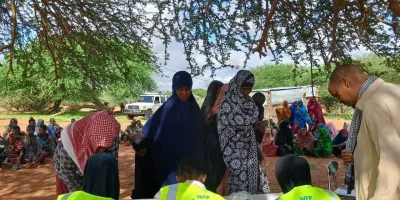
The World Food Programme also paid tribute to the thousands of people working behind humanitarian operations, including drivers, pilots, warehouse teams, engineers, nutrition specialists and emergency responders.
The World Health Organization said the wider threat extends to healthcare workers and patients.
In 2026 alone, 911 health workers and patients have been killed in attacks on healthcare across 19 countries and territories, while nearly 1,486 others have suffered injuries.