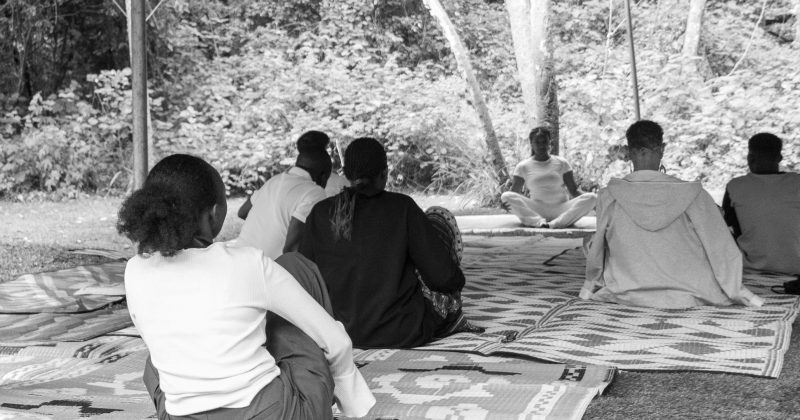
NAIROBI, Kenya, Oct 22 – The tranquil grounds of Entim Sidai Wellness Sanctuary in Nairobi came alive with music, memory, and movement as “WAKATI WETU: It’s Our Time”, Africa’s first-ever Reparations Festival, officially opened yesterday.
The two-day festival — themed “It’s Our Time: To Resist, Repair and Reclaim” — marks a historic moment for the continent’s reparatory justice movement. It blends art, activism, and scholarship to reimagine Africa’s path toward repair and renaissance.
Convened by African Futures Lab, Baraza Media Lab, AU ECOSOCC, and Reform Initiatives, the event has drawn hundreds of artists, intellectuals, policymakers, and Pan-Africanists from across the continent.
A Call to Remember and Reclaim
Award-winning author Yvonne Adhiambo Owuor opened the festival with a keynote that urged the audience to confront painful truths.
“Reparations is first an act of moral autopsy and then moral exorcism,” she said. “There is no repair or healing without walking into, around, and naming the wound in its fullness.”
Owuor challenged efforts to dilute justice under the guise of development.
“Why would we want to integrate reparations into development — fold justice back into the very economic model that produced injustice?” she asked.
Her remarks set a deeply reflective tone echoed by Dr. Kathryn Nwajiaku-Dahou, Director of the Politics and Governance Programme, who shared a proverb from her father:
“The cup that was meant for your lips will never pass you by.”
Justice, Truth, and Historical Memory
Veteran lawyer Hon. Paul Muite, who helped lead the Mau Mau reparations case against the British government, emphasized that justice must begin with historical accuracy.
“In order for reparations cases to succeed, the starting point is research — accurate records of who was who, who did what, with their names. Justice begins with truth,” he said.
Muite reflected on Kenya’s post-independence failures to honor the Mau Mau legacy, calling it “the third betrayal.”
Media, Memory, and Power
In a session titled “Ubuntu: Media and Memory,” journalist Ngartia Mūrūthi unpacked how colonial-era newspapers were used to justify oppression.
“For the colonial project to succeed, it had to manufacture consent. Newspapers were the biggest tools of propaganda,” he said.
Media scholar Christine Mungai added that journalism plays a vital role in repair.
“It takes bravery to tell stories that make power uncomfortable. That courage is part of repair.”
A Cultural and Philosophical Awakening
Throughout the day, speakers called for a moral and cultural awakening anchored in history.
Philosopher Yoporeka Somet observed:
“You cannot talk about renaissance if you do not know your history. We must first heal ourselves by reconnecting with what we were before our story was disrupted.”
Dr. Natasha Shivji urged African states to take ownership of the reparations agenda:
“Reparations are not just demands on the outside world; they are demands on the state — to organize history into a revolutionary platform, not a plea for sympathy.”
Art as Resistance and Renewal
Under the cultural theme “Confronting the Silence,” the festival featured performances by Eric Wainaina, DJ Talie, Koko Koseso, and NiK DJ, with poetry, murals, and films transforming the venue into a living archive of memory.
Screenings of “If Objects Could Speak” and “How to Build a Library” explored stolen African artifacts and erased memories, adding to the conversation on cultural restitution.
Festival convener Liliane Umubyeyi, Executive Director of the African Futures Lab, said the event’s mission is both political and creative.
“We are here because justice is a cultural and political question. Our shared creation has the power to renew our understanding of our place in history. The time is truly ours — Ni Wakati Wetu!”
Looking Ahead: Repair as Rebirth
The festival continues through October 23 with sessions on Tax Justice, Climate Reparations, Gendered Reparations, and a closing keynote by Brian Kagoro on “Vision for the Future.”
As the African Union prepares to launch the Decade of Reparations (2026–2036), the Wakati Wetu Festival stands as a declaration that Africa will no longer plead for justice — it will define it.