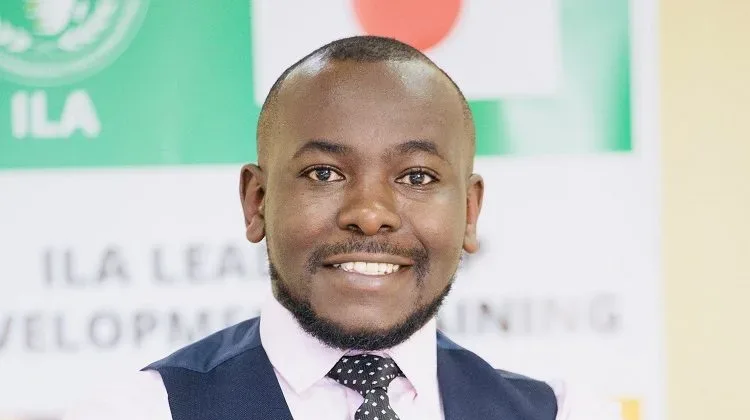
By Gitau S, Regina,
NAIROBI, Kenya, Aug 16 – On the 12th of August 2026, I sat, just like the President and other dignitaries did, for hours listening to what would be Kenya’s developmental blueprint over the next three decades. A raw ambitious draft of re-imagining the now popular proverbial Kenyan “Yonder” in the name of Singapore. I listened to the views of all stakeholders with interest, from the brains behind the original framework that was the Vision 2030, to the political class, to the private sector, to the religious community and even importantly to the young people who are the ultimate carriers of this dream should it ever materialize. In all those conversations, there was a common denominator and refrain; everyone sounded optimistic and hopeful that this doesn’t culminate as a pipe dream or worse still as those ambitious white elephant projects that African governments are fond of launching.
The truth of the matter is that to realize the Vision 2060 developmental reality, there has to be not only collective multi-sectoral concerted effort, but also a radical restructuring of Kenya’s Social, economic and political DNA. It is for that reason, that I indeed laud the idea of having to embed the logic of this idea in the Constitution as Law, and rightly so, matters development should now be protected by Law and stop being treated as suggestions or afterthoughts. Development itself should be cited in Kenya’s preamble as a constitutional right, just like other fundamental rights.
That notwithstanding however, we must consciously agree that part of the reason why we did not manage to effectively tap to the Vision 2030 sap is because we are still battling with a humungous cancer, corruption. I listened to most of those conversations on 12th, and apart from one or at most two speakers, the rest did not address that specific elephant in the room. Our destiny as a country cannot continue to be written or rewritten by the status quo. Most of who sat at KICC are exactly what it means to be corrupt and crooked, how then can we pretend to sit down, and architecture a future with the exact people who will effectively dung on it. Should it go on paper, the carriers of this vision have to be professionals, the youth folk and Kenyans themselves; the alien and extant political class should limit their roles to the legislative axis of it and completely keep off the implementation phase.
The developmental phase of the late 20th century that saw our dream country Singapore, China among others experience rapid modernization was largely because they institutionalized a system that made corruption high-risk. Thieves of public resources were highly punished, and the judicial process to effectively make them accountable was swift, fast and highly independent. For Kenya’s vision 2060 to see the light of day, we must replicate the anti-graft model deployed by these countries, after all we want to be like them, and we will not choose what to and what not to pick from them. Our iteration from these peers has to be holistic, including on how to deal with corruption and thieves.
In actual sense development and graft are highly immiscible variables, just like God and the devil, in their elementary nature cannot share a room. Kenya must be intentional in separating the two and this has to start from the basics. For instance, the conversation to have EACC bear prosecution powers should be part of this developmental discourse. A corruption case having to drag for 10 years means that one third of the temporary phase of the Vision 2060 blueprint will be gone with the winds. That pace “in and of itself” is an enabler of corruption. A while back, someone asked an interesting question. That, if we are somehow able to conclusively deal with a presidential election petition in a record 14 days, despite the legal necessity of documenting volumes of evidence from thousands of polling stations, and tracking electoral footprints from almost every polling variable, what is so difficult in cloning that effort to dealing with corruption? Indeed, the person was right, If an election is an emergency, so is the need to recoup money grabbed by thugs.
I passionately highlight this because I am compelled by data. To put into context, a report by EACC quoted 253 billion as an average of what is lost annually to corruption. If we are to lose 250 billion each year throughout the Vision 2060 phase, we’d have lost 7.5 trillion by 2060.Folks, our public debt already stands at almost 12 trillion, so over the previous phase had we been prudent enough with the little we had, then our standing would be at perhaps anything less than 5 trillion. Therefore, the vision 2060 is not entirely about building an abstract aesthetically appealing document, it has to go beyond that, by assessing the foundational ideals of how exactly to run, fund and actualize it as corruption-free goal.
The President in his oral response mentioned that this blueprint may have to call for a constitutional referendum. This would be a good idea, if and only if, we are not patching it up as a developmental clause but patching it with the responsibilities of being honest and dignified to it. Kenya’s constitution must tighten the judicial and institutional parameters that will make theft a low-reward errand. It should feel that the imaginative thought to dip your hand in the public cooking jar is an inch away to Manyani or Kamiti, otherwise we risk dreaming a grand magnificent summer only to deliver a pale, depressive and lonely winter.
The author is an International Development PhD Candidate at ISS, Hague.