NAIROBI, Kenya, June 15 – Women-owned businesses in Kenya continue to receive a disproportionately smaller share of credit compared to male-owned enterprises, highlighting persistent financing challenges that could be limiting the growth of a key segment of the country’s economy.
Data presented by Metropol Credit Reference Bureau (CRB) during a Credit Community Workshop in Embu County shows that women-owned businesses account for only 27 percent of outstanding micro, small and medium enterprise (MSME) credit value, compared to 73 percent for businesses owned by men.
The figures indicate that for every Sh1,000 advanced to male-led enterprises, women-owned businesses receive approximately Sh361, underscoring a significant credit access gap despite the growing role of women entrepreneurs in driving employment and economic activity.
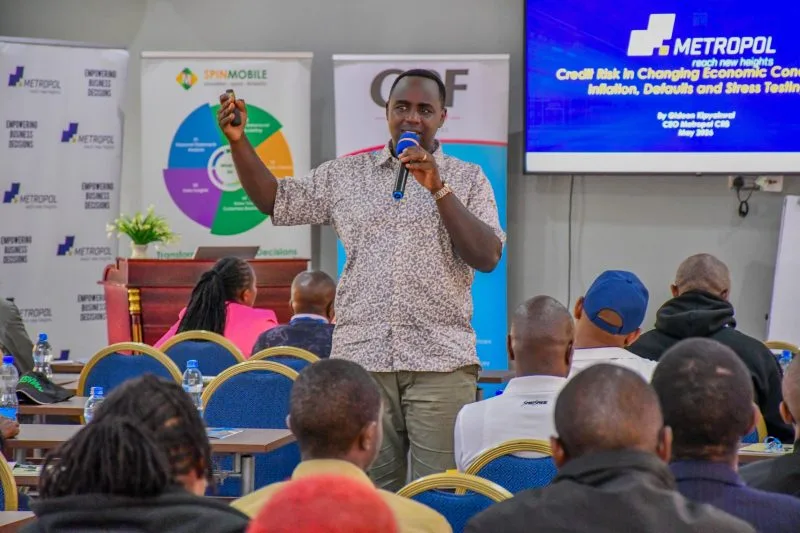
Speaking during the workshop, Metropol CRB Chief Executive Officer Gideon Kipyakwai said the disparity points to structural challenges in the lending ecosystem rather than a lack of entrepreneurial capacity among women.
“The issue is not whether women entrepreneurs have the potential to succeed. Across Kenya, women are running successful businesses and creating jobs. The challenge is that many do not have access to the traditional forms of collateral that lenders often require.”
“Customer-centric lending scorecards can help lenders build a more complete view of a customer’s creditworthiness by incorporating credit history, repayment behavior and other relevant customer information alongside traditional assessment methods.”
Access to credit in Kenya has traditionally been tied to ownership of assets that can be pledged as collateral, a requirement that industry players say has disadvantaged many women entrepreneurs despite operating viable businesses.
According to Kipyakwai, broadening credit assessment models could help unlock financing for businesses that are otherwise excluded under conventional lending frameworks.
The findings come at a time when policymakers and financial institutions are increasingly focusing on financial inclusion as a catalyst for economic growth, particularly among MSMEs, which form the backbone of Kenya’s economy.
Kipyakwai noted that while collateral remains an important component of risk assessment, lenders should consider a wider range of customer information to evaluate borrowers.
Industry stakeholders attending the workshop observed that many women-owned and informal businesses remain underserved despite demonstrating strong growth potential and repayment capacity.
The discussions also reflected a broader shift within the credit information industry, where credit bureaus are increasingly positioning themselves as tools for responsible lending rather than solely repositories of negative credit records.
Kipyakwai said the role of credit reference bureaus has evolved significantly as lenders seek more balanced information to support lending decisions.
The two-day workshop, themed “Bridging the Gap: Use of Customer-Centric Lending Scorecards,” brought together SACCOs, fintechs, digital lenders and regulators from Central, Lower Eastern and Upper Eastern Kenya.
Participants explored how data-driven lending approaches can help financial institutions expand access to finance while maintaining prudent risk management standards.
The workshop forms part of ongoing efforts by Metropol CRB and other industry stakeholders to promote more inclusive lending practices, particularly for underserved groups such as women entrepreneurs, whose access to finance remains a critical factor in Kenya’s broader economic growth agenda.