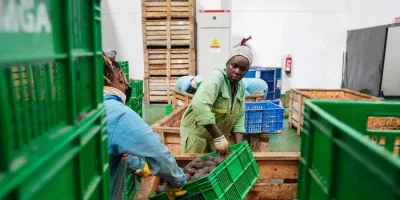
When Fleuri Adon landed in Kenya a year ago, he spotted a gap in food supply chain within the Hotel, Restaurants and Catering (HORECA) industry, resulting into wastage of time and money to the entrepreneurs in the space.
Despite the penetration of internet in the country, he says, most HORECA businesses still operate offline denying players in the ecosystem the digital dividends that would easily save them some coins by connecting them with the suppliers across the country at a click of a button.
Adon together with his co-founder Gibson Okwara built Ayanna.Africa, a web and mobile platform for hospitality industry which acts as a market place for the businesses to access and procure goods directly from suppliers. In an interview, the entrepreneur says the system’s aim is to allow one to manage everything from one interface and increase productivity.
To use the platform, a supplier enters some information about his or her business, add the products to be sold on the platform and invite current customers to use Ayanna.Africa to order online.

Currently valued at USD1 million, the Ayanna platform has over 40 suppliers where HORECAs can choose items they require for their establishments from. A partnership with a digital financial provider enables suppliers within the Ayanna ecosystem to access money worth their invoice in case of delay in payment.
“Sourcing of raw materials is still mostly done the traditional way, which include order forms sent by text messages, WhatsApp or email, some HORECA browse and call every supplier to check the prices. It is a back and forth leading to wastage of resources,” he notes.
“That’s how I came up with a plan to digitize the food supply in Kenya through a central marketplace platform also known as Ayanna linking HORECAs with reliable suppliers, talk of any item that the industry may need, we have suppliers to meet the demand,” he says.
“Our target is to rollout in the entire continent where through our research, we have discovered the industry faces similar challenges, yet the hospitality is growing at a rapid pace. The HORECAs industry in Africa accounts for 8.1 per cent of the continent’s GDP with a growth of 7 per cent Year on Year,” he says.
Adon says through the venture, his company is chasing a USD16 billion opportunity in Africa’s hospitality industry of which USD2.2 billion lies in East Africa and USD616 million in Kenya.
“We are using Kenya as our launching pad, due to its vibrant tourism space, many hotels are establishing their presence here and through Ayanna, we want take away the hustle of sourcing some materials needed to run such businesses,” he explains.
“But our ultimate goal is to digitize the entire Africa’s supply chain for the HORECA business,” he adds.
Invoice Financing
“Some of these suppliers are small and medium enterprises, a slight delay in payment of their supplies may stall their operations, so we have struck a deal with a lender to finance a given per centage of the invoices when there is a delay in payments. The money is recovered from the HORECAs in an arrangement with Pesawise,” says Fleuri.
In case of delay in payments, Ayanna through partnership with the lender pays the supplier in 24 hours, once the order is received by the HORECA business.
Europe, America and Asia have similar solution with players such as Rekki, Metro and Collectiv Food valued at over $5.1 billion serving the European market. MarketMan and Lightspeed valued at plus $3Bn are operating in America, while Pinduaduo Inc valued at more than $150 billion is found in Asia.
Collectiv Food for instance launched in London in 2018 sourcing meat, seafood and plant-based products directly from network of producers and deliver to professional kitchens, harnessing collective buying power.
By going direct to source, Collectiv Food says it secure the best prices whilst guaranteeing traceability and enabling you to make better purchasing decisions.
“Working with reliable suppliers on our network will enable Ayanna to stabilize commodity prices and reduce the time lost in finding what is needed to run your business. Our suppliers are vetted and every product is tested before it is made available on our marketplace,” says Okwara.