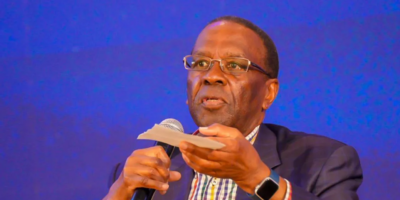
On 11th February 2021, I was invited to the launch of the Africa Borderlands Centre, a specialized entity of the United Nations Development Programme (UNDP), in Lodwar Turkana. The center, themed as, ‘Elevating voices from the Africa borderlands’, offers a development capability approach with the potential to meaningfully impact borderlands in ways that will enhance development along borderlands.
The choice of Lodwar as the host, was significant in two key ways: Turkana County is a borderland frontier with Uganda, South Sudan, and Ethiopia and; the geo position of Turkana, can potentially be utilized to create pathways for socio-economic progress with neighboring communities.
“If Goods don’t cross our Borders, soldiers will”
Stressing on the significance of cross border trade, His Excellency Workneh Gebeyehu, the Intergovernmental Development Authority Executive Secretary and Chief Guest during the launch, reminded all that if goods do not cross our borders, then soldiers will.
In Africa, 270 million people live in the borderlands; this sizable segment of the population cannot be ignored if the world is to achieve the Sustainable Development Goals by 2030. Closer home, while the population in the border between Ethiopia and Kenya is predominantly composed of pastoral communities, there is need to strengthen existent economic opportunities and build stronger bilateral linkages on both sides of the border for trade and development to thrive.
The borderland population of Ethiopia and Kenya, coupled with existent comparative advantages in technology, infrastructure, and access to finance, offers a market niche which is arguably larger than any of our neighboring countries. Logically, the most suitable area for the Africa Borderlands Centre is therefore the 891 km long border between Ethiopia and Kenya.
To elevate voices from the borderland communities in Northern Kenya and Southern Ethiopia, who have long relied on livestock for daily sustenance and as a livelihood will be an opportunity to intervene and encourage stabilization and sustained peace.
The Governments of Ethiopia and Kenya have put in place a host of institutional arrangements to buffer development of innovative programmatic activities aimed at empowering cross border trade and development. The Moyale one stop border post provides an avenue for borderland communities to benefit from.
Opportunities are wide and various, according to a 2020 report by the World Bank, milk sales in Ethiopia and Kenya’s border communities represented on average 45 percent of total household incomes. The report further noted that the pastoral livelihood zones of Ethiopia-Kenya border, households derive 60–70 percent of their incomes from milk and ghee sales.
Majority of the people involved in milk production are women; with proper financial and literacy empowerment, they can potentially diversify, grow and sustain their businesses beyond border areas.
What if one day dukas in Kisumu stocked milk processed and packaged in Moyale?
The viability of development, as postulated by the Africa Borderlands Centre, is dependent on empowering informal cross border traders. We need local solutions to local challenges.
A closer look at our shared border reveals that cross border trade is heavily gendered.
Women, according to the Intergovernmental Authority on Development (IGAD) account for more than half of the borderland traders. Hence, to fast track development, equitable and inclusive poverty reduction efforts which present unique opportunity to women need to be pursued with tenacity.
Integrating trade in livestock products into development programmes can boost the capacity of women to produce better and more. In addition, innovative ideas which promote and benefit small and medium traders should be developed alongside harmonized complimentary policies and trade structures.
This is significant because, in the absence of policies, cross border trade can turn into illicit trade.
In Kenya, the discovery of oil in Turkana county created the possibility of extractive industries to be set up, while in Ethiopia, the development of water resources along the Great Renaissance Dam offers an opportunity for export of electricity to Kenya.
For Ethiopia and Kenya, the phrase good fences make good neighbors, is not needed. In place, our purpose should be to invest sustainably in borderlands and move from building barriers to building bridges.
We should co-create approaches that ensures that borderland communities derive maximum improvement from opportunities that arise from their own areas. In addition to partnering with the academia, business communities and local stakeholders.
This will help to fight insecurity, ecological degradation and catch up with SDGs.
Meles Alem Tekea
Ambassador Extraordinary & Plenipotentiary of the F.D.R.E
To the Republic of Kenya, and Permanent Representative to UNON