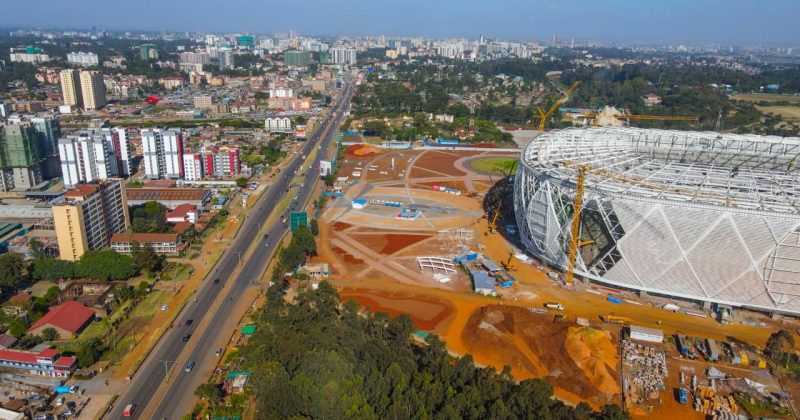
NAIROBI, Kenya, Dec 4 – The construction of Talanta Sports City is not only transforming Nairobi’s skyline but also reshaping the city’s transport networks, a ripple effect of Kenya’s first-world stadium project.
While the Ministry of Defence is managing the stadium’s construction, the facility is driving upgrades to surrounding infrastructure, positioning Kenya closer to global standards in urban planning and mobility.
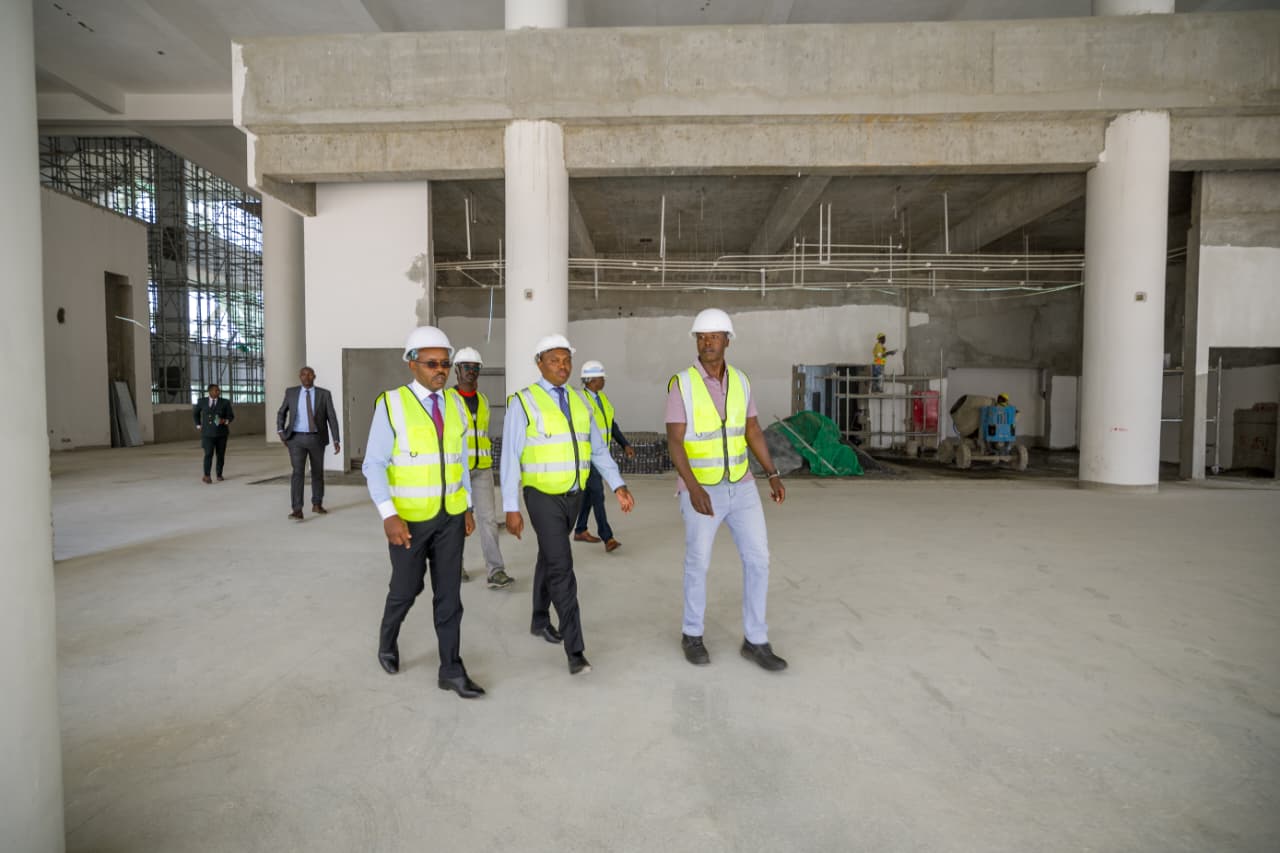
On Wednesday during a site visit at the stadium, Defence Principal Secretary Dr. Patrick Mariru noted that his ministry is working in partnership with the Ministry of Roads to create access roads.
“In this stadium, we are working with the Ministry of Roads, because we need roads to evacuate people from this stadium,” he said.
Confirming Dr Mariru’s statement, Major Victor King’e, the project architect from the Ministry of Defence, said that the transport infrastructure for Talanta Sports City will be supported by multiple modes of access.
He emphasised that while there is existing road infrastructure, additional link roads will be created to serve as alternative routes.
“In terms of transport, the stadium will be supported by several modes. First, the existing roads, including Ngong Road, will be widened to handle the extra traffic. We are also creating link roads from Talanta Sports City to the Southern Bypass, which will act as alternative evacuation routes,” Major King’e explained.
For commuters and spectators unable to use the road network, railway access is also being planned.
“Kenya Railways is in the advanced stages of constructing, or rather, they are going to begin constructing a railway station adjacent to Ngong Road, which will serve the commuter rail coming from Kibera all the way to Satellite Station further ahead, and eventually to look back to the central business district,” Major King’e said.
The stadium itself will have eight gates to manage flow and security.
“On the eastern side, we have two gates. One will be pedestrian, the other both vehicular and pedestrian. Along Ngong Road, we will have another two gates, one primarily for evacuation and the other for VIPs.”
“On the western side, there will be VIP and media entrances, while the southern side will feature two additional emergency exit gates. Media will have dedicated access to press conference rooms and a media tribune for live commentating,” he added.
These transport and access upgrades coincide with major road works in Nairobi.
The long-awaited Ngong Road/Naivasha Road flyover at Junction Mall, which is officially ongoing, aims to ease persistent traffic congestion.
The project is being executed by the Kenya Urban Roads Authority (KURA) and funded through a concessional loan of Ksh. 3.58 billion (EUR 25.3 million) from the Spanish Corporate International Fund (FIEM). Completion is expected by July 2027.
“Once completed, the flyover will bring numerous benefits to Nairobi’s residents. Most notably, it will dramatically reduce traffic congestion, especially at key intersections, saving time for motorists, public transport passengers, and pedestrians. Safety will be prioritised through the addition of Non-Motorised Transport (NMT) facilities, ensuring safe passage for cyclists and pedestrians,” KURA confirmed.
Meanwhile, construction at Talanta Sports City continues on a 24-hour schedule.
“We began on the 1st of March 2024, so we are about 21 months into the project. Right now, we are at 68% overall. That is for the main stadium infrastructure as well as the support infrastructure,” Major King’e said.
The target is to have the stadium externally complete by the end of this year. However, to fully operationalise the facility and make it usable, completion is scheduled for 1 March 2026, exactly 24 months from when the project began.
Set to host the 2027 Africa Cup of Nations, the stadium is driving a broader vision of positioning Kenya as a first-world nation, where world-class sporting facilities spur urban development, modern transport systems, and expanded economic opportunities.