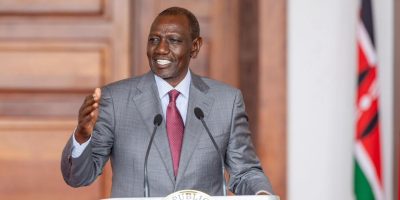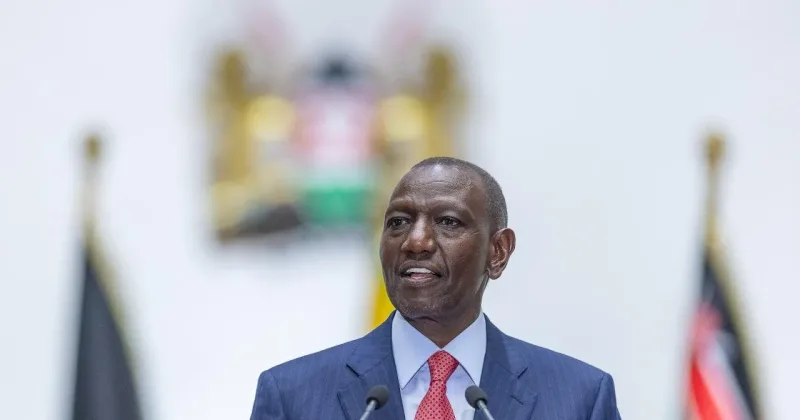
NAIROBI, Kenya, Sep 2 – President William Ruto has directed the Kenya Revenue Authority (KRA) to provide traders with a clear list of goods that cannot be imported under cargo consolidation, as the government seeks to resolve a dispute that triggered the shutdown of businesses in Nairobi’s Central Business District last Friday.
Speaking during a meeting with micro, small and medium enterprise (MSME) traders and cargo consolidators at State House Nairobi, Ruto also directed that a proper register of cargo consolidators be maintained and made available to traders.
The President said the move would eliminate uncertainty over the application of the revised customs benchmark, which traders have blamed for increasing the cost of importing merchandise.
“I want to ask the people of KRA to give us high-value items which do not qualify for consolidation.”
“They want to know which items do not qualify for consolidation. That’s why you don’t come to them.”
Ruto said KRA should also identify registered consolidators so that traders can establish who is authorized to handle their cargo.
The President defended consolidation as an important model for small businesses that cannot afford to import an entire container on their own, arguing that pooling shipments helps reduce the cost of international trade.
The meeting follows protests by traders in Kamukunji, Gikomba and Nyamakima on August 28, when businesses were shut and traders marched through the CBD to oppose KRA’s revised customs benchmark.
KRA increased the minimum benchmark for general consolidated cargo in a 40-foot container from Sh2.5 million to Sh3.2 million, a 28 percent increase, effective August 20.
The authority says the figure is a reference point rather than a flat tax and is intended to address undervaluation and under-declaration of imports.
Traders, however, argued that the higher benchmark would raise their import costs and squeeze already thin margins.
They had demanded that the previous Sh2.5 million benchmark be retained and called for further consultations with KRA.
Ruto also directed government agencies to reduce costs associated with handling consolidated cargo, saying the government did not want small traders to bear unnecessary charges.
The President further signaled tougher measures against foreign traders operating in sectors reserved for Kenyan citizens, saying the government would pursue legal measures to protect local businesses from unfair competition.
He said investor confidence was being built to attract investment rather than foreign traders competing directly with small Kenyan businesses.