NAIROBI, Kenya, Jan 2 – As the world welcomed the New Year 2023 in style, hundreds of thousands of refugees living in Kenya have nothing to celebrate as they still face challenges integrating.
Many feel they are not given the treatment they deserve as refugees who have stayed here for years–some even born in Kenya and became adults.
It is for this reason that they seek more recognition and the implementation of the Refugee Act of 2021 to enable them secure jobs among other benefits for their status.
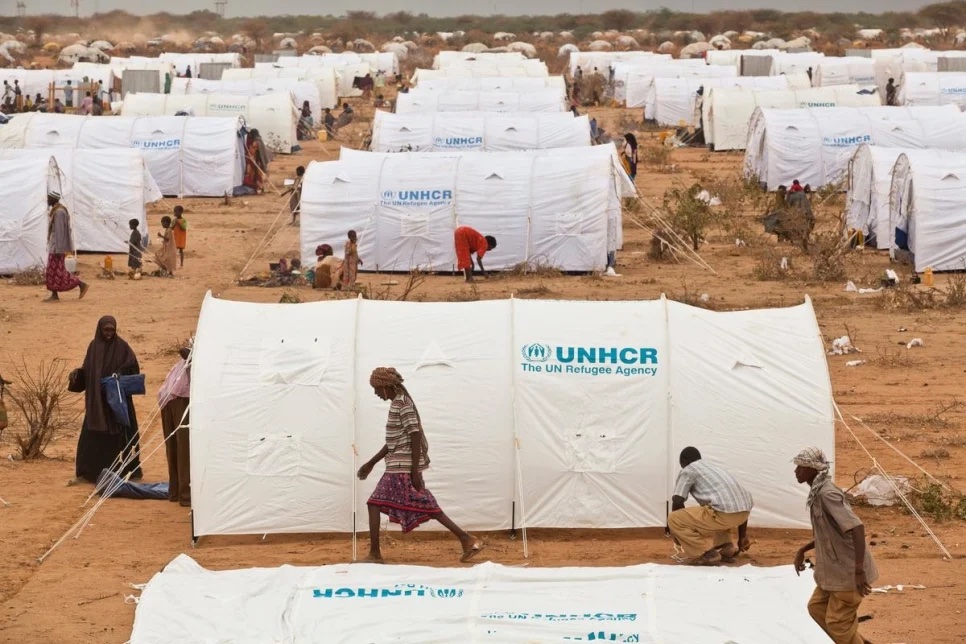
Kenya has an estimated 700,000 refugees mainly residing in Dadaab while others are elsewhere including Nairobi that hosts about 90,000-according to official records that show the country is home to some of the world’s largest refugee camps.
But they all share one thing in common–lack of access to basic services and limitations to free movement and are unable to secure employment due to lack of proper documentation.
One of the Refugee Leader and Community Worker in Nairobi’s Eastleigh area says they hoped for a better life with the passing of the refugee law in late 2021 but nothing much has changed.
The Refugee Act of 2021 stipulates that refugees will get facilitation to access of relevant documentation, right to gainful employment, access to rights and services among others.
A key challenge refugees in Kenya face is the long and tedious application of work permits, which was to be resolved by the implementation of the new act.
This applies to refugees born in Kenya-some waiting for acknowledgement of their registration status as Kenyans 30 to 40 years later.
Worse still is the sufferinng borne by Special Interest Groups (SIGs), many of who are yet to get citizenship several years later as they continue to languish in the camps.
“We have disabled people including women and children who are really suffering not only in camps but in urban centres as well, it is a very serious challenge that should be looked at differently but no one seems to care,” a refugee Mohammed Ismael from Somalia said, adding.
What with refugees who have been married by Kenyans or to Kenyans and made families.
“Our children are still not recognized for documentation registration so as to integrate,” one refugee who only gave her name as Amina said, “this is a major form of discrimination because other nationalities married to or by Kenyans are treated differently.
Other than refugees in Dadaab and Kakuma, others are strewn all over in urban centres including Nairobi, Mombasa among other cities.
“We face a lot of challenges in movement because we are not treated right as human beings who should enjoy the basic rights of humanity,” another refugee Adan Gurre told us, “it is our hope that the new government will consider our plight.
As of 2020, there were about half a million refugees or asylum seekers in Kenya, more than half of them from Somalia.
This number has since grown with the latest figure placed at between 700,000 to 1 million.
A report published in 2021 by Refugees International (RI) and the Centre for Global Development’s (CGD) concludes that Kenyan policies outrightly limit refugees’ right to work, freedom of movement and access to financial services which in turn increases food insecurity, vulnerability to violence and poverty among refugees.
The case study from the CGD and RI’s “Let Them Work” initiative makes the case for greater economic inclusion of refugees in Kenyan labour market.
“It is commendable that Kenya hosts one of the largest refugee populations in the world, and has done so for decades,” said Helen Dempster, a policy fellow and head of the #LetThemWorkInitiative at the Center for Global Development. “But refugees in Kenya still face long-standing barriers to economic inclusion, and the COVID-19 pandemic has only exacerbated these challenges.”