NAIROBI, Kenya Oct 21 -The government has stepped up coordination of its response to the Ebola outbreak, with Principal Secretary for Medical Services Ouma Oluga calling for a whole-of-government approach to strengthen preparedness, public awareness and institutional readiness.
The move comes as Kenya’s confirmed cases of Bundibugyo virus disease, a rare strain of Ebola, rose to nine, with health authorities maintaining that infections remain linked to a single cluster originating from the country’s first recorded case.
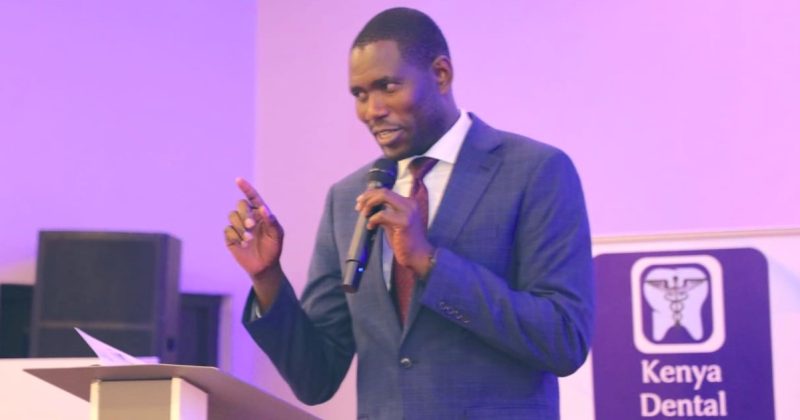
Dr Oluga spoke on Wednesday during a high-level intergovernmental briefing at Radisson Blu Hotel in Nairobi, attended by Principal Secretaries from various ministries, departments and agencies (MDAs), as well as chief executives of health semi-autonomous government agencies.
He said coordinated action across government institutions was critical to supporting the national response, ensuring consistent communication and protecting public health.
“The Government remains committed to a coordinated, whole-of-government approach to the Bundibugyo Virus Disease response,” Dr Oluga said, emphasising institutional preparedness, responsible communication and public awareness.
The meeting brought together officials to align their respective institutions’ roles in the response, with an emphasis on adhering to official public health guidance and ensuring that information reaching the public is accurate and evidence-based.
Director-General for Health Patrick Amoth also attended the meeting.The briefing comes amid a rapidly evolving regional outbreak that has raised concerns over cross-border transmission and the capacity of health systems to detect and contain infections.
Kenya confirmed its ninth case on October 20, according to the latest reports, with the patient having been quarantined before testing positive. The infections are linked to the initial patient, who had travelled from the Democratic Republic of Congo (DRC) through Uganda to Nairobi and died on October 5.
Health authorities have identified 135 contacts linked to the Kenyan cases, with 134 traced and placed under follow-up or quarantine. Officials have reported no evidence of transmission beyond the identified cluster.
The latest developments mark an increase from seven cases reported on October 17, when three healthcare workers who had treated the initial patient and a male relative were among those confirmed to have contracted the virus.
The outbreak in Kenya is linked to a much larger epidemic in the DRC, where the Bundibugyo virus has continued to spread across several provinces.
As of October 18, the DRC had reported 9,552 laboratory-confirmed cases, including 4,602 deaths, according to figures compiled by South Africa’s National Institute for Communicable Diseases. The country had also recorded 2,550 recoveries.
The outbreak has expanded to eight provinces, with Ituri remaining the worst-affected area. Uganda, which reported 20 confirmed cases earlier in the year, has had no active cases since August, according to recent reports.
The Bundibugyo strain is particularly concerning because there is no approved vaccine or specific treatment for the disease, making early detection, isolation, supportive care and contact tracing central to containment efforts.
Against this backdrop, the Nairobi meeting sought to reinforce the role of government institutions in ensuring a unified response, including public communication that discourages misinformation and promotes compliance with health advisories.
The government has emphasised the need for sustained public awareness as health authorities continue surveillance and follow-up of individuals who may have been exposed to the virus.
The briefing reaffirmed the government’s commitment to an evidence-based response, with ministries, agencies and health institutions expected to coordinate their efforts to strengthen national preparedness and limit further spread.