172 disappearances since January, according to France 24. Drones flying over the presidential motorcade, with responsibility claimed by a shadowy group. And a junta responding to it all with a single word: terrorism, as though vaguely naming the threat were enough to dispel it. While Colonel Randrianirina’s regime sinks ever deeper into a security and military escalation, pressure is mounting across every layer of Malagasy society. The safety valve has not yet blown. But the lid is beginning to shake.
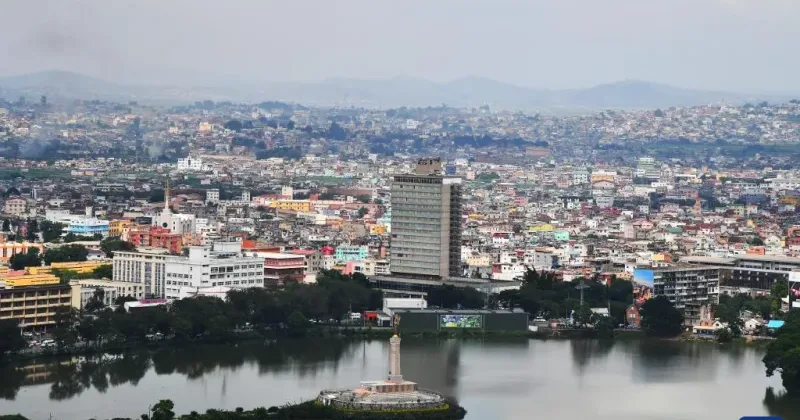
JULY 14 – Antananarivo has been living in fear since May. Not the fear of a single dramatic event, but the creeping anxiety that makes parents worry every time their children leave for school and every time they return. Since the beginning of the year, the national police have recorded 172 reports of disappearances: 164 people remain missing, while eight bodies have been recovered. On one day alone, thirteen new disappearances were reported.
How have the authorities responded? Faced with the surge in disappearances and violent crime, Colonel Randrianirina has repeatedly invoked the spectre of terrorism, describing what he calls a “strategy” aimed at “destabilising Madagascar” and “damaging its international image”. The outcome has been predictable: a formal investigation, battalions deployed across the capital, and explicit accusations directed at both traditional media and social media platforms. Yet this response appears less designed to protect the population than to shield a regime increasingly confronted with the erosion of its popular support.
Only days earlier, two drones flew over the presidential motorcade in the Ivandry district. The presidential guard opened fire but failed to bring them down. A previously unknown group calling itself Sampana Tsikilo Madagasikara subsequently claimed responsibility in a video. It featured a man dressed in military attire, whose identity remains unverified, delivering a “warning” to the head of state, giving him one month without making any specific demands, and threatening what he described as the regime’s “Russian interests”. Here again, the junta leader portrayed the incident as an attempt to spread panic, tarnish Madagascar’s image abroad and destabilise the government.
An opportunistic exploitation of chaos?
The authorities have stopped short of formally linking the two incidents, but they scarcely need to. By treating them simultaneously as manifestations of an existential threat to the state, they encourage precisely that conflation, constructing a broader narrative of conspiracy. Such a narrative conveniently diverts attention from far more uncomfortable questions: the persistence of nationwide power cuts, chronic shortages of running water, rising criminality, and the still-unfinished reconstruction following Cyclone Gezani.
The Prime Minister has spoken of a “war”. Four hundred additional security personnel have been deployed throughout the capital. At the same time, the Council of Ministers announced plans to block internet websites, officially to combat “obscene” content allegedly responsible for the deteriorating security environment. In practice, however, the measure bears all the hallmarks of an information-control mechanism, particularly at a time when social media remain one of the few relatively open spaces where public dissent can still be expressed.
Instrumentalising a genuine wave of serious crime to justify a creeping state of exception amounts to replacing answers for real victims with political storytelling. Already, attention has shifted away from the pressure exerted on the Constitutional High Court (HCC), where four judges remain under investigation for allegedly “destabilising the regime”. Little is now said about the Southern African Development Community (SADC), which called in late June for “an end to arbitrary arrests” and “the return of political exiles”. Nor is there much discussion of the repeated postponement of the national dialogue or the continued absence of any credible electoral roadmap.
A rapidly deteriorating political climate
The situation is as politically volatile as it is socially explosive. The honeymoon that followed the coup proved remarkably short-lived. By November 2025, less than two months after the military takeover, representatives of Generation Z were already warning publicly that the Colonel had not been handed “a blank cheque”. The regime clearly recognised the danger. In January 2026, the presidency announced that cybercrime legislation would be enforced “with greater rigour”. By April, words had become action: six activists were arrested during overnight raids on charges of “undermining state security”, accusations that Amnesty International immediately described as “deliberately vague”.
That same week, Colonel Patrick Rakotomamonjy, himself a senior transition official responsible for handling public grievances within the presidency, was arrested over an alleged assassination plot. Only weeks earlier, he had publicly denounced corruption at the highest levels of government. The message sent to the wider state apparatus could hardly have been clearer: loyalty offers little protection to those who speak too freely. Shortly afterwards, former Education Minister Paul Rabary was imprisoned for an alleged conspiracy based largely on WhatsApp exchanges. MP Rajerison found himself facing the lifting of his parliamentary immunity after filing an impeachment petition, the very petition that subsequently formed the basis for proceedings against the HCC judges. Opposition figures are no longer merely being repressed; they are increasingly being neutralised before they are able to act.
In May, the Catholic Church, which represents roughly a quarter of Madagascar’s population and has historically served as an important moral authority, took the unusual step of issuing a public statement condemning “the arrest of those who do not share the government’s views” and calling for “credible and democratic elections”. It was perhaps the clearest indication yet that the regime’s social base is eroding well beyond the traditional political opposition.
The Russian variable
It is worth noting that the junta felt under threat long before the July drone incident. As early as 7 November 2025, less than a month after the coup, Madagascar’s intelligence services announced that they had foiled an assassination attempt against Colonel Randrianirina, arresting two suspects and seizing weapons. In April 2026, thirteen more individuals were prosecuted over a second alleged plot, one which, according to prosecutors, involved officers from the armed forces themselves. The fear of a coup within the coup has shaped the regime’s decisions from the very outset, and it is through this lens that the most striking new feature of Malagasy politics in decades should be understood: Russia.
The Africa Corps has already trained 127 Malagasy soldiers in an initial intake comprising special forces personnel and members of the presidential guard, a programme completed in early May. In July, another cohort from the special services received their certificates at the Mahazoarivo Palace in the presence of senior officials. Since December 2025, Moscow has supplied BMP-3 infantry fighting vehicles, small arms and protective equipment.
What Russia is building in Madagascar is not simply conventional military cooperation between sovereign states. It is the architecture of a praetorian guard. Its purpose is not to defend Madagascar against an external geopolitical adversary, none currently exists, but to protect the regime from its own citizens.
That is precisely what makes this development both unprecedented and deeply troubling on the Great Island. Experience in the Sahel and the Central African Republic suggests that the Africa Corps does not stabilise regimes; rather, it insulates them from domestic political pressure while making them increasingly dependent on Moscow, whose strategic interests rarely align with those of local populations.
For Colonel Randrianirina, the calculation is straightforward. Backed by a Russian praetorian guard, he may feel increasingly able to disregard the Catholic Church, Generation Z, the SADC, and, tomorrow perhaps, to suppress openly what he can no longer merely intimidate. As criminality spirals and social tensions continue to mount, Madagascar’s pressure cooker now has its lid bolted down from the outside. That may prove to be the most dangerous development of all.