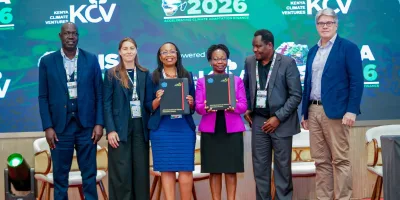
NAIROBI, Kenya, Sept 3 – Kenyan school feeding innovator Food4Education (F4E) is among organisations making the case that school meals can drive economic growth as thousands of delegates gather in Kigali, Rwanda, for the Africa Food Systems Forum (AFSF) 2026.
The five-day summit brings together heads of government, private investors, farmers, researchers, development partners, women and youth to discuss how Africa can build food systems that are healthier, more inclusive and resilient enough to meet the Sustainable Development Goals by 2030.
School feeding is among the key issues on the agenda, with governments and partners exploring how successful national programmes can be scaled across borders.
F4E is expected to present its model as an example of how governments can work with private and development partners to scale school feeding programmes while creating jobs and opening markets for smallholder farmers.
The Nairobi-based organisation says what began in 2012 as a programme feeding 25 children in founder Wawira Njiru’s hometown of Ruiru has grown into a system reaching more than 660,000 children daily across over 1,900 schools, with more than 200 million meals served to date.
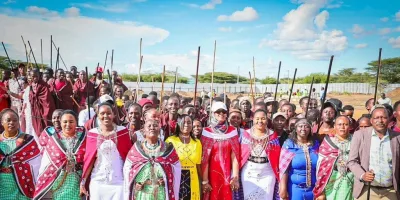
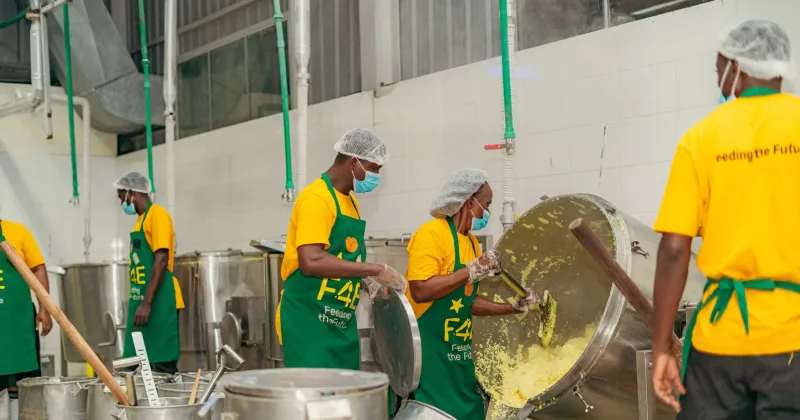
About 80 per cent of the food F4E procures comes from local smallholder farmers, while the organisation employs more than 6,000 people, most of them women and young people.
Much of that growth has been supported by technology developed in Kenya. F4E’s Tap2Eat platform allows families to contribute towards meal costs through NFC-enabled wristbands and cards while providing real-time data for planning.
At its Nairobi Giga Kitchen, which runs on solar and steam power, the organisation produces a nutritious meal for roughly 30 US cents, with food waste kept below 1 per cent.
The model has attracted interest beyond Kenya, including from Zambia, which is working with F4E to develop a nationally led feeding system targeting 5.6 million learners by December 2026.
F4E has also set a target of reaching one million children daily in Kenya by 2027.
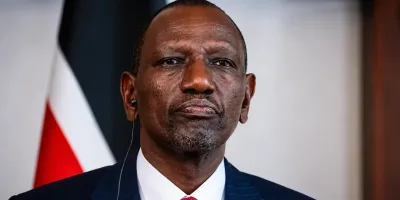
Wawira says the conversation among African governments has changed. Rather than asking only how many children a feeding programme can reach, policymakers are increasingly asking how many jobs it creates, how many farmers it connects to reliable markets and how much public spending is channelled back into local economies.
The aim is to position school feeding as infrastructure that supports economies across the continent rather than simply a programme targeting vulnerable learners.
The Kigali appearance comes after a run of international recognition for Wawira. Last month, she was named the recipient of the German Africa Prize 2026 by the Deutsche Afrika Stiftung (German Africa Foundation) for turning school feeding into what the organisation describes as economic infrastructure.
Claus Stäcker, President of the prize jury and Director of Programmes for Africa at Deutsche Welle, said Wawira’s model shows that school feeding can nourish children while strengthening local economic cycles.
Wawira has also been named the recipient of the Diane von Furstenberg (DVF) Award in recognition of her work improving the lives of women. The award recognises women who have demonstrated the courage to fight, the strength to survive and the leadership to inspire.
The DVF Awards have honoured women from more than 30 countries working on issues ranging from climate change and immigration to human trafficking, gender equality and violence against women.
“To be recognized by someone who opened the door so others could walk through it is an honor I carry with pride,” Wawira said on her social media pages after she was announced as the DVF Award recipient on August 31.
In her post, Wawira revisited F4E’s origins, recalling that she started the organisation 14 years ago as “a 21-year-old international student trying to get 25 children in my hometown fed so they could stay in school,” with no connections, no trust fund and no benchmark to follow.
She said she struggled even to find men willing to work for her, so she “hired women” and “young people” instead — “thousands of them” — adding that the team was “underestimated every single day” and “built it anyway.”
Wawira also credited the farmers and families who supported F4E in its early days.
“To every supplier and farmer who took a chance on us early, to every parent and teacher who trusted us before we had a name, and to every young woman who’s been told no and shows up anyway, this one’s for you,” she wrote on LinkedIn.
She added, “What people see for an instant is never the full story. And what comes next is always bigger than you can imagine.”
That argument echoes discussions at AFSF 2026, where delegates have focused on the view that Africa’s challenge is not simply food production but investment and functioning systems.
A recurring theme at the forum has been that Africa already produces enough food to meet its needs, but faces challenges in moving food, trading efficiently and ensuring it reaches people equitably within and across borders.
The Food and Agriculture Organization (FAO) is also contributing technical expertise to sessions on investment, climate action, gender equality and youth employment, as well as discussions on turning national food systems plans into funded programmes.
For Kenya, F4E’s presence in Kigali offers an opportunity to showcase a homegrown school feeding model and its potential to influence how African countries feed children at scale.