NAIROBI, Kenya, July 26 – Kenya is stepping up efforts to restore its mangrove ecosystems through stronger partnerships, increased investment and coordinated action as the country seeks to reverse decades of degradation along its coastline.
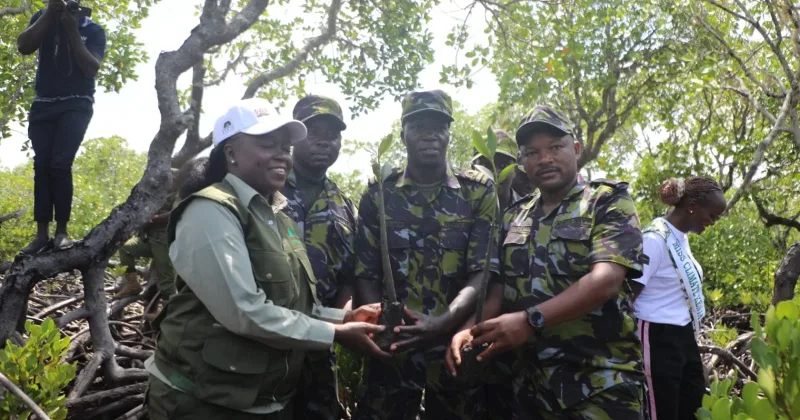
The renewed commitment was made during this year’s World Mangrove Day celebrations at the KEFRI Grounds in Mokowe, Lamu County, where government agencies, development partners, researchers, community organisations and private sector players pledged to accelerate restoration programmes across the country’s coastal counties.
The celebrations, presided over by Cabinet Secretary for Environment, Climate Change and Forestry Dr. Deborah Barasa and Lamu Governor Issa Timamy, followed the conclusion of a two-day National Mangrove Stakeholder Forum that reviewed progress made under the National Mangrove Ecosystem Management Plan (2017–2027) and identified priority actions to scale up restoration efforts.
Kenya’s mangrove forests cover approximately 61,271 hectares along the country’s 536-kilometre coastline, with Lamu accounting for about 61 per cent of the national mangrove cover.
The forests provide essential ecosystem services, including shoreline protection, biodiversity conservation, blue carbon storage and nursery grounds that support fisheries and the livelihoods of thousands of coastal households.
Despite their importance, the ecosystems continue to face increasing pressure from illegal harvesting, pollution, encroachment, unsustainable coastal development, reduced freshwater inflows and the effects of climate change.
According to the State Department for Forestry, Kenya loses about 0.7 per cent of its mangrove cover annually, threatening marine biodiversity, fisheries productivity and the natural protection that mangroves provide against coastal hazards.
The stakeholder forum identified inadequate financing, fragmented coordination and limited private sector participation among the key challenges slowing restoration efforts.
Participants called for stronger collaboration between national and county governments, research institutions, Community Forest Associations, civil society organisations, development partners and the private sector to accelerate conservation programmes.
The forum also proposed innovative financing mechanisms, enhanced resource mobilisation and improved governance to support large-scale restoration and sustainable livelihood initiatives.
The recommendations are expected to inform the country’s next mangrove management strategy once the current 2017–2027 plan comes to an end.
Organised by the State Department for Forestry in partnership with the Kenya Forest Service, the Kenya Forestry Research Institute (KEFRI) and the Global Mangrove Alliance, the World Mangrove Day celebrations underscored the need for coordinated national action to restore degraded mangrove ecosystems and strengthen the resilience of Kenya’s coastal communities.
Among those who attended the event were Investment Promotion Principal Secretary Abubakar Hassan, Secretary for Forest Development George Tarus, Secretary for Administration Patrick Meso, Kenya Forestry Research Institute (KEFRI) Board Chairman Lt. Gen. (Rtd.) Walter Raria Koipaton, KEFRI Chief Executive Officer Dr. Jane Njuguna, Kenya Forest Service (KFS) Board Chairman Titus Korir, KFS Commandant Mohammed A. Mohammed and other senior government officials and conservation partners.