NAIROBI, Kenya, Nov 7 – The Kenya Electricity Generating Company (KenGen) is planning to increase electricity generation from geothermal sources as water levels drop at Kenya’s large hydropower stations.
As of yesterday midnight, Masinga Dam, which is Kenya’s largest hydropower dam, recorded water levels of 1,039.42 meters above sea level (mASL) against a total capacity of 1,056 mASL.
This was slightly above the minimum operating level of 1,037 mASL, having received only 7.5 millimeters of rainfall in the last 24 hours.
Depressed hydrology is attributed to climate change, which has been characterized by unpredictable rainfall patterns, making it difficult to plan and implement a sustainable water management program in large dams.
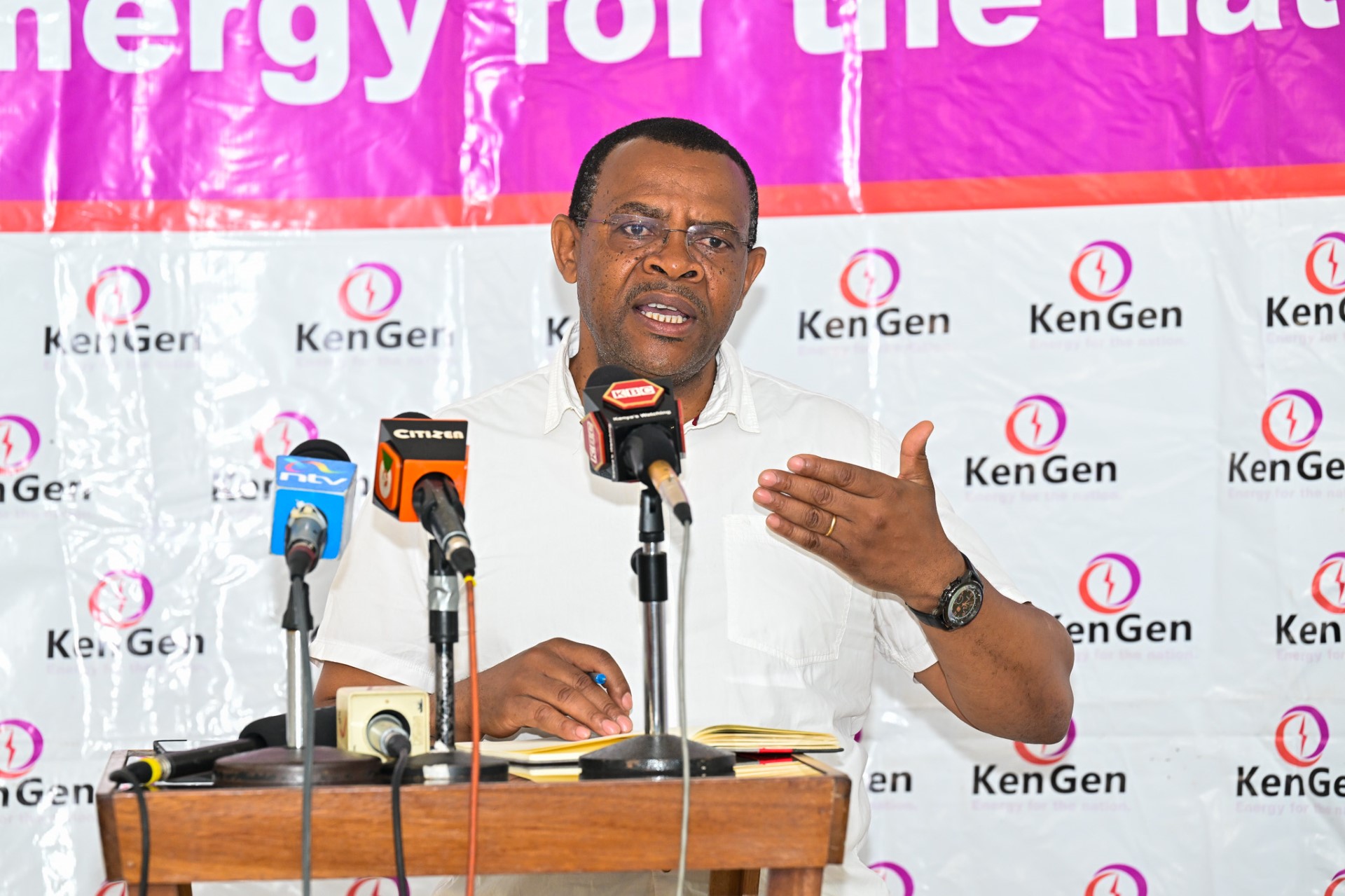
“Despite the ongoing rains in most parts of the country, we are receiving very low inflows at our dams at the Seven Forks, located along the Tana River,” said KenGen Managing Director and CEO Peter Njenga.
“This poor hydrology means that we now have to turn to another source to meet the growing demand for electricity in the country,” he added.
According to a daily electricity dispatch report by KenGen, the large hydroelectric power stations, which ordinarily would produce a combined maximum capacity of 626 MW, were only able to achieve 471 MW at their peak over the past 24 hours.
“One of the large power stations, Masinga, has been shut down most days of November as part of our ongoing water management program to ensure we are able to meet the energy demands for the longest duration possible,” said Njenga.
Njenga went on to say that KenGen was angling to acquire more geothermal drilling licenses in the Great Rift Valley as part of the company’s plans to increase geothermal generation capacity, which he said was clean and more reliable as geothermal is not dependent on weather.
Kenya has a potential 10 GW of geothermal energy, of which only 950 MW has been exploited, with about 799 MW having been developed by KenGen in the Olkaria and Eburru Hill Geothermal Fields in Nakuru County.
KenGen boasts a diverse energy portfolio, including geothermal, hydro, wind, and thermal, adding up to 1,904 MW, of which 86% is drawn from renewable sources.