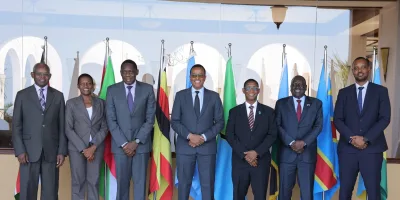
During the Horn of Africa Summit 2012 on Infrastructure and Investment hosted in Nairobi, IGAD Executive Secretary Mahboub Maalim said the countries had prepared a range of strategic investment choices to raise the profile of the priority projects.
“Out of about $7 billion (Sh574.7 billion) which was our estimate in operationalising this plan, $2 billion (Sh164.2 billion) is already available and has been mobilised with works going on at various stages in various countries,” he said.
A ring corridor to link major ports and trading hubs of the Horn countries (Djibouti, Eritrea, Ethiopia, Kenya, Somalia, Sudan and Uganda) is one of the ambitious infrastructure projects.
The Horn of Africa region has been plagued by droughts, abject poverty and dilapidated infrastructure stifling efforts towards economic development.
To date, IGAD has had limited success in securing funding for large capital investment projects such as roads.
Consequently, the Horn of Africa Initiative (HOAI) was established to address these issues, putting key focus on infrastructure development such as interconnectivity in transport and energy sectors as well as regional management of water resources for food security.
HOAI has six projects planned for the water sector amounting to Sh10.7 billion (€100.5 million) and will include water harvesting, groundwater assessment, capacity building for water planning institutions and a regional water trust fund among others.
The energy sector will have four energy interconnectivity link projects to cost Sh123.8 billion (€ 1.15 billion) and four regional renewable energy projects worth Sh48.6 billion (€ 452 million).
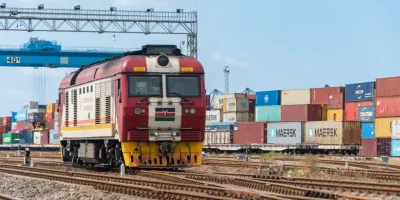
The transportation segment is estimated to be Sh235.8 billion (€2.19) billion and will involve developing the corridor between Juba and Kitale, the Berbera Corridor between Ethiopia and Somalia, the Djibouti-Addis Ababa railway link, Isiolo road to Ethiopia, Juba-Kampala road and railway link connecting South Sudan, Uganda and Kenya.
It is estimated the cost of addressing Africa’s infrastructure needs is around some $93 billion (Sh7.63 trillion) a year, which would be off-set by an infrastructure funding gap of $31 billion annually, primarily in power.
Speaking during the conference, Commissioner of Infrastructure at the African Union Commission Elham Ibrahim said Africa’s development would be achieved through a global strategy based on regional integration.
Two years ago the African Union (AU) established the Program for Infrastructure Development in Africa (PIDA), a long-term initiative that sets out short-term goals to be achieved by 2020, medium-term goals to be achieved by 2030, and the long term by 2040.
In the shorter term, PIDA has already begun its Priority Action Plan to be implemented between 2012 and 2020 requiring nearly $68 billion (Sh5.58 trillion) or $7.5 billion (Sh615.7 billion) annually.
“The PIDA program contains 51 projects, 24 in transport, 15 in energy, nine in trans-boundary water and three in ICT. Energy and transport projects and programs represent around 95 percent f the total cost and Eastern Africa more than 33 percent ($23 billion),” Ibrahim revealed.
However, central in the high level deliberations, was the need for political will and commitment on the part of the countries involved to drive the projects forward.