NAIROBI,Kenya Oct 28 – Specialised police officers deployed to some of the country’s most challenging security hotspots are seeking better accommodation, higher allowances and modern equipment, with Parliament promising to push for additional funding to address the gaps.
The officers told the National Assembly Departmental Committee on Administration and Internal Security that poor living conditions, delayed payments and inadequate operational resources were undermining their welfare and preparedness for security emergencies.
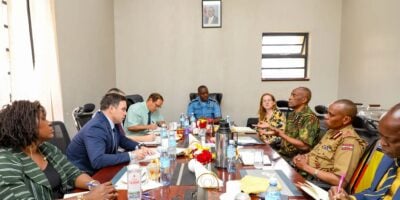
During an oversight visit to a police facility in Magadi, Kajiado County, they appealed for urgent investment in accommodation, surveillance technology, ammunition and other equipment needed to confront emerging threats.
The committee, chaired by Narok West legislator Gabriel Tongoyo, said it would consider the requests as it prepares to engage the government on funding priorities in the next supplementary budget and subsequent budget estimates.
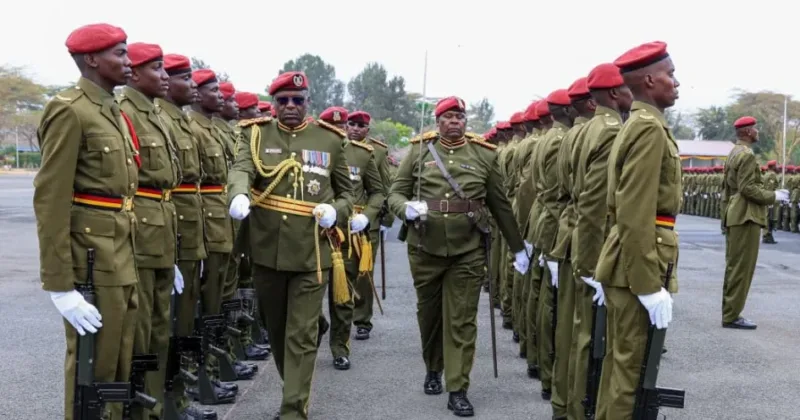
General Service Unit (GSU) officials told the legislators that officers deployed to remote and harsh environments were living in worn-out tents that offered inadequate protection from extreme weather.
Superintendent of Police Benard Kibet Yegon, who is in charge of Planning, Research and Reforms at GSU headquarters, said some camps urgently needed semi-permanent structures to provide officers with more habitable accommodation.
“The tents are really wearing us out. We could put up some semi-permanent structures in these camps. It requires a little funding,” Dr Yegon told the committee.
He said the poor state of accommodation was among the challenges confronting officers deployed far from established police facilities, calling for additional allocations to improve housing and provide essential equipment.
Beyond infrastructure, Dr Yegon urged the government to formally establish the specialised tactical unit as a permanent formation within the Kenya Police Service, arguing that this would strengthen its mandate and operational capacity.
He said the unit would provide specialised support during emergencies beyond the capacity of regular police officers, including attacks by armed groups such as Al-Shabaab.
The officers also want enhanced training to prepare them for high-risk assignments and improve their ability to respond to rapidly changing security threats.
“Strengthening GSU capability through targeted modernisation and technological advancement is essential to enhance operational effectiveness and preparedness in addressing the evolving national security environment,” Dr Yegon said.
He called for investment in modern weapons, ammunition, drones and surveillance systems to improve intelligence gathering, threat detection and response.
Monthly allowance
The officers also asked Parliament to review their deployment allowances, saying the current payments did not adequately reflect the demands and risks associated with specialised assignments.
Dr Yegon said officers in the specialised unit received a monthly allowance of Sh2,000, which he urged the government to increase.
He further called for the implementation of a special operations allowance previously approved for another specialised formation, saying GSU officers were yet to benefit from the arrangement.
The unit also sought funding to establish five operational commands and strengthen coordination with other security agencies through a multi-agency framework.
Deputy Inspector-General of the Kenya Police Service Eliud Lagat separately disclosed that the service had accumulated Sh70 million in allowance arrears, leaving some officers without payments for two to three months.
“I would humbly ask that you have a look at it in the next supplementary budget. Already, we have arrears of Sh70 million. Most officers have not been paid for the last two or three months, and we are struggling with that issue,” Lagat said.
He urged the committee to prioritise the arrears in the next supplementary budget, warning that delayed payments were adding to the challenges facing the service.
Lagat also raised concerns over delays in enrolling newly recruited officers in the Social Health Authority medical cover, saying some officers who had recently completed training had yet to be fully registered.
The service further requested Sh60 million to facilitate the transfer and rotation of officers across the country.
Lagat said the money would support the movement of officers between stations, including deployments involving Mandera, Busia and Narok, and allow them time to familiarise themselves with their new areas of operation.
He urged the government to facilitate the transfers before the end of the year to give officers sufficient time to prepare for next year’s General Election.
“It is high time that we do it now, even before December 2026, so that they can acclimatise and get to know the environment before the elections,” he said.
Funding requests
Tongoyo said the committee would assess the requests and identify those that could be accommodated in the forthcoming supplementary budget, with other proposals considered during the next budget cycle.
He said the visit was intended to go beyond inspecting facilities and establish whether the resources allocated to the security sector were meeting the operational needs of officers.
“We don’t just take pride in physically coming and seeing. We want to also make an undertaking. It is not just going to be a mere visit,” Tongoyo said.
He said the committee would engage the relevant agencies on the proposed interventions, while taking into account competing demands on public finances.
Tongoyo noted that previous visits to police training and operational facilities, including Magado Field Campus and the GSU facility in Kiganjo, had exposed similar concerns about resources and working conditions.
The committee said it would continue scrutinising security sector spending and engaging police leadership on measures to address operational gaps.
The requests come as security agencies prepare for the 2027 General Election, when adequate staffing, timely deployment and operational readiness will be important in maintaining security across the country.
However, the proposed improvements will depend on the availability of funds and decisions made during the budget process.