NAIROBI, Kenya, Aug 24 – President William Ruto has said his administration is taking steps to improve the welfare of prison officers through better pay, healthcare and housing, as part of efforts to modernise Kenya’s correctional services.
The President said prison officers had endured years of neglect and that his government was implementing reforms aimed at improving their working and living conditions.
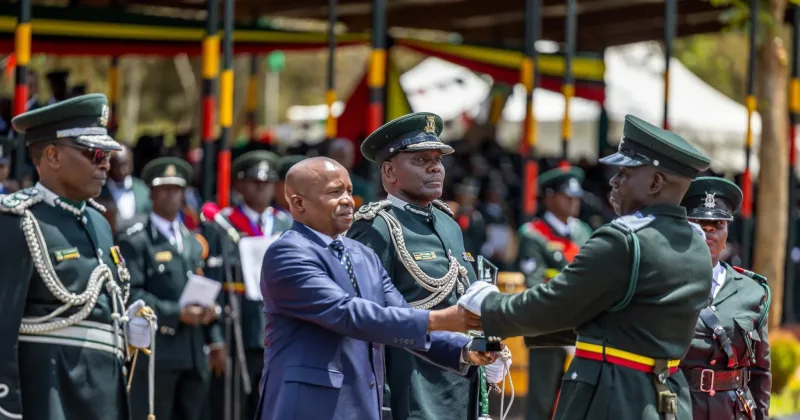
In a speech delivered on his behalf by Deputy President Kithure Kindiki on Monday during the 27th Pass-Out Parade for Kenya Prisons Service cadets at the Prisons Staff Training College in Ruiru, Kiambu County, Ruto said the reforms were intended to motivate officers and strengthen the correctional system.
The President said the first two phases of the ongoing salary review had already resulted in significant increases for prison officers.
“Following Phase I and II of the salary review, entry-level remuneration for a prison constable rose by more than 36 per cent, while the maximum point on the salary scale increased by approximately 24 per cent,” he said.
He added that Phase III of the review took effect on July 1, 2026, describing the latest increase as part of the government’s commitment to improving the welfare of correctional officers.
The government has also enrolled prison officers under the Usalama Cover provided through the Social Health Authority (SHA), with the President saying the arrangement would improve their access to healthcare.
Kindiki, representing Ruto at the ceremony, also officially opened the 150-bed Wanini Kireri Magereza Level IV Referral Hospital at the Prisons Staff Training College.
The facility will provide specialised healthcare to prison officers and their families, inmates and residents of surrounding communities.
Housing is another area targeted under the government’s welfare programme, with the Kenya Prisons Service expected to receive 28,000 units under the Affordable Housing Programme.
Of these, 9,000 units will be procured through public-private partnerships, according to the President.
The government is also seeking to improve the mobility and operational capacity of the service. Under Phase VII of the Government Motor Vehicle Leasing Programme, 41 vehicles have been acquired for the Prisons Service, with additional investments in electric vehicles planned.
Ruto said improving welfare must go hand in hand with modernising the correctional system to enable officers to respond to emerging forms of crime.
He challenged the service to accelerate the adoption of technology and equip officers with the skills needed to deal with increasingly sophisticated criminal networks.
“Radicalisation, organised crime, cybercrime and trafficking demand new knowledge, new capabilities and new tools. A correctional service that does not modernise cannot keep pace with the threats it exists to contain,” the President said.
He said the government would continue investing in the modernisation of the Kenya Prisons Service, arguing that officers could not be expected to deliver a modern correctional service while working with inadequate equipment, infrastructure and living conditions.
“The Government has continued to invest in the modernisation of the Kenya Prisons Service. We cannot demand a modern correctional service from officers working with outdated tools, inadequate infrastructure and difficult living conditions,” he said.
The President also urged the newly passed-out officers to uphold professionalism, discipline and integrity as they begin their careers.
He reminded them that their responsibility involved the custody and rehabilitation of people who had been deprived of their liberty, but not their dignity.
“A prison sentence takes away liberty. It does not take away human dignity. You must therefore be firm without being cruel; vigilant without becoming abusive; disciplined without becoming indifferent; and authoritative without becoming arbitrary,” Ruto said.
The President said the reforms were ultimately aimed at creating a correctional service that is better equipped, more professional and capable of protecting public safety while respecting the rights and dignity of inmates.