Independent media and professional journalism are essential pillars of any democratic society. The protection and promotion of a free, responsible and independent media, embedded in a country’s democratic culture and traditions, is critical for any nation committed to the rule of law and citizens’ access to credible information. Such information is essential not only for accountability but also for national development.
Yet, as Kenya has experienced before elections and during electioneering periods, the media increasingly faces intimidation and pressure. Rather than demanding responsibility from public officials, political leaders, their supporters and other opinion leaders, attention is often diverted towards blaming the media.
There is growing pressure on journalists to police hate speech, incitement and irresponsible political conduct, while those who make inflammatory statements or sponsor violence are sometimes allowed to escape scrutiny. Even more worrying is the growing tendency to celebrate compromised journalism and to undermine media institutions that hold powerful individuals and institutions to account.
The media and journalists carry a heavy responsibility. Society expects them to provide quality, relevant and useful information; promote diversity and plurality of ideas; and give a voice to those who might otherwise go unheard. It is therefore understandable that freedom of expression and media freedom are exercised within a framework of responsibility.
The Constitution and international human rights frameworks recognise that freedom of expression is not absolute. There are legitimate limitations relating to national security, incitement, hate speech and public safety, among other concerns. In addition, Kenya has laws and professional mechanisms designed to hold journalists accountable for misconduct.
Media codes of ethics require journalists to seek and report the truth, minimise harm, act independently, pursue matters of public interest and remain accountable in the course of their work. Where journalists or media organisations act unprofessionally, there are established mechanisms through which complaints and disputes can be addressed.
But accountability must never be confused with intimidation.
In the same way that laws and professional standards place responsibilities on the media, the Constitution also provides important protections for freedom of the media and the right of citizens to access information held by public institutions. Journalists, too, are entitled to protection as they discharge their professional responsibilities and as individual human beings.
The appropriate response to alleged unprofessional conduct is to seek redress through lawful and established mechanisms, not through threats, harassment, arbitrary detention, abduction, violence or online attacks. Unfortunately, attacks against journalists often go unpunished, contributing to a culture of impunity and fear.
Kenyan journalism, like the media industry across the world, is undergoing tremendous change. The rise of digital platforms, artificial intelligence, social media and new patterns of news consumption has transformed how journalism is produced, distributed and financed. Media organisations are already developing strategies to address technological disruption, declining revenues and questions of long-term viability.
However, the growing targeting of journalists presents an even more dangerous challenge.
Physical attacks, threats, online surveillance, coordinated trolling and campaigns designed to destroy the credibility of journalists have become increasingly common. Equally concerning is the reluctance by authorities and other duty bearers to take decisive action against perpetrators.
That some people increasingly view an independent, free and public-interest-focused media as a threat is deeply disturbing. Journalists are being targeted for simply doing their work. Others are subjected to coordinated online abuse and malicious campaigns intended to discredit them.
This is particularly dangerous in an era when information sources have multiplied dramatically and misinformation can spread rapidly across digital platforms. At such a time, society needs credible and professional journalism more than ever.
Access to credible information is itself an important accountability mechanism. Governments and public institutions should recognise the value of journalism that exposes corruption, abuse of power and human rights violations. Such reporting provides an opportunity for corrective action and helps institutions identify wrongdoing that might otherwise remain hidden.
The media should not be viewed as the enemy simply because it asks difficult questions.
When political actors or members of the public celebrate attacks against journalists, or sponsor campaigns to malign journalists for undertaking legitimate public-interest work, they send a dangerous signal. The ultimate losers are not only journalists but citizens whose right to know is undermined.
The media has also consistently played an important role in the fight against corruption. Through factual, persistent and professional reporting, journalists help create public awareness and demand for accountability. Investigative reporting has exposed major scandals, identified individuals and institutions linked to the misuse of public resources, and provided important information that can assist investigators and oversight bodies.
Journalism has, in many instances, served as an early warning system for society and a vital whistle-blowing mechanism.
The current onslaught against journalists should therefore serve as an urgent wake-up call, both for the media industry and for the country. Journalists and media organisations must continue to strengthen professionalism, ethical standards and accountability. The industry must also work to improve the working environment and safety of media practitioners.
At the same time, the media fraternity must build greater solidarity and develop a common agenda around the protection of journalism. Reducing unnecessary divisions within the sector and ensuring that media freedom remains part of the national conversation will be critical in creating an environment in which journalists can perform their constitutional role without fear or favour.
The safety and protection of journalists will become even more critical as Kenya approaches the 2027 General Election. Elections are periods when access to accurate and timely information is essential, but they are also moments when journalists can face heightened risks.
Kenya must also consider its commitment to Sustainable Development Goal 16.10, which calls for public access to information and the protection of fundamental freedoms in accordance with national legislation and international agreements. SDG 16.10.1 further requires the monitoring and reporting of verified cases involving the killing, kidnapping, enforced disappearance, arbitrary detention and torture of journalists and other relevant actors.
There should be no room for intimidation and harassment of the media in a country committed to democratic governance. A free media plays a critical role in the democratisation process, particularly during elections.
As Kenya heads towards 2027, journalists must be allowed to do their work without intimidation. Those who disagree with the media should challenge reporting through facts, lawful processes and professional engagement—not threats or violence.
Do not harm or kill the messenger. The real threat is not the journalist exposing wrongdoing, but those within society who violate the rights of others and believe they should never be held to account.
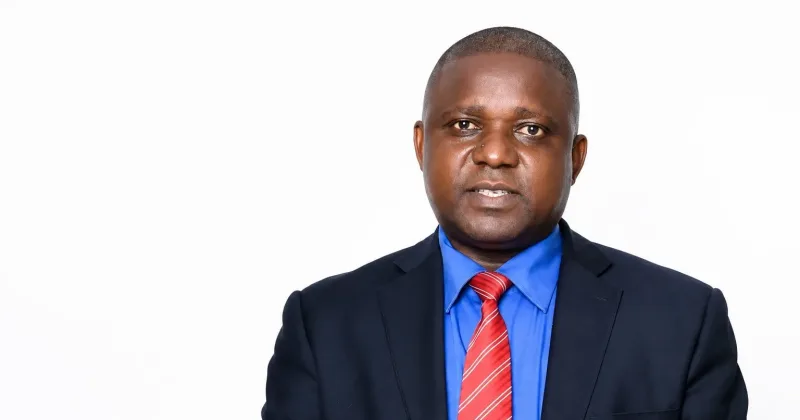
The author is the Deputy CEO and Director, Media Training and Development at the Media Council of Kenya.