NAIROBI, Kenya, Jul 29 – For decades, Nairobi has been Kenya’s undisputed commercial capital, attracting businesses with its concentration of financial institutions, multinational headquarters, government agencies, aviation links and technology firms.
Its dominance remains evident in the numbers.
According to the Kenya National Bureau of Statistics (KNBS), Nairobi generated 27.5 per cent of Kenya’s Gross Value Added (GVA) in 2023—nearly five times the contribution of the next largest county economy.
But Kenya’s investment map is gradually changing.
Fifteen years after the adoption of the 2010 Constitution, devolution, improved infrastructure and county-led investment promotion are encouraging businesses to look beyond Nairobi.
Cities once viewed primarily as administrative or regional centres are increasingly positioning themselves as specialized investment destinations, leveraging distinct competitive advantages in logistics, manufacturing, agriculture, tourism and trade.
Rather than competing directly with Nairobi, Mombasa, Kisumu, Nakuru and Eldoret are carving out complementary economic identities, creating a more diversified national investment landscape.
The shift beyond Nairobi
For investors, location decisions are increasingly driven by factors beyond proximity to the capital.
Lower land prices, improved transport infrastructure, access to raw materials, county-level incentives and expanding consumer markets have made regional cities increasingly attractive for manufacturing, logistics, hospitality and commercial real estate.
Economic analysts say devolution has also accelerated public investment outside Nairobi, improving roads, health facilities, utilities and administrative services that reduce the cost of doing business.
“Investors are increasingly looking beyond Nairobi because counties have improved infrastructure, utilities and market access. Businesses now choose locations based on proximity to customers, logistics and production costs rather than simply being close to the capital,” Mentoria Economics Chief Economist Dr. Ken Gichinga said.
KNBS data illustrates the emerging trend.
While Nairobi remains the country’s largest economy, counties such as Nakuru (5.2 per cent GVA) and Mombasa (4.8 per cent) have steadily expanded their contribution to national output, reflecting broader geographic diversification of economic activity.
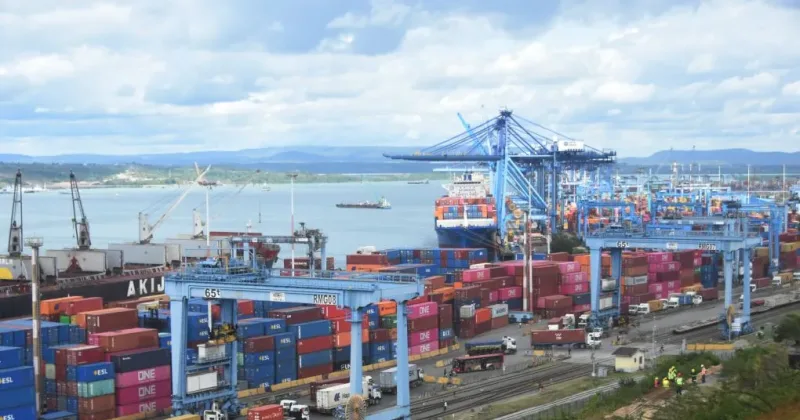
Mombasa is increasingly positioning itself as more than Kenya’s principal seaport.
The county is leveraging the Port of Mombasa, expanding transport infrastructure, tourism assets and the Dongo Kundu Special Economic Zone (SEZ) to attract manufacturing, logistics and export-oriented investment.
The recently completed Dongo Kundu Bypass has eased congestion around Mombasa Island while improving access to industrial land and logistics facilities south of the city.
According to the National Assembly, the bypass has diverted more than 60 per cent of vehicles that previously relied on the Likoni Ferry, significantly improving freight movement.
At the centre of Mombasa’s industrial ambitions is the 3,000-acre Dongo Kundu SEZ, strategically located near the port, Standard Gauge Railway and Moi International Airport.
The zone has already attracted investors including Taifa Gas, which is developing a 30,000-metric-tonne LPG import and storage terminal, alongside commitments from logistics and manufacturing firms.
Beyond industry, improved infrastructure has stimulated investment in housing, hospitality and commercial developments across Nyali, Bamburi, Shanzu and Mtwapa.
The government’s Affordable Housing Programme is expected to add 10,000 housing units across the county, supporting growing demand generated by industrial expansion.
To date, the Kenya Ports Authority (KPA) has received 97 land applications for about 7,000 acres, more than double the current 3,000-acre size of the Dongo Kundu SEZ, indicating demand exceeds available serviced land.
Kisumu: Reviving western Kenya’s trade gateway
On the shores of Lake Victoria, Kisumu is reinventing itself as a regional logistics, trade and blue economy hub.
The revival of Kisumu Port, together with rehabilitation of rail connections linking western Kenya to Mombasa, has renewed interest in lake transport connecting Kenya, Uganda and Tanzania.
The Kenya Ports Authority says Kisumu Port handled 459,601 tonnes of cargo in 2025, with volumes expected to exceed 700,000 tonnes this year as regional trade expands.
“The Port has been very impressive in terms of cargo handling. The growth has been very steady,” said Port Manager for Cargo Services Patrick Makau.
Beyond cargo movement, county leaders see opportunities in fisheries, aquaculture, petroleum distribution, logistics, tourism and maritime services.
Kisumu is also emerging as a regional centre for healthcare, higher education and financial services, anchored by institutions such as Moi International Airport, universities and expanding commercial developments.
The County Government of Kisumu identified real estate, financial services and pharmaceuticals as other opportunities for investment from the port during an investment forum with Japanese businesses.
Nakuru: Capitalizing on industry, agriculture and geothermal energy
Strategically located along Kenya’s Northern Corridor, Nakuru has evolved into one of the country’s fastest-growing regional economies.
Its economy combines commercial agriculture, manufacturing, logistics, tourism and geothermal energy, making it attractive for both domestic and international investors.
Naivasha has emerged as a major hospitality and conference destination, supported by improved transport links, Lake Naivasha and the annual World Rally Championship.
“Naivasha has been placed on the world map largely by hosting the acclaimed World Safari Rally Championship and other international events,” said Nakuru Tourism Association Chairman Elijah Mwangi.
But hospitality represents only one dimension of Nakuru’s investment story.
The county is also benefiting from industrial development around Naivasha, geothermal power generation at Menengai, flower exports, agro-processing and logistics linked to the Standard Gauge Railway Inland Container Depot.
The proposed Naivasha Special Economic Zone is expected to further strengthen manufacturing and export opportunities.
The KenGen Green Energy Park has already attracted five investors into green fertiliser production, electric vehicle assembly, steel fabrication, fish feed manufacturing and data centre infrastructure.
The latest investment is a 3.95 million dollar geothermal powered fish feed plant by Maxim Agri. Samakgro and Synergetic Development Group is building a steel logistics and fabrication facility using 18MW of geothermal electricity.
Along with these developments, the government’s County Aggregation and Industrial Parks programme, which is implementing 47 agro-industrial parks across the country, is set to deepen value addition and bolster manufacturing supply chains.
Eldoret: North Rift’s emerging commercial capital
Eldoret has long served as the commercial heart of Kenya’s North Rift.
Today, its economy is expanding beyond agriculture into manufacturing, logistics, healthcare, education and real estate.
The city’s elevation to city status has accelerated investment in urban infrastructure while reinforcing its role as a gateway to western Kenya, Uganda and South Sudan.
Agriculture remains central to Eldoret’s economy, with the city serving as a major trading centre for maize, wheat, dairy and horticultural products.
However, new investments are increasingly diversifying its economic base.
These include the Export Processing Zone, manufacturing industries, wholesale trade, healthcare anchored by Moi Teaching and Referral Hospital, expanding universities and commercial real estate developments.
The city’s strategic location along regional transport corridors also strengthens its attractiveness for logistics companies serving East and Central Africa.
“Uasin Gishu county has the potential of becoming a major industrial hub for the country and also the East African region considering the available infrastructure already in place such as the Eldoret International Airport, the road connecting the East Africa region and the railway line,” Cabinet Secretary for Investments, Trade and Industry Lee Kinyanjui said during an inspection of the Eldoret EPZ and County Aggregation and Industrial Park (CAIP).
Competition among Kenya’s regional cities is no longer based solely on geography.
County governments are increasingly investing in industrial parks, investment promotion agencies, digital licensing systems and public-private partnerships to attract businesses.
At the same time, improved national infrastructure—including highways, railways, airports and ports—is reducing the traditional advantages once enjoyed almost exclusively by Nairobi.
Private developers are also responding.
Commercial real estate, residential housing, hotels and logistics parks are expanding rapidly across many regional urban centres as businesses establish operations closer to emerging markets.
“Manufacturers are increasingly looking at locations that offer reliable infrastructure, affordable energy, efficient logistics and proximity to raw materials and markets. As counties improve their investment climate, firms are no longer compelled to concentrate all operations in Nairobi,” Tobias Alando, Chief Executive, KAM noted.
Challenges
Despite growing momentum, regional cities continue to face obstacles.
Investors cite land administration, infrastructure financing, utility reliability, regulatory consistency and access to skilled labour among the factors that will determine whether regional growth can be sustained.
Competition is also intensifying as counties seek to differentiate themselves through incentives, industrial policies and investment promotion strategies.
“Devolution created opportunities for counties to compete for investment, but sustained success depends on the quality of institutions, efficient service delivery and prudent management of public resources.” Institute of Economic Affairs (IEA Kenya) Chief Executive Kwame Owino stated.
Nairobi is unlikely to lose its position as Kenya’s economic capital any time soon.
Yet the country’s growth story is becoming increasingly multi-centred.
Mombasa is leveraging its logistics advantage to build an industrial base. Kisumu is reviving Lake Victoria trade while expanding its blue economy.
Nakuru is combining agriculture, manufacturing, geothermal energy and tourism, while Eldoret is evolving into a commercial, logistics and healthcare hub for the North Rift.
Collectively, these cities illustrate how devolution and infrastructure investment are reshaping Kenya’s economic geography.
For investors, the question is no longer whether opportunities exist beyond Nairobi—but which regional hub offers the greatest competitive advantage for their next investment.